People sometimes ask how I ended up doing the kind of work I do now. The honest answer is that it came together slowly, from a few places and a lot of people, and most of it started before I ever picked up a tattoo machine.
Before tattooing
My father talked to me a lot about photography and composition when I was younger. I didn't think of it as training at the time, but it shaped how I look at everything. When I see a tattoo, the first thing I notice isn't the subject. It's how the shapes are arranged and how they sit on the person.
Before I tattooed, I worked in commercial illustration and did artwork for record labels. That work taught me to draw for someone else's idea and still make it my own, which turned out to be good preparation for custom tattooing.
Around that time, a couple of books changed what I thought tattooing could be. Guy Aitchison's Reinventing the Tattoo and Suits Made to Fit showed tattoos designed around the whole body rather than single images placed on skin. The work of Filip Leu, Aaron Cain and Rob Koss did the same. It made it clear how far large-scale tattooing could go.
Starting at Tahiti Felix's
I started tattooing in 2000 at Tahiti Felix's Master Tattoo in San Diego, under Denny Besnard. The shop had been open since 1949.
Learning in a shop with that much history gave me a lot of respect for the traditions of tattooing. Many of the old guidelines exist for good reasons, and I think it's important to understand them before you start bending them.
Later I worked at Avalon Tattoo II, owned by Fip Buchanan.
Opening Remington
In July 2011 I opened Remington Tattoo in North Park, in a converted 1930s Spanish building. I've also done guest work at Dare Devil Tattoo in New York.
Having my own shop gave me room to focus on the work I care about most: large, custom pieces planned around the body.
The work I focus on now
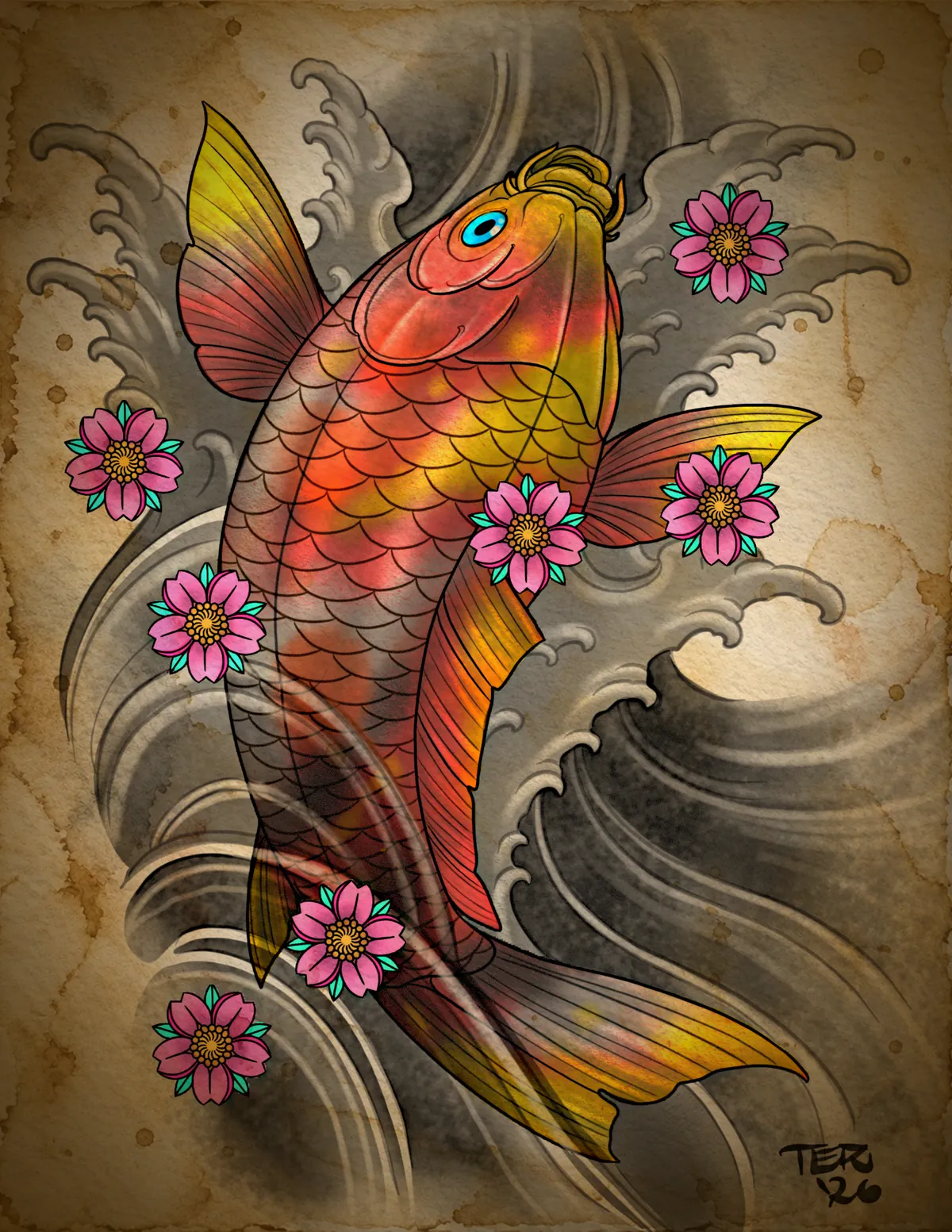
Most of what I do today is large-scale custom work. Neo-Japanese, biomechanical and bio-organic, neo-traditional, illustrative realism, ornamental and art nouveau, in black and grey or color.
The style changes from piece to piece, but the approach doesn't. I draw every design myself, for the person who's going to wear it. I don't copy other artists' work, and I don't use AI to design tattoos.
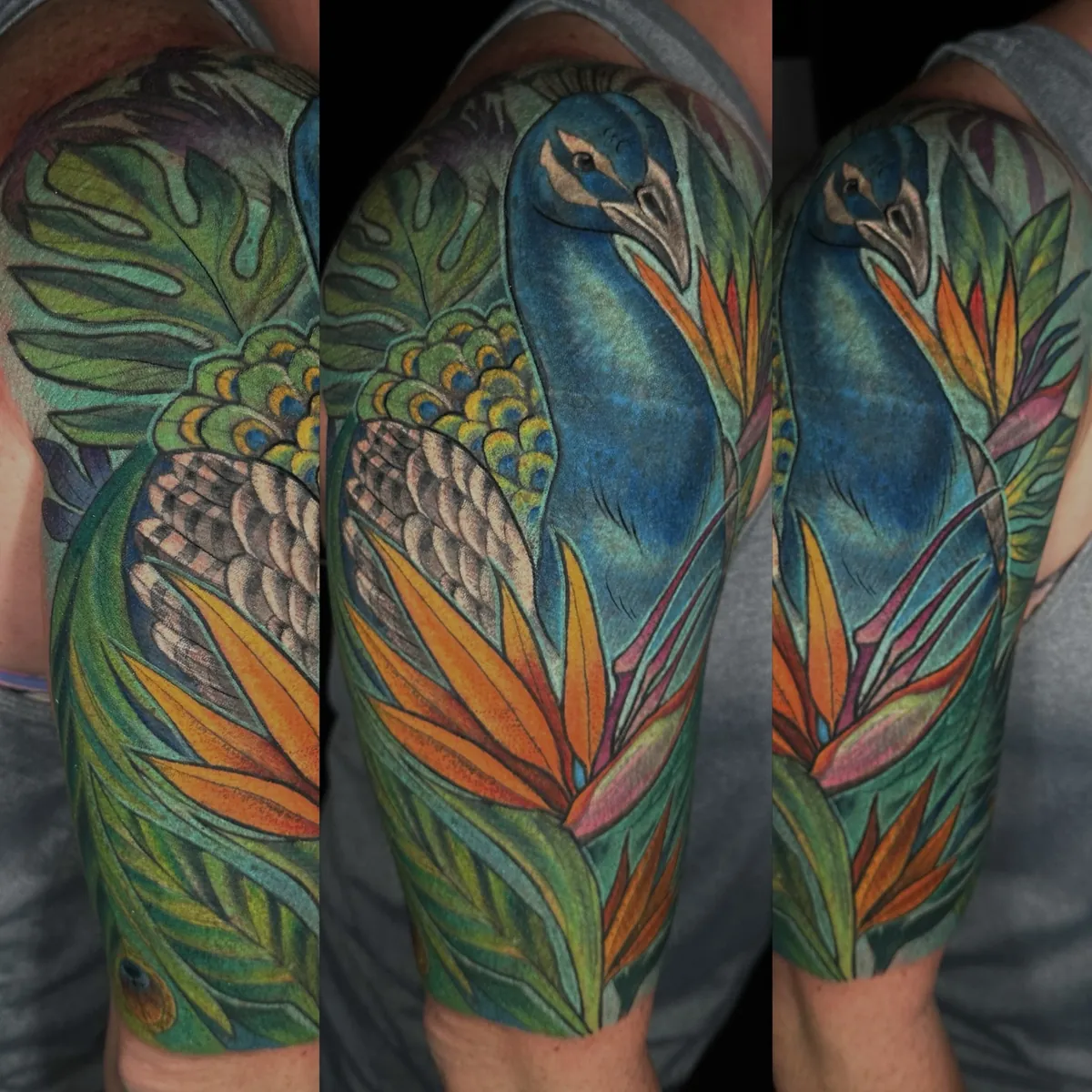
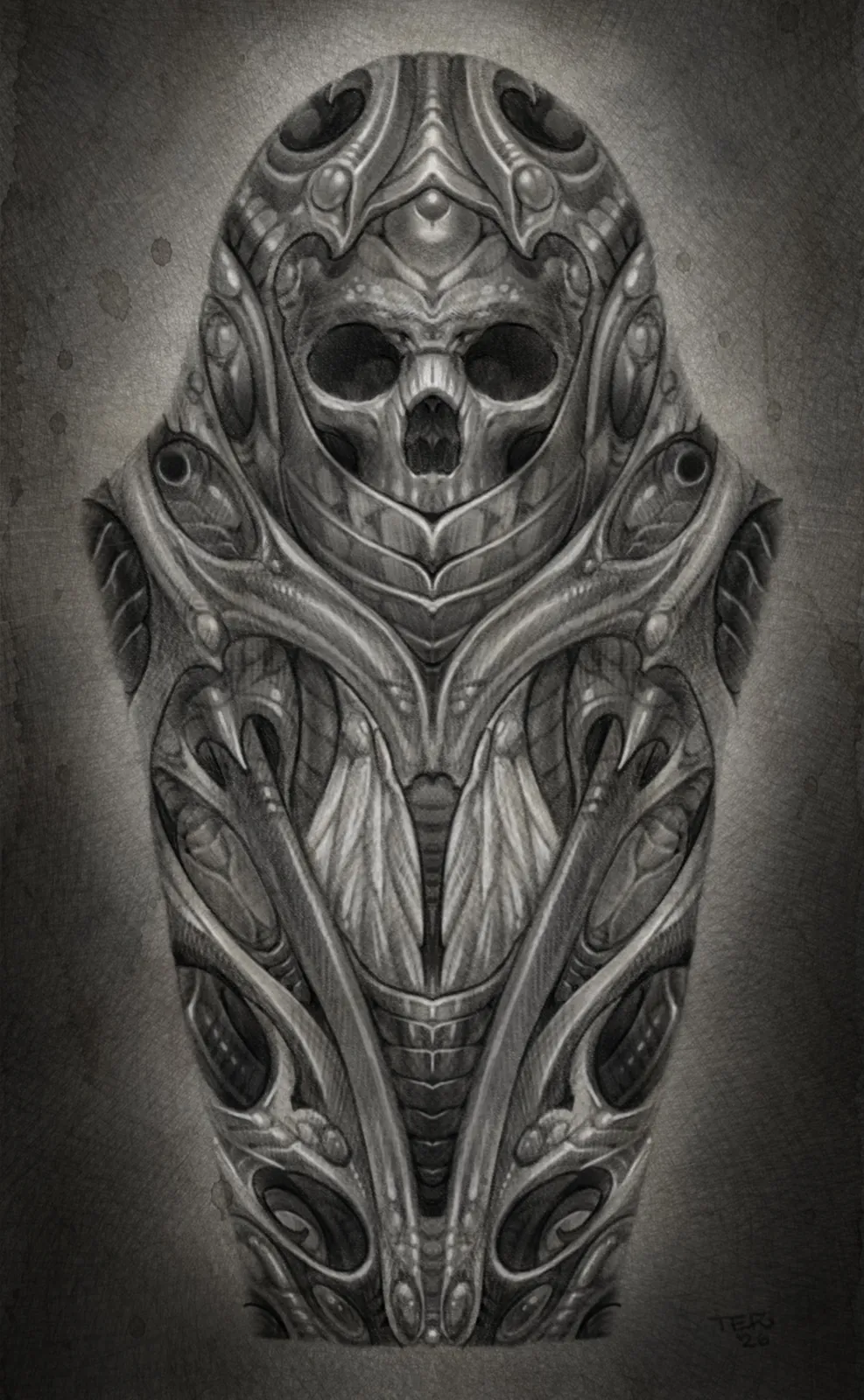
I also try to design every piece with a possible bodysuit in mind, even when it's small. A tattoo should work on its own, but it should also leave room for what might come next.
The artists I come back to most cover tattooing, painting and illustration. Alphonse Mucha is probably the biggest influence, especially the way he composed his posters. I also keep returning to Gustave Doré and Frank Frazetta. In tattooing, there's Ed Hardy, who I think of as the heart of American and modern tattooing, along with Shige, Filip Leu, Marcus Pacheco, Steve Moore, Aaron Cain and Rob Koss.
Painting alongside tattooing
I paint in oils and work on illustration, sculpture and digital pieces outside of tattooing. My paintings have been shown at Modern Eden in San Francisco and La Luz de Jesus in Los Angeles.
The two feed each other. Painting keeps me thinking about value, light and composition, and tattooing keeps me thinking about how an image has to hold up on a living, moving surface.
Final thoughts
A lot of what I know came from people who were generous with their time and from years of simply doing the work. I'm still learning, and I think that's the part of tattooing I enjoy most.
I'm usually booked about a year out. If you're thinking about a large custom piece, the best place to start is the booking page.