Remington Tattoo · San Diego, CA
Biomechanical tattoos, built to live under the skin.
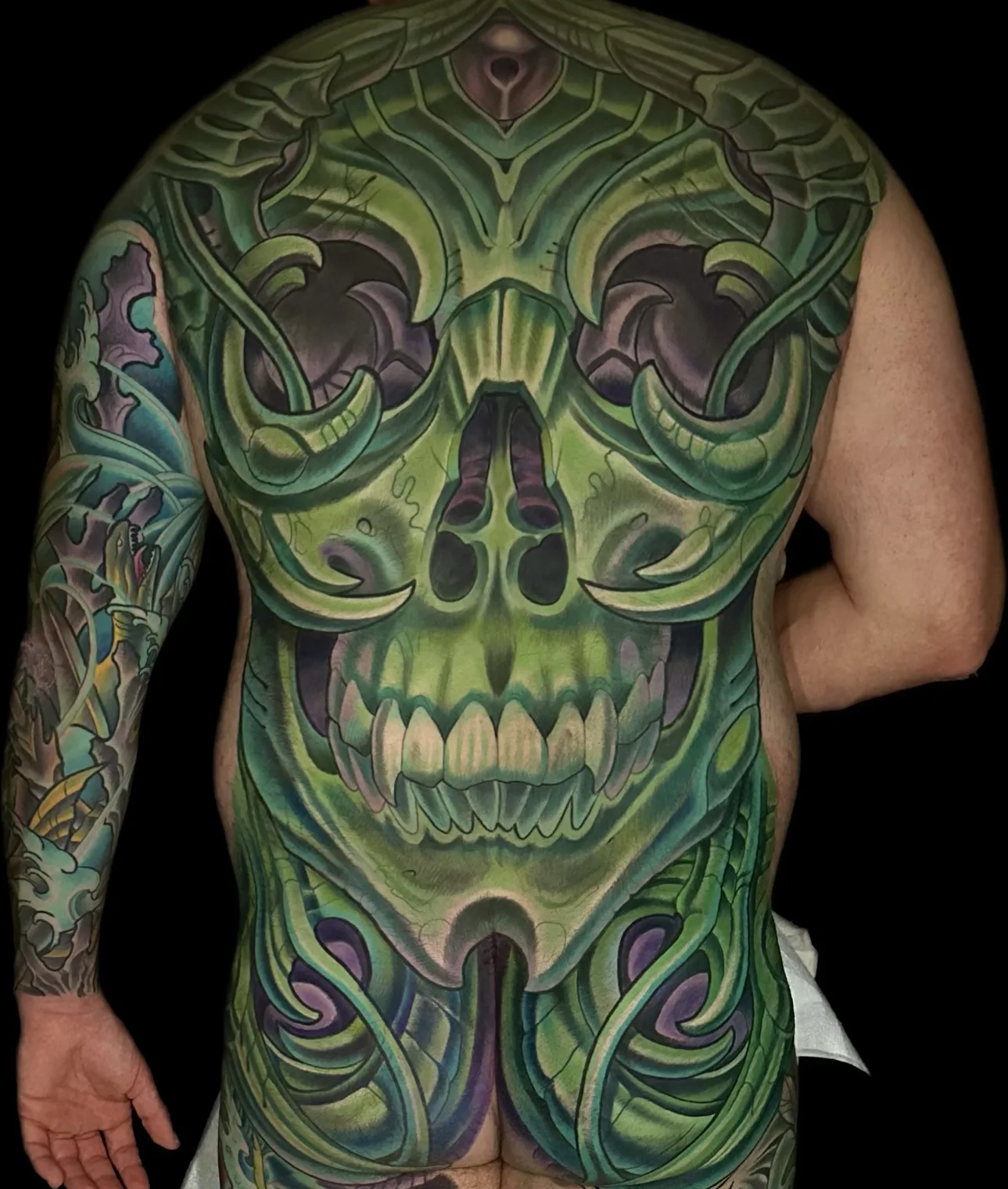
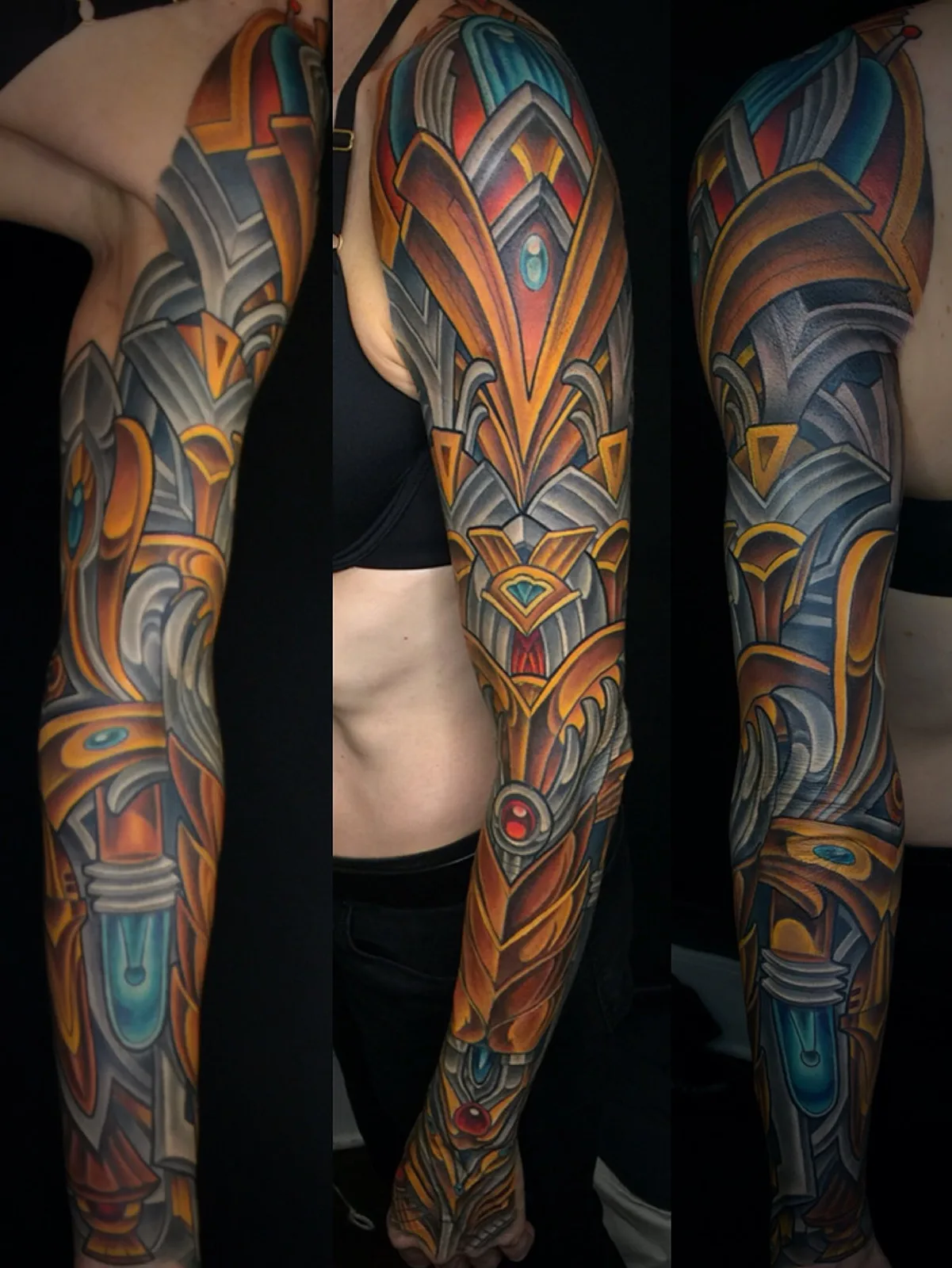
Biomechanical and bio-organic work is Terry Ribera's home ground. Mechanical and organic forms interwoven into compositions that look like they have always existed beneath the surface — architectural, precise, and drawn from scratch for the body they wrap. His mastery of the style earned him a place in The Biomech Encyclopedia by Guy Aitchison.
“A strong, identifiable silhouette is everything. It's what gives a design its presence and makes it feel intentional rather than incidental.”Terry Ribera — Design Philosophy
The Style
What makes biomechanical work different
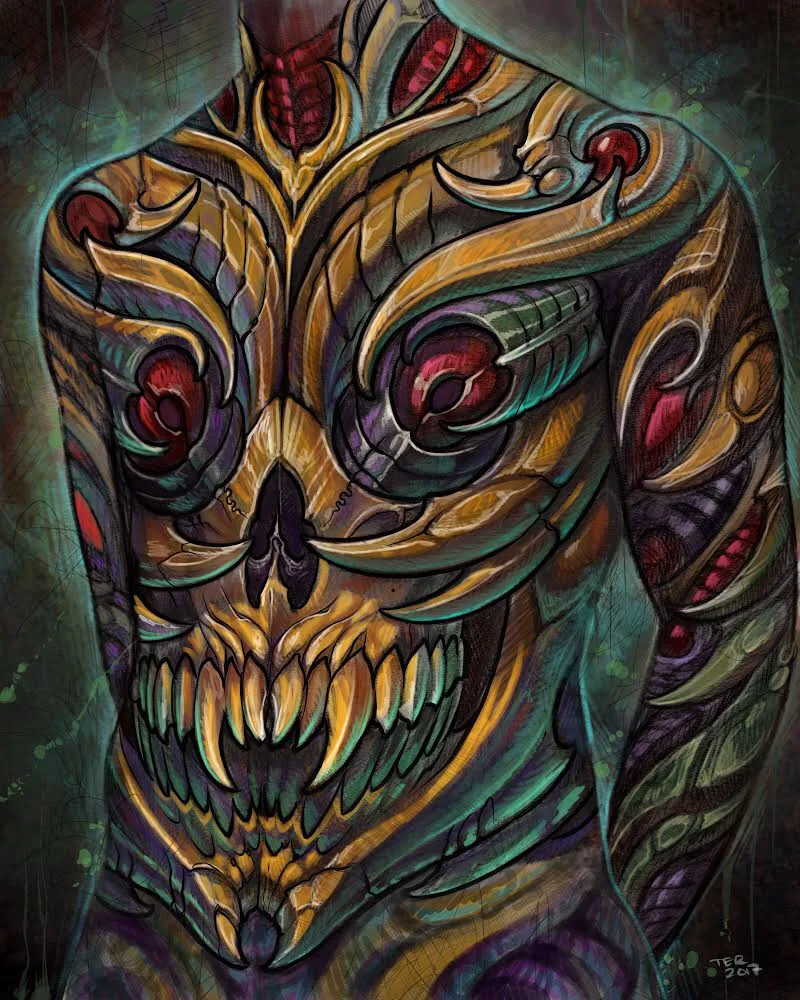
Most tattoo styles sit on top of the skin. Biomechanical work is designed to look like it lives underneath it. Gears, pistons, tubes, and exoskeleton are fused with bone, tendon, and muscle, so the finished piece reads as though the surface has been peeled back to reveal the machinery inside. It's an illusion of structure — architectural, precise, and unforgiving of shortcuts.
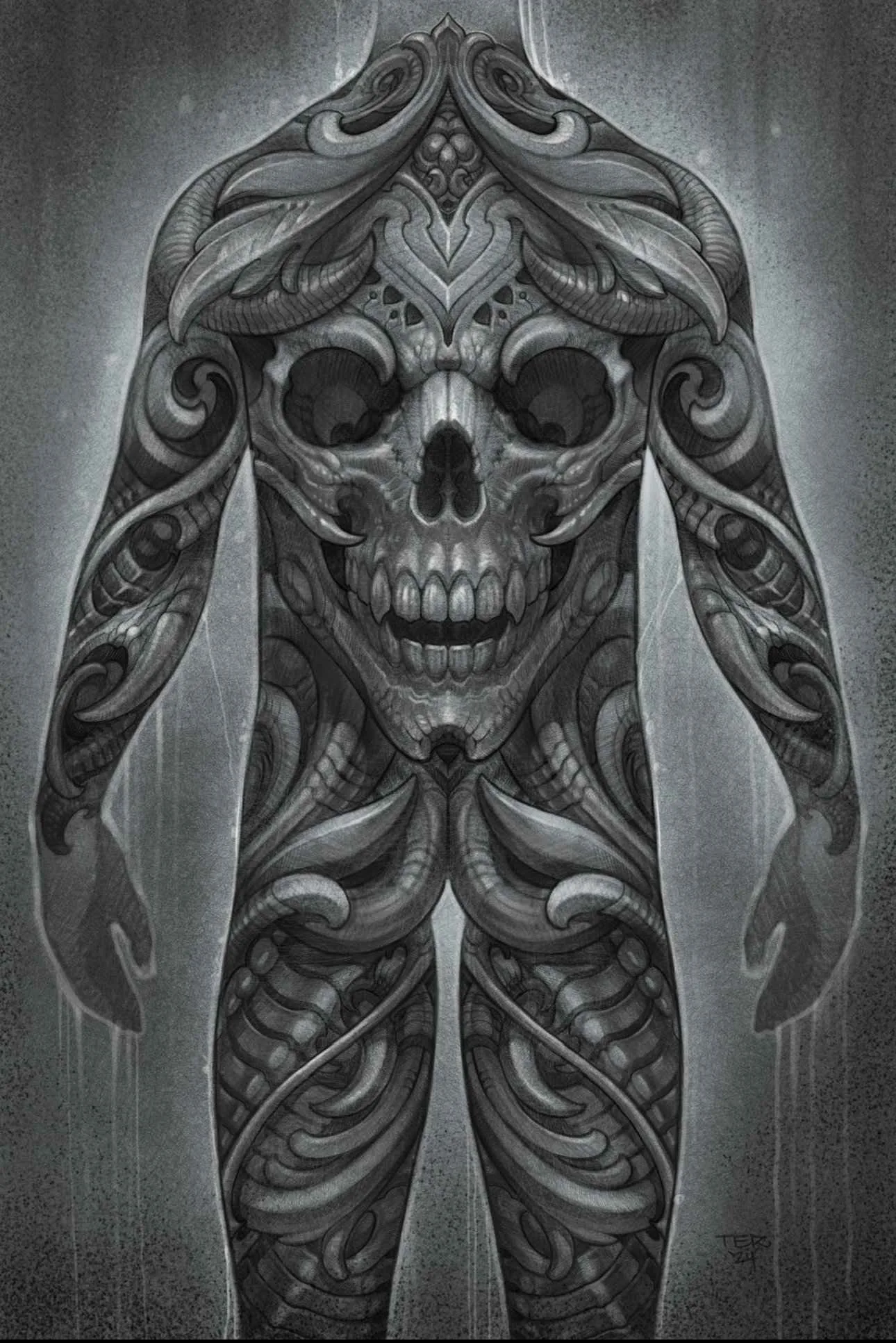
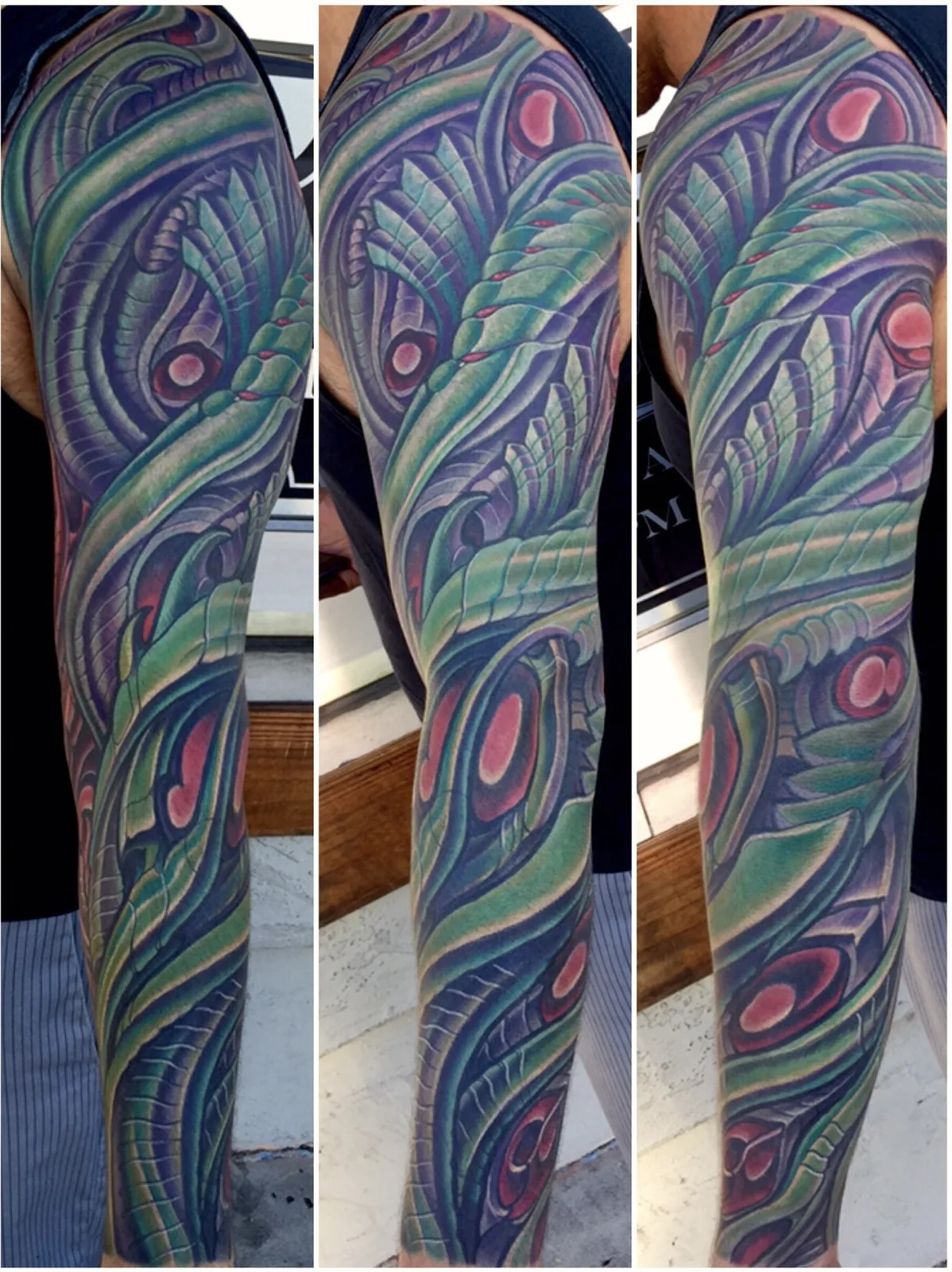
Bio-organic is its sibling language: the same underlying idea rendered with natural forms — bone, root, scale, and flora — instead of steel. Terry works fluidly across both, and many pieces blend the two. Either way, the whole thing lives or dies on drawing and flow, and holds up in black & grey or full color. Because it wraps and connects so naturally, biomech is also some of the strongest material for cover-ups and for growing into a full body suit.

Recognized Work
Written into the reference
Terry's biomechanical design earned him a place in The Biomech Encyclopedia by Guy Aitchison — a 486-page large-format reference that's considered the definitive text on the style, covering its full spectrum alongside some of the artists who shaped it.
He also built The Biomech Kit for Procreate: body templates, flow and flash stamps, bone and exoskeleton brushes, dual-color repeaters, and five digital palettes — over 100 components, all drawn from the same process he uses in the studio.
The Approach
How a biomech piece comes together
Every piece follows the same sequence Terry has refined over 25 years and roughly 24,000 hours of tattooing. It's built to remove guesswork before the first session and to make sure the design still reads decades from now.
Concept & drawing
It starts with a real conversation. Drawing consultations run 2–3 hours with you in the room — Terry develops the initial biomech composition with the client present, not behind a closed door. Everything is drawn from scratch for you; nothing is pulled off a wall or generated by AI.
Designed for the body
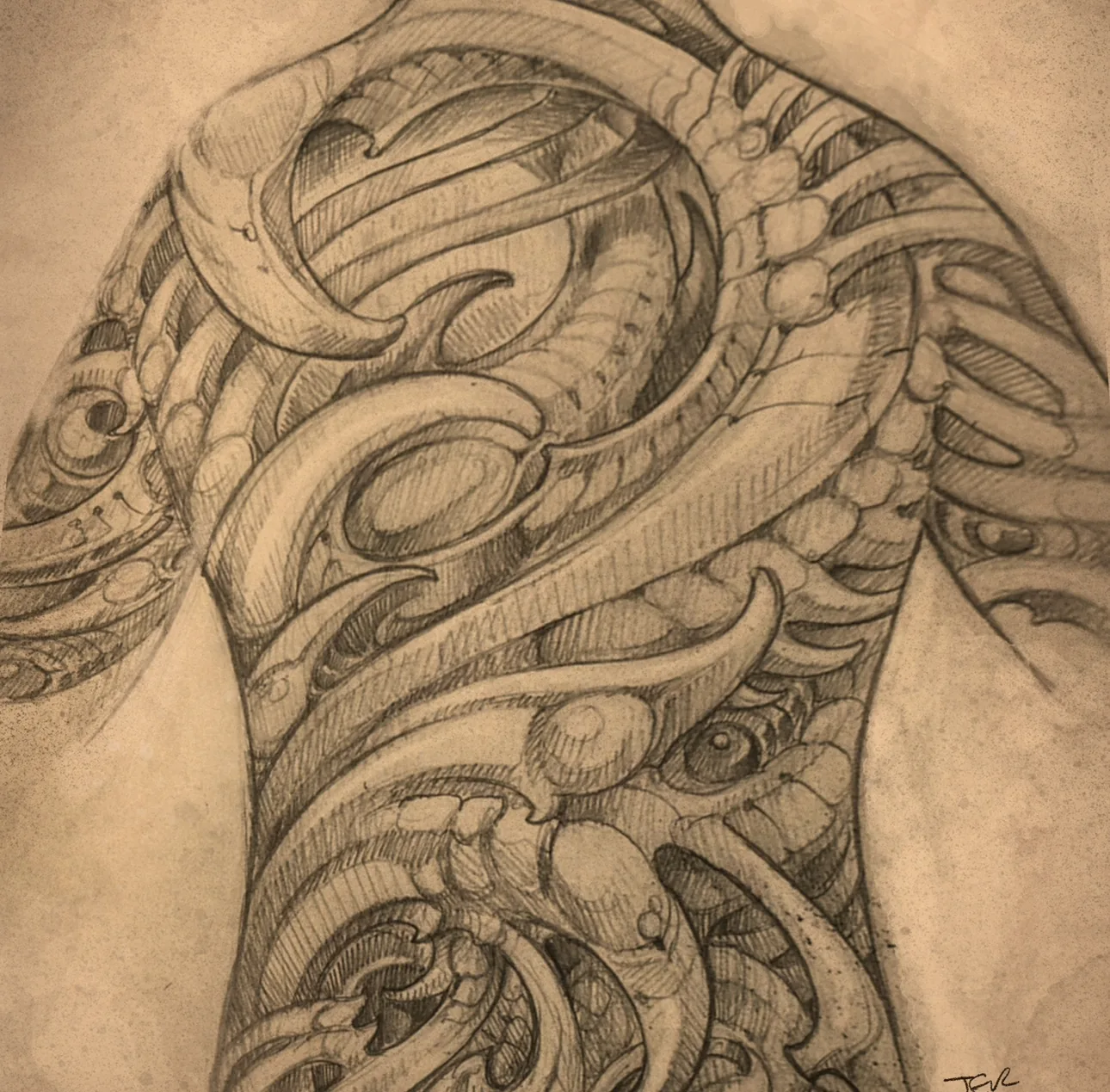
Biomech only works when the forms follow real anatomy. Terry maps the composition to your muscle, joints, and movement, so the machinery appears to run with the body instead of sitting on it. Existing tattoos, if you have them, are factored into the flow from the first sketch.
The black foundation
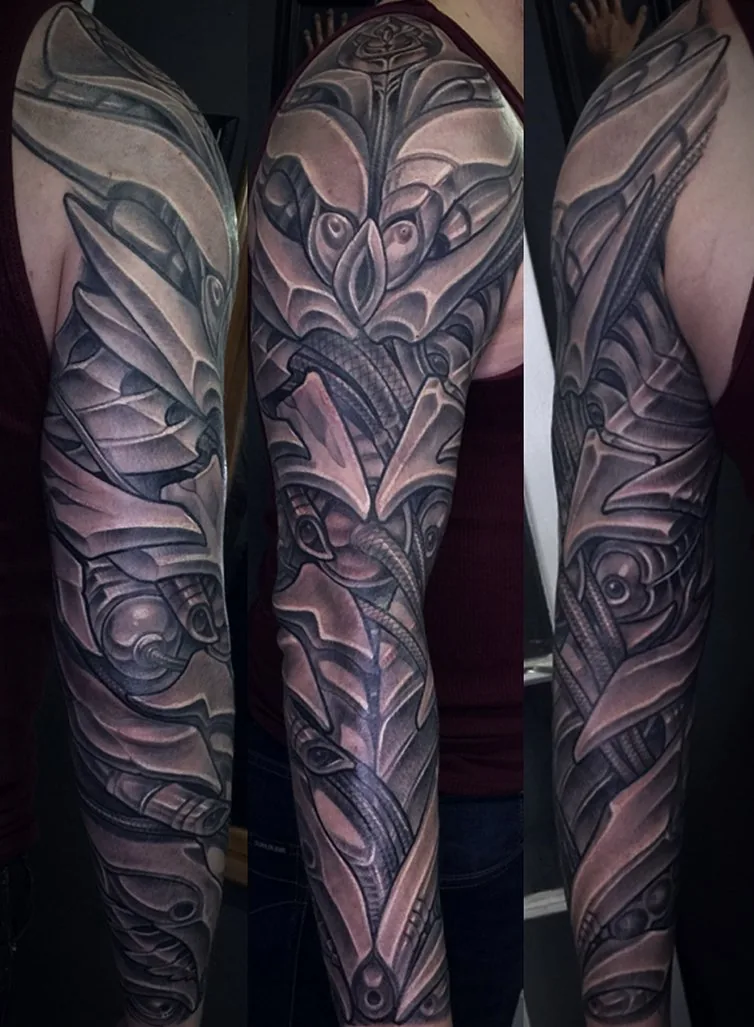
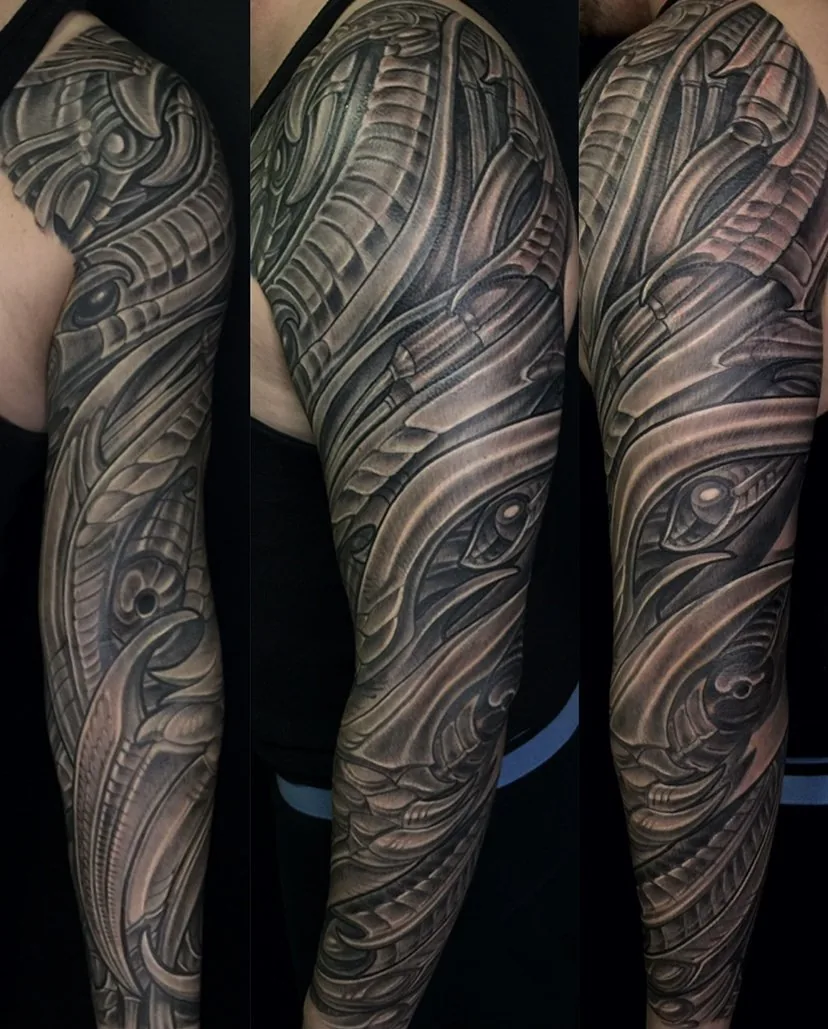
Longevity is the foundation of everything. Linework and shadow structure — the black base — are established first, before any color or lighter values. That's what gives biomech its depth and lets it hold up in 10, 20, and 30 years, not just on day one. It's also why the style reads so well in pure black & grey.
Color, when it's color
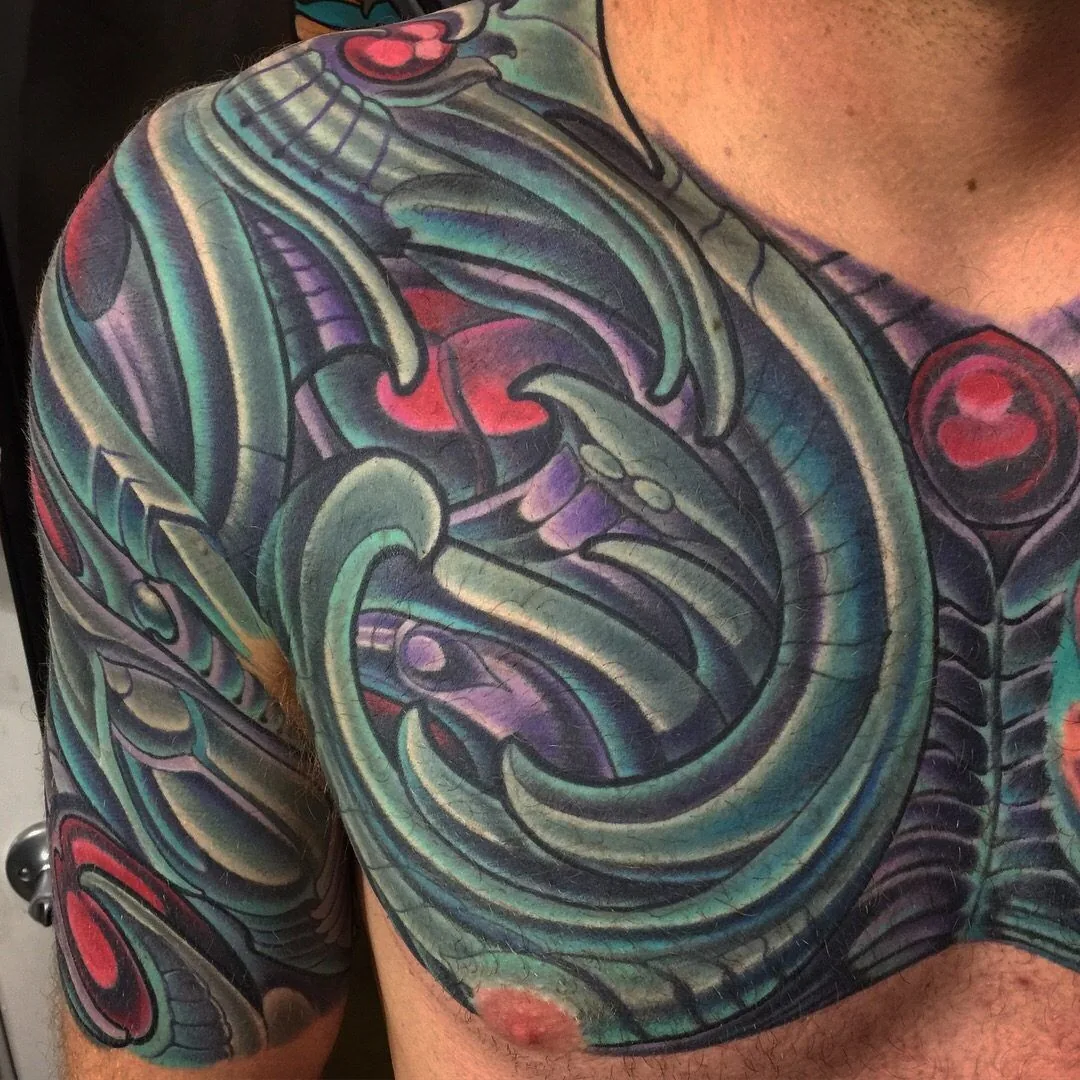
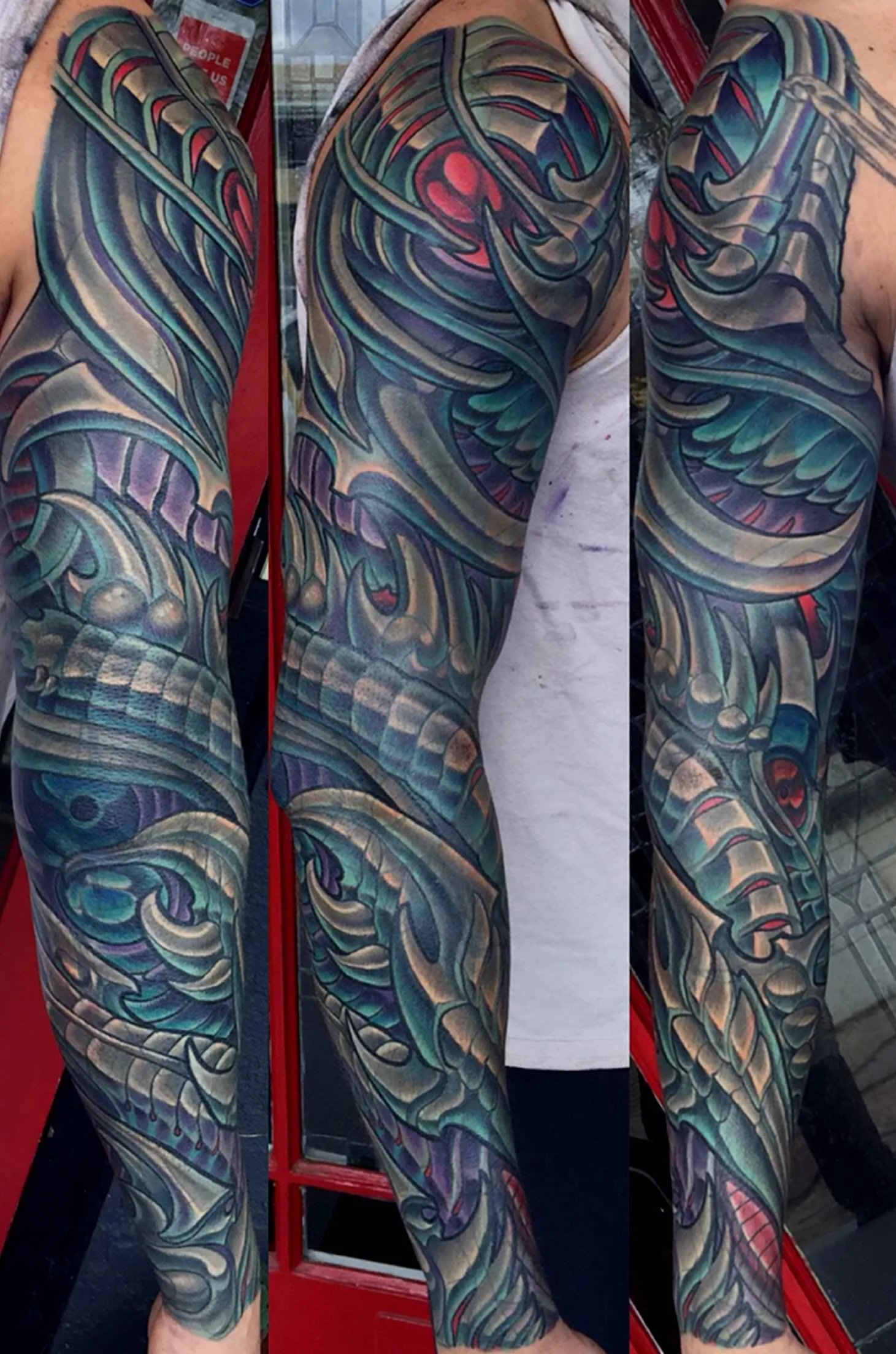
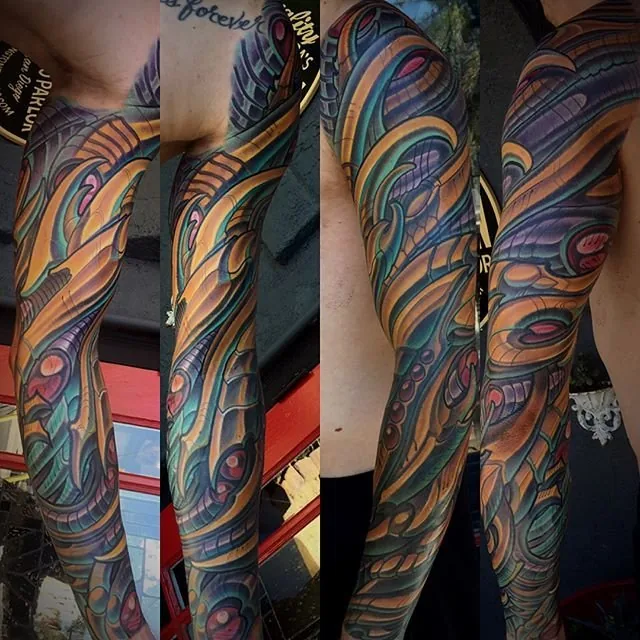
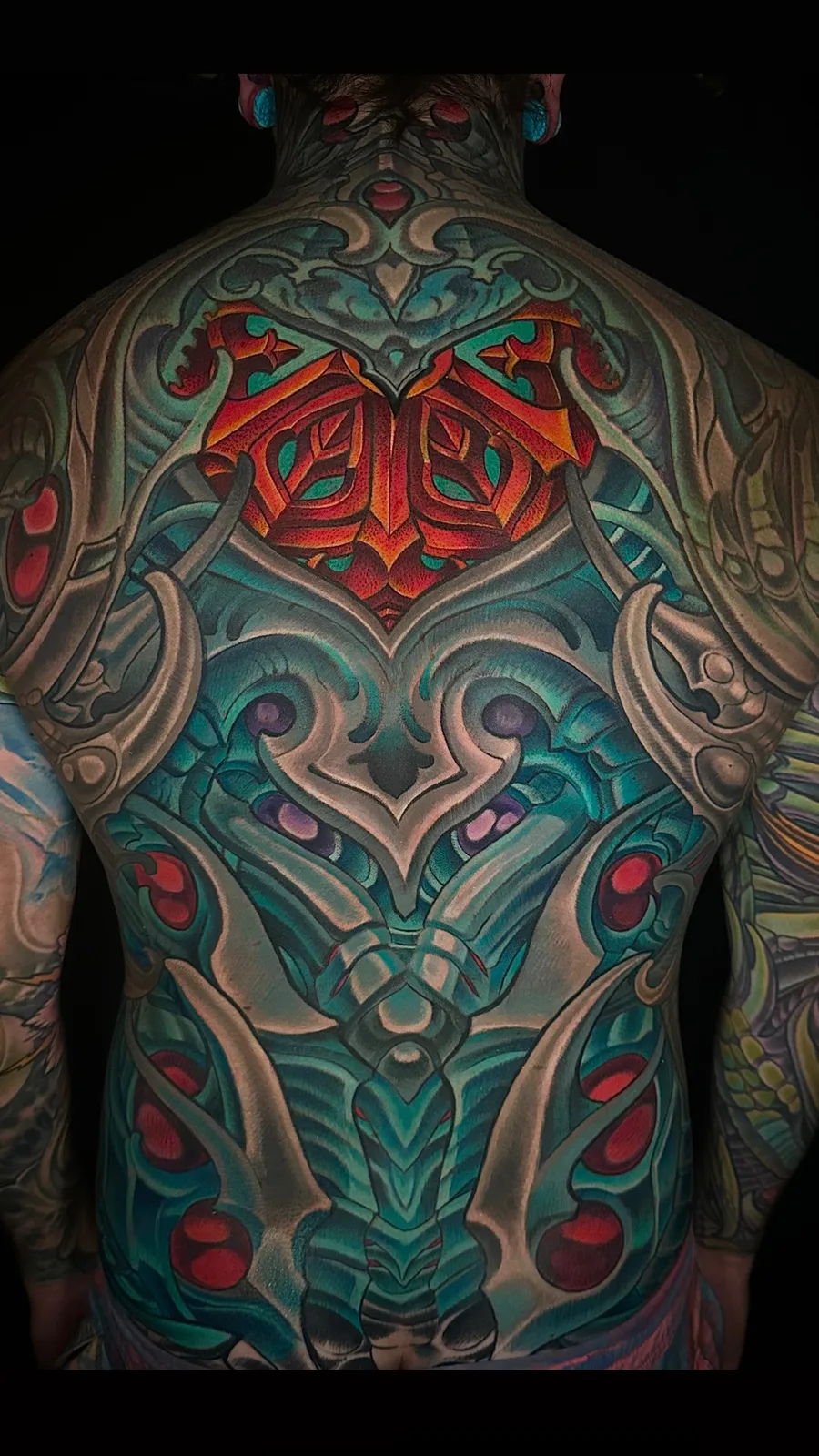
When a piece calls for color, it's chosen with a real understanding of how ink behaves in skin over decades — saturated, luminous, and built on that same black structure so it never goes muddy. Whether it lands teal and silver or gold and orange, the goal is a piece that still reads from across the room years later.
On Skin
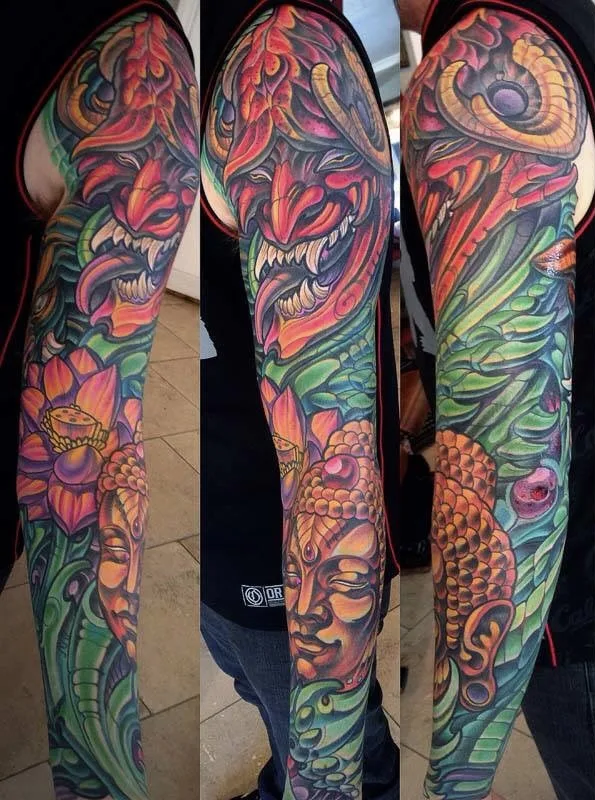
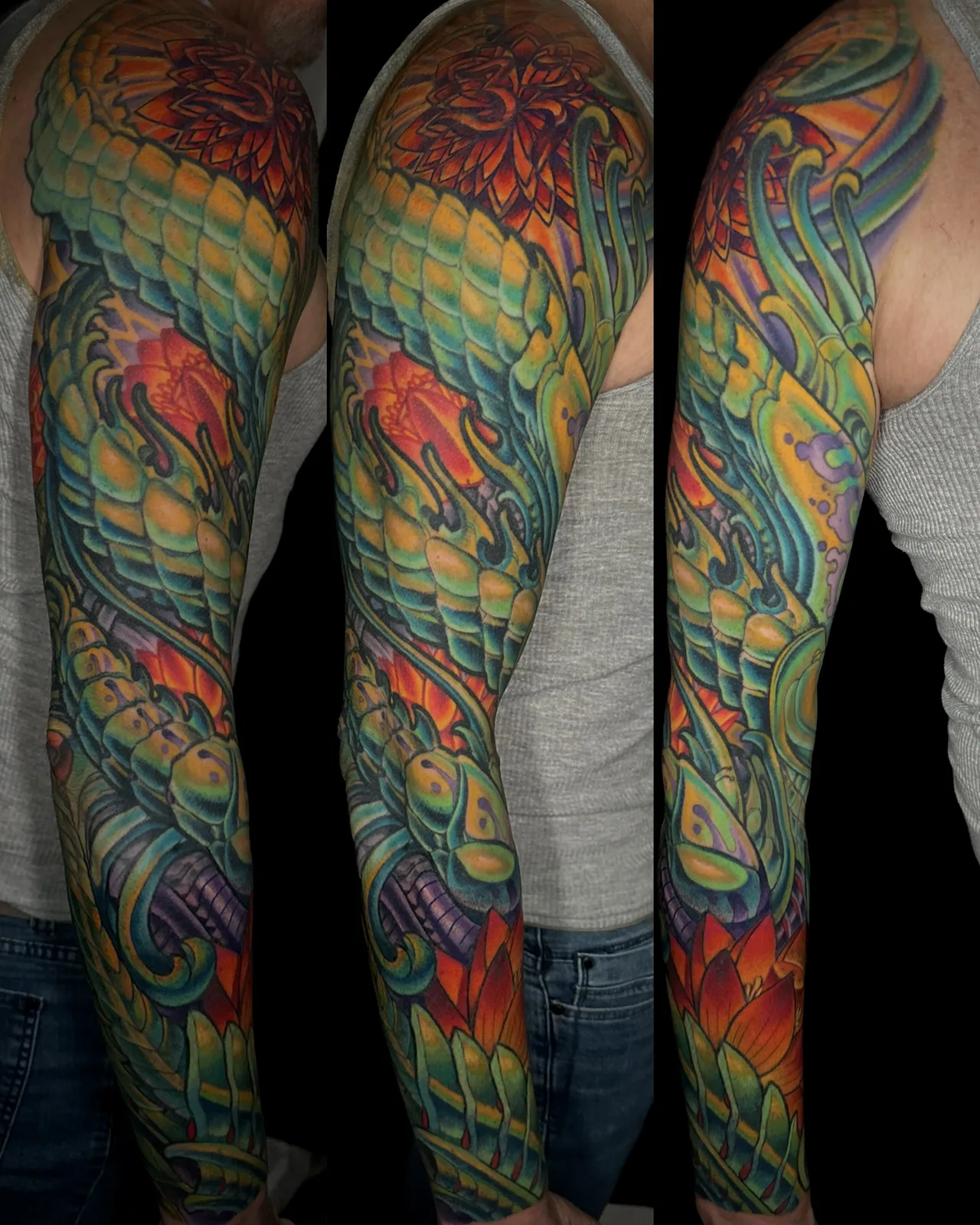
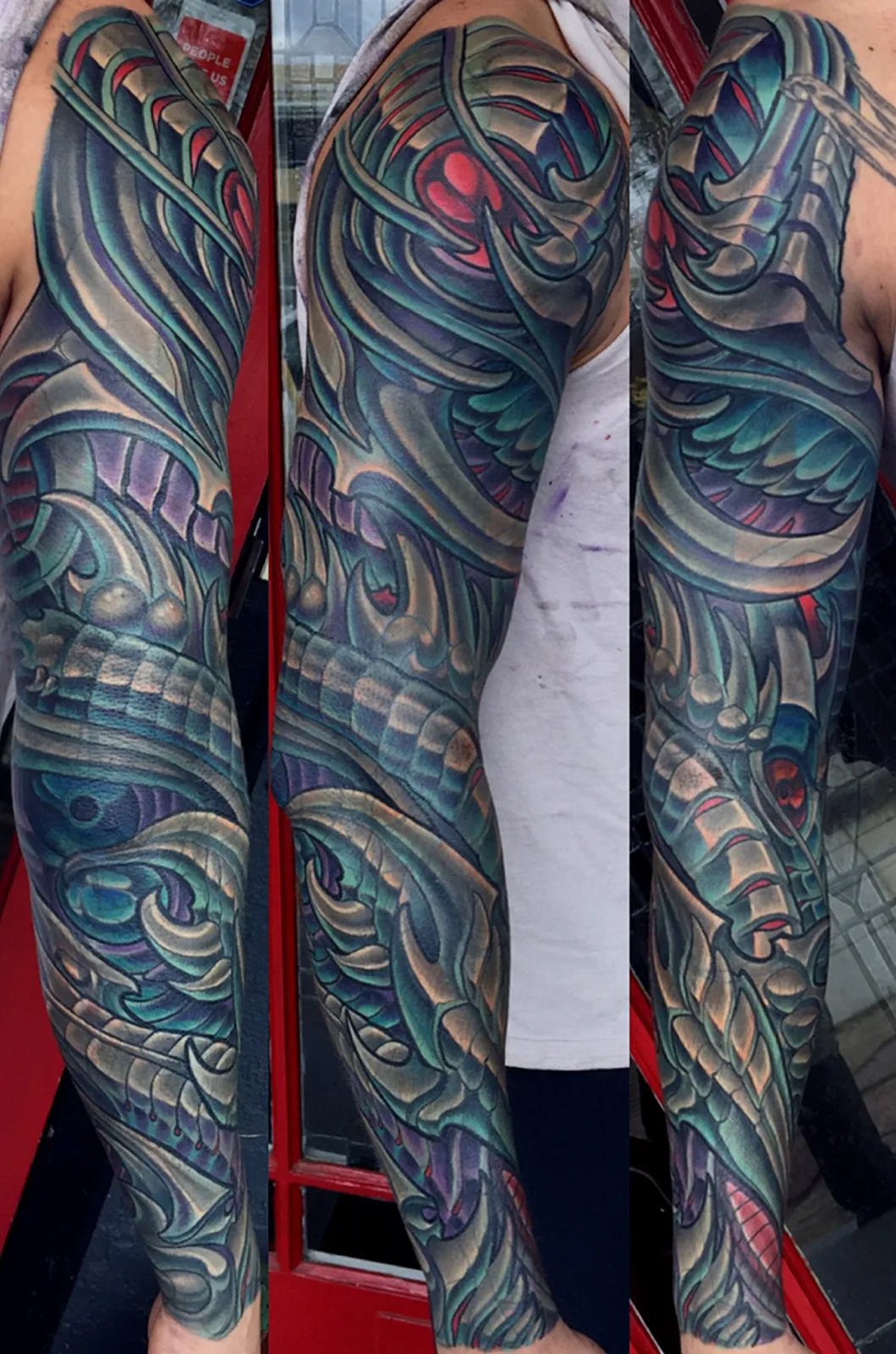
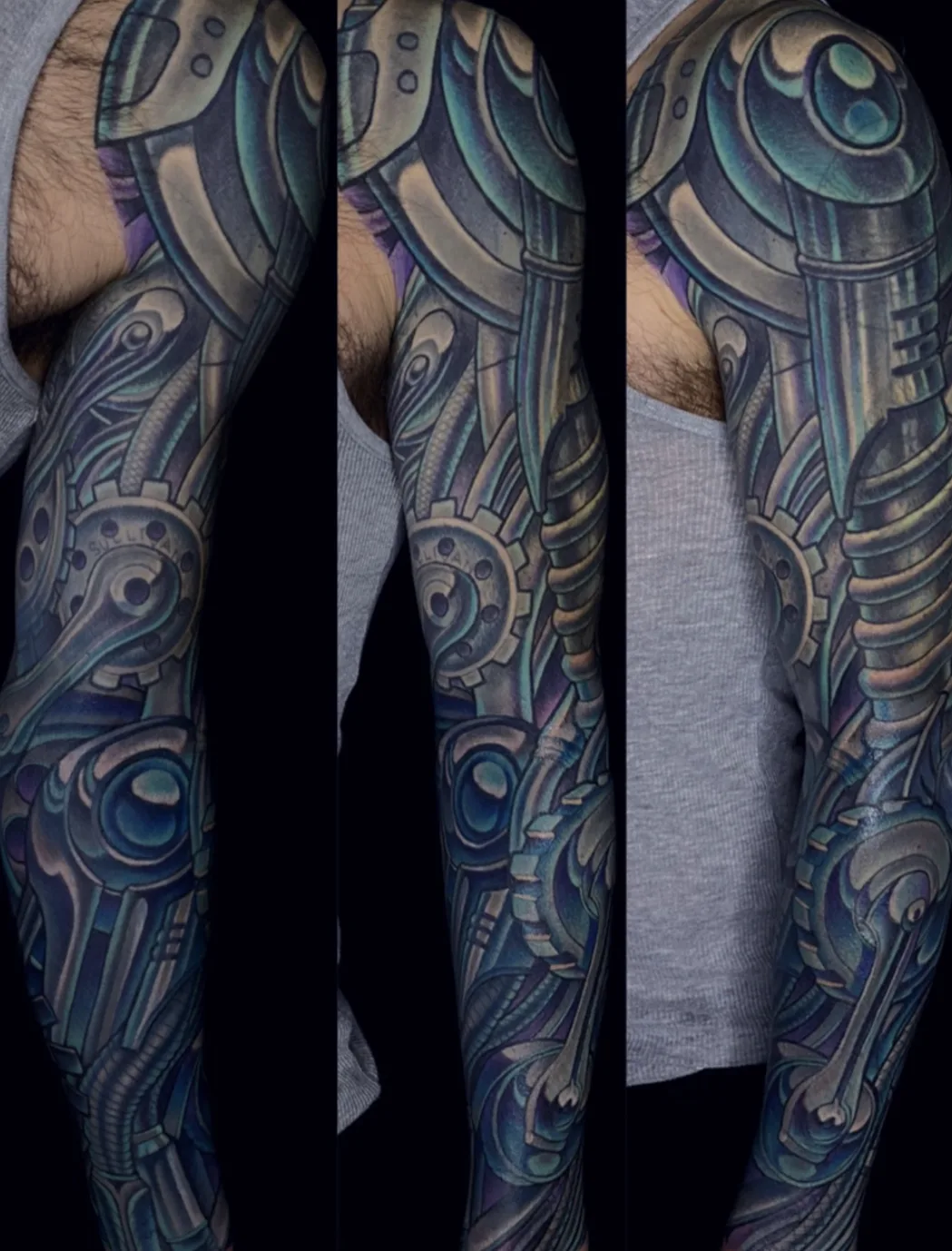
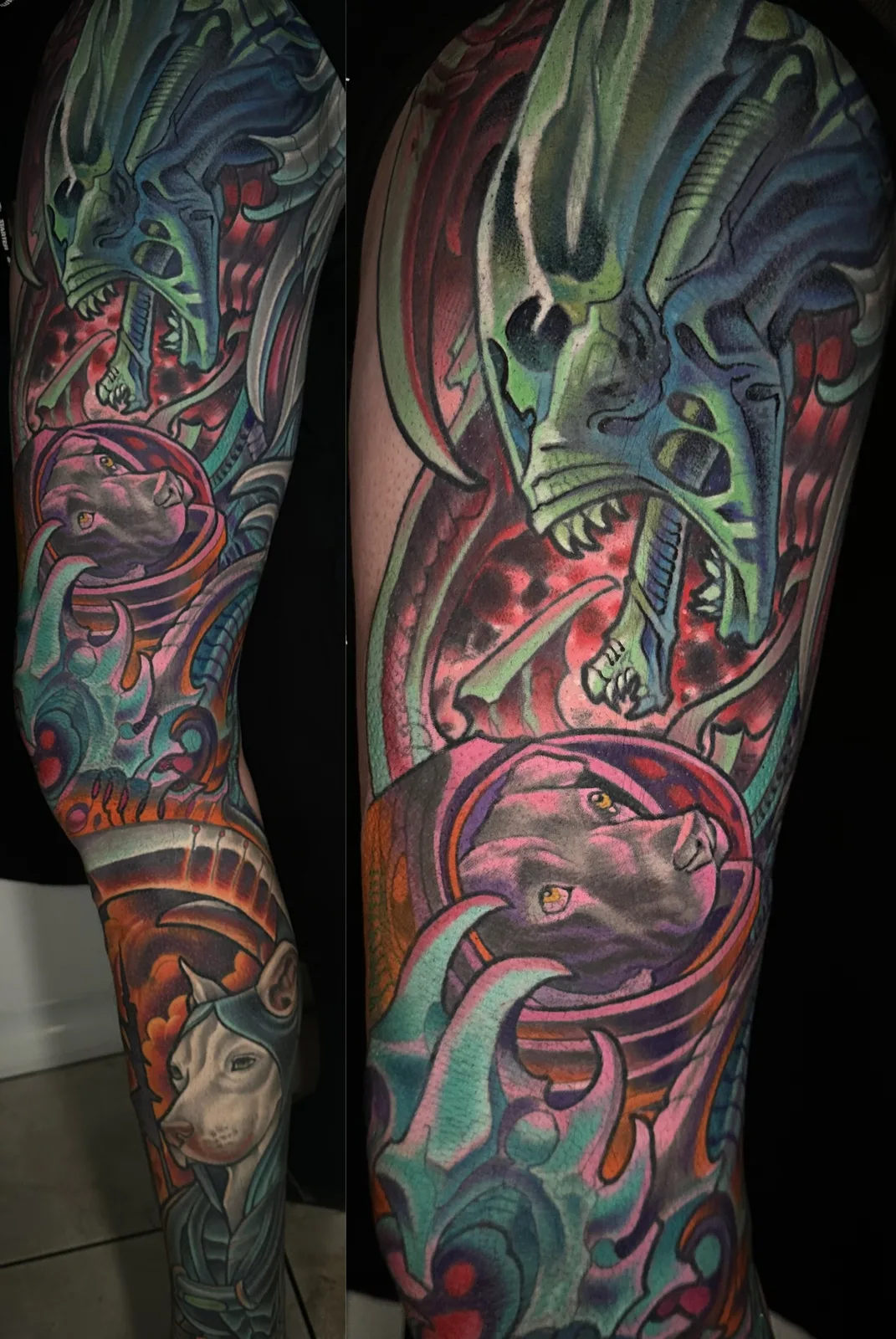
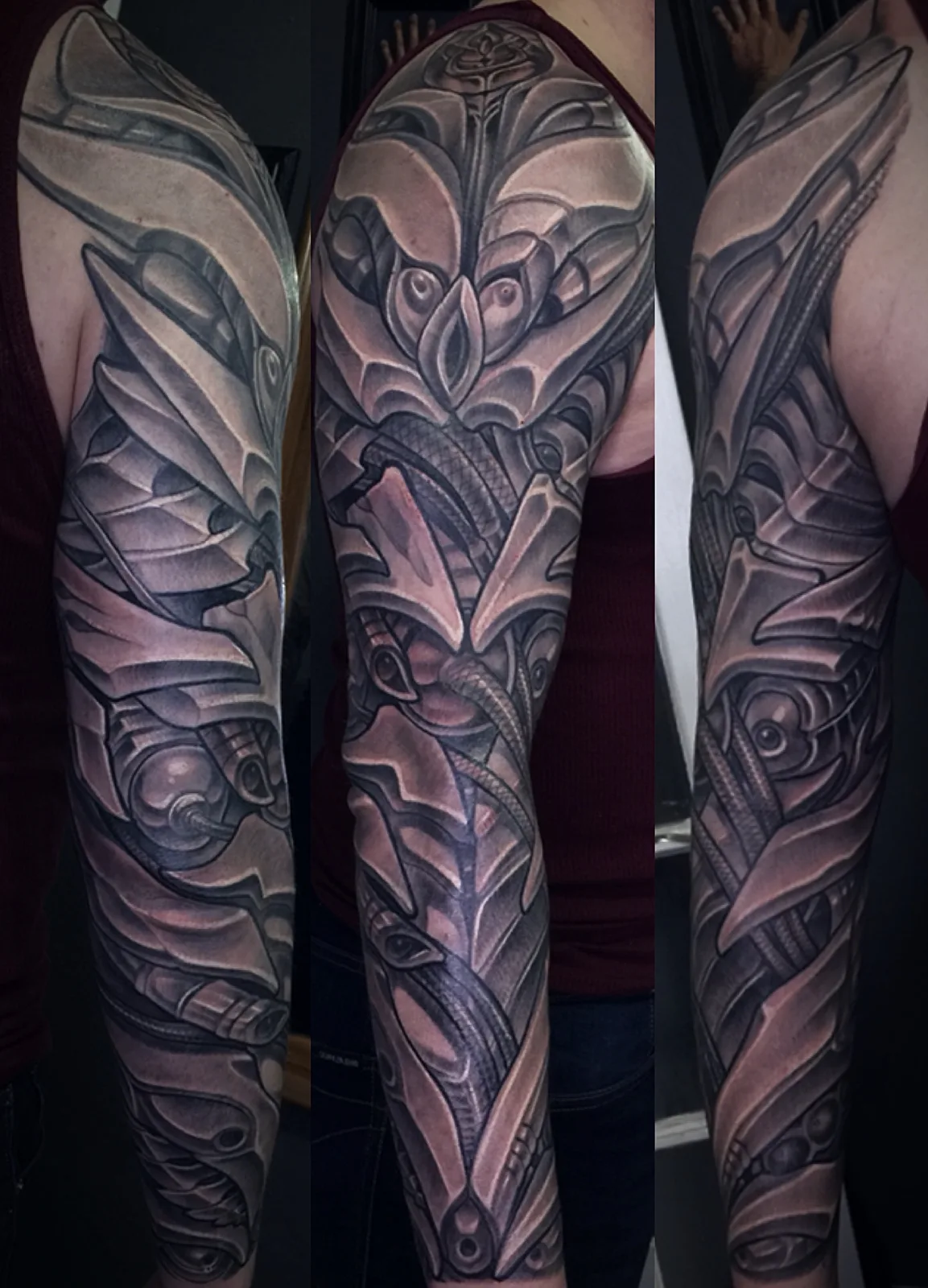
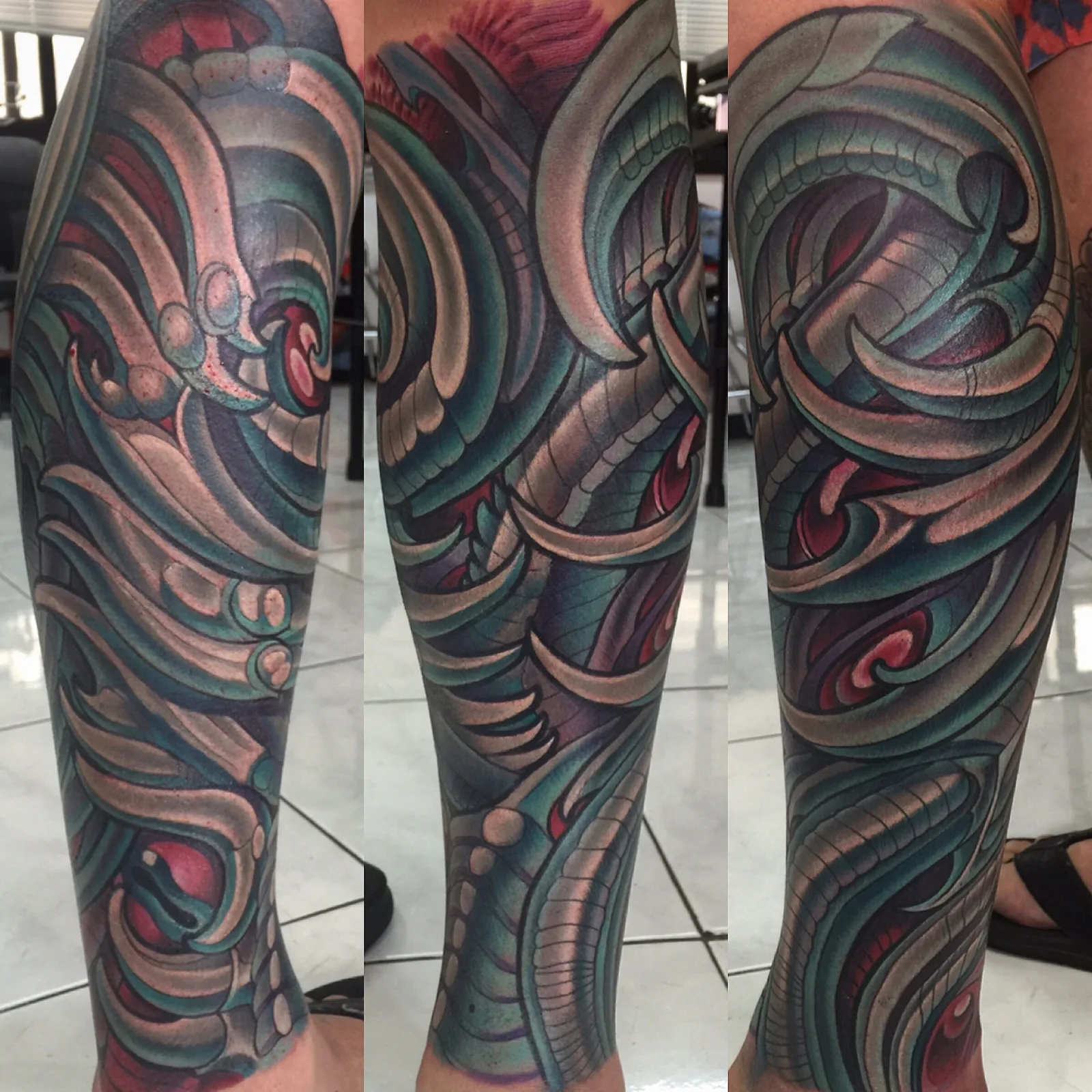
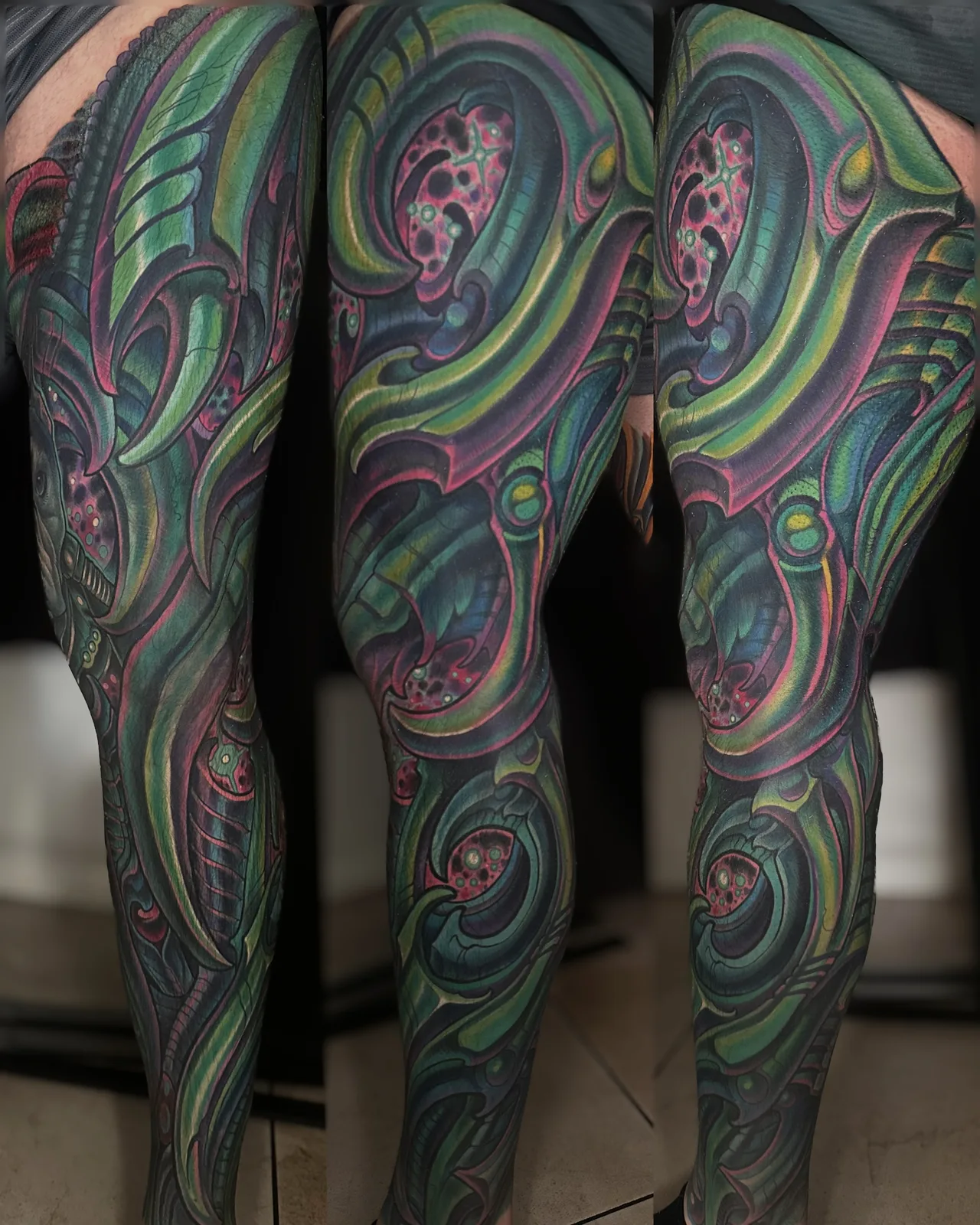
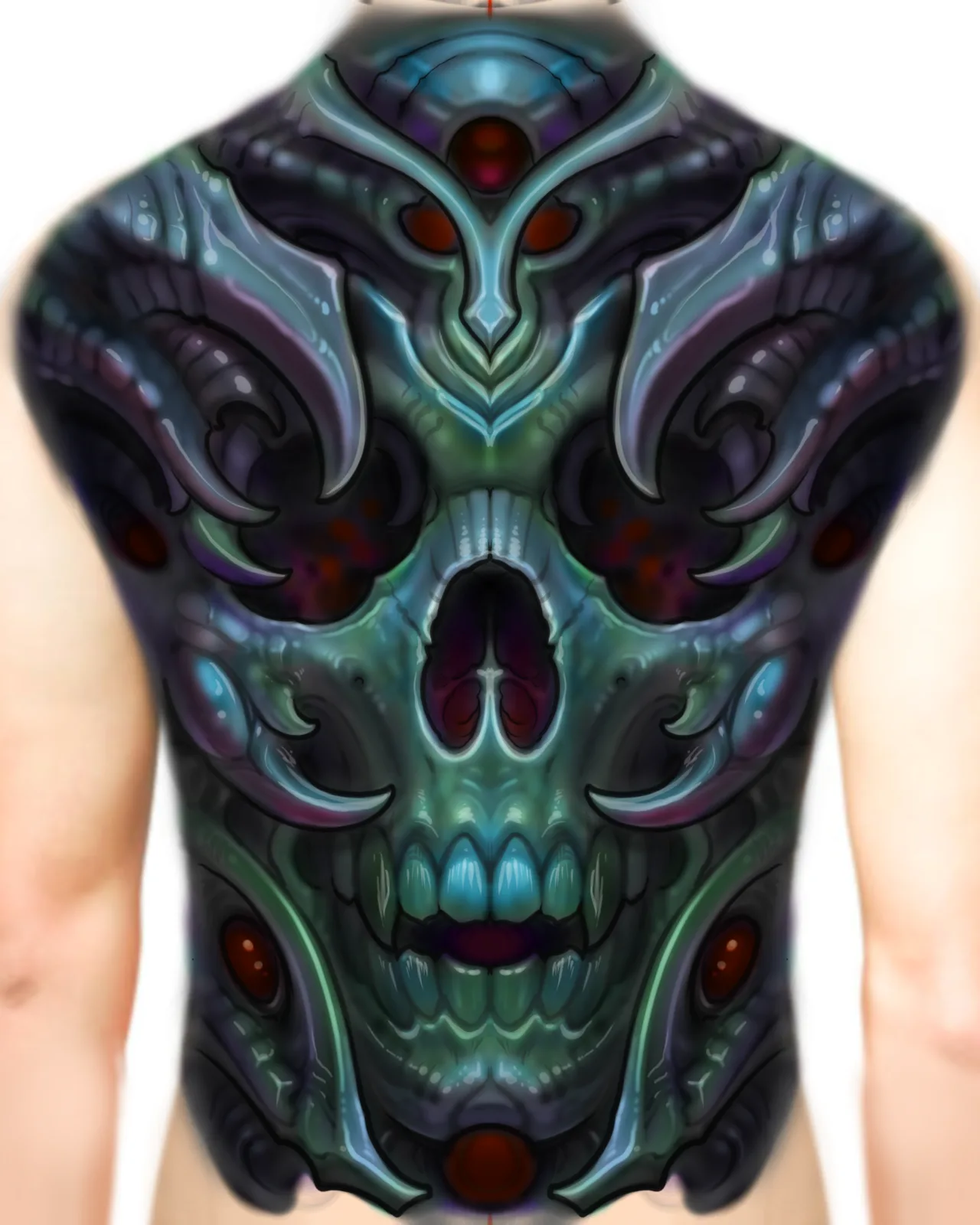
Biomechanical & bio-organic, on real clients
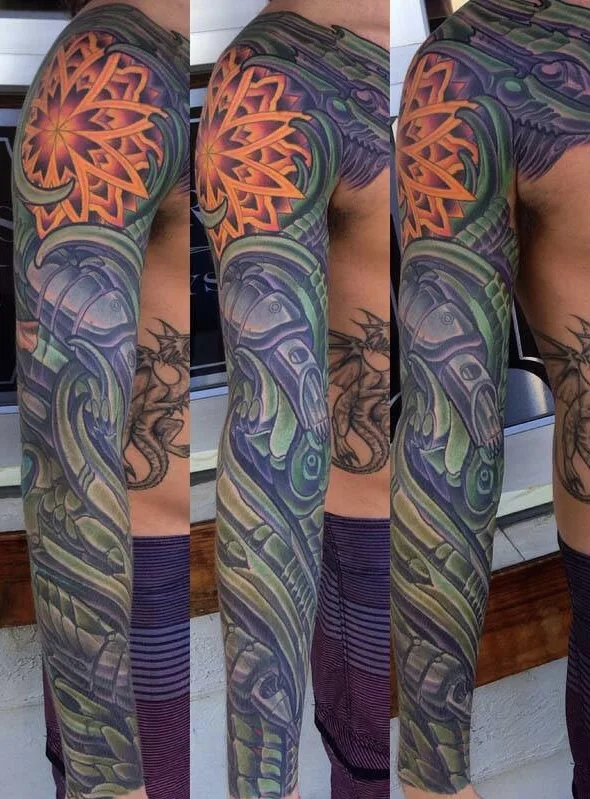
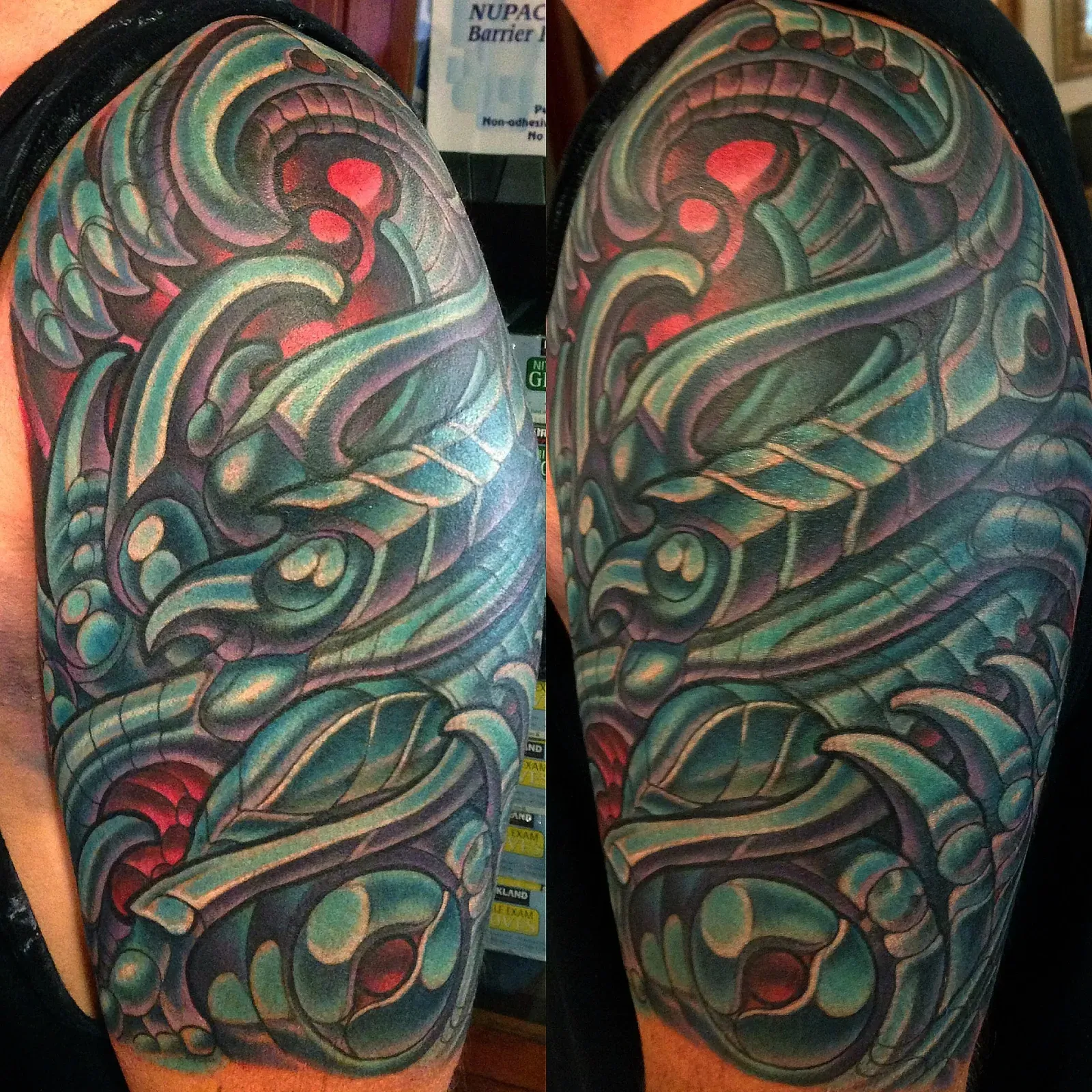
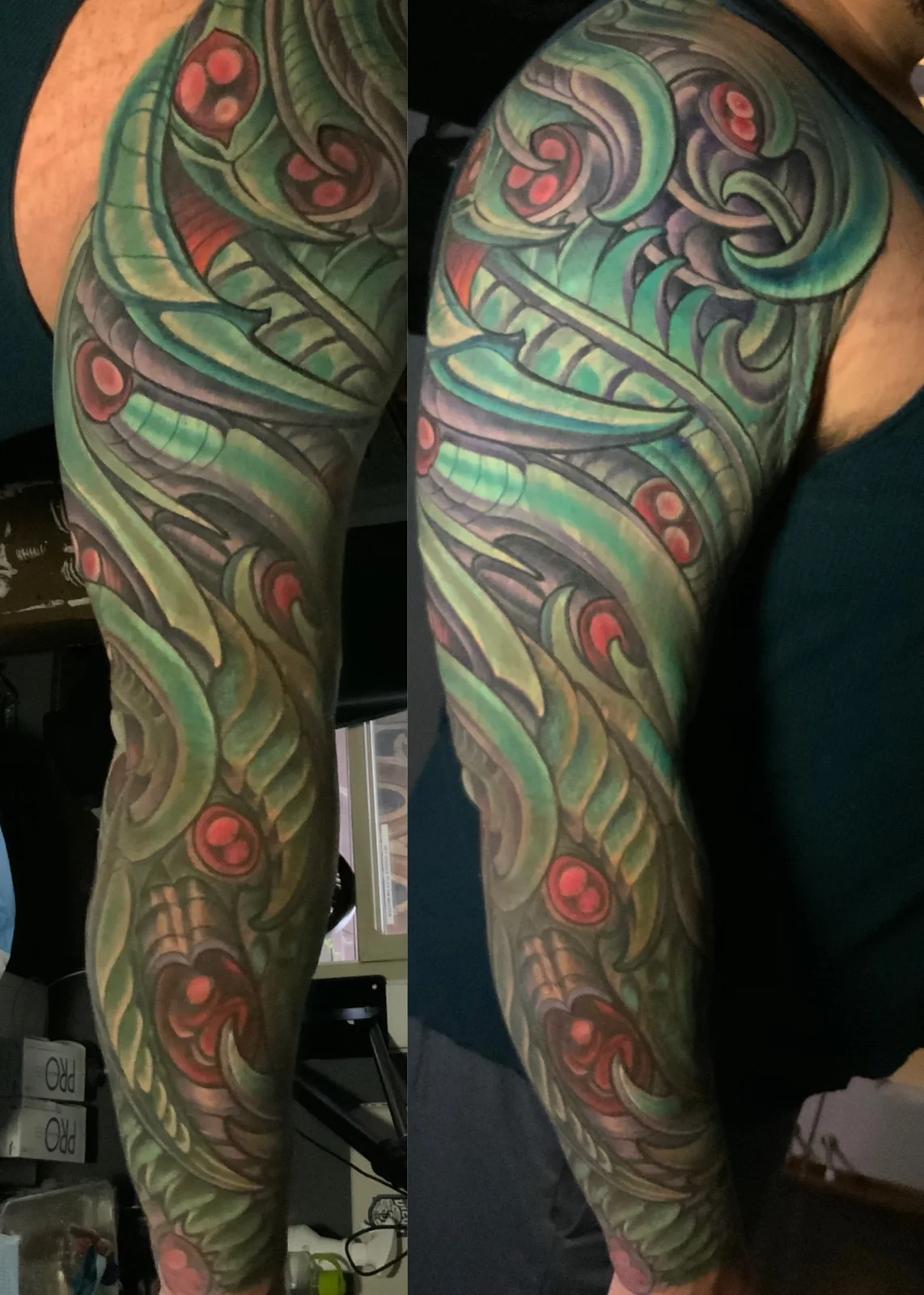
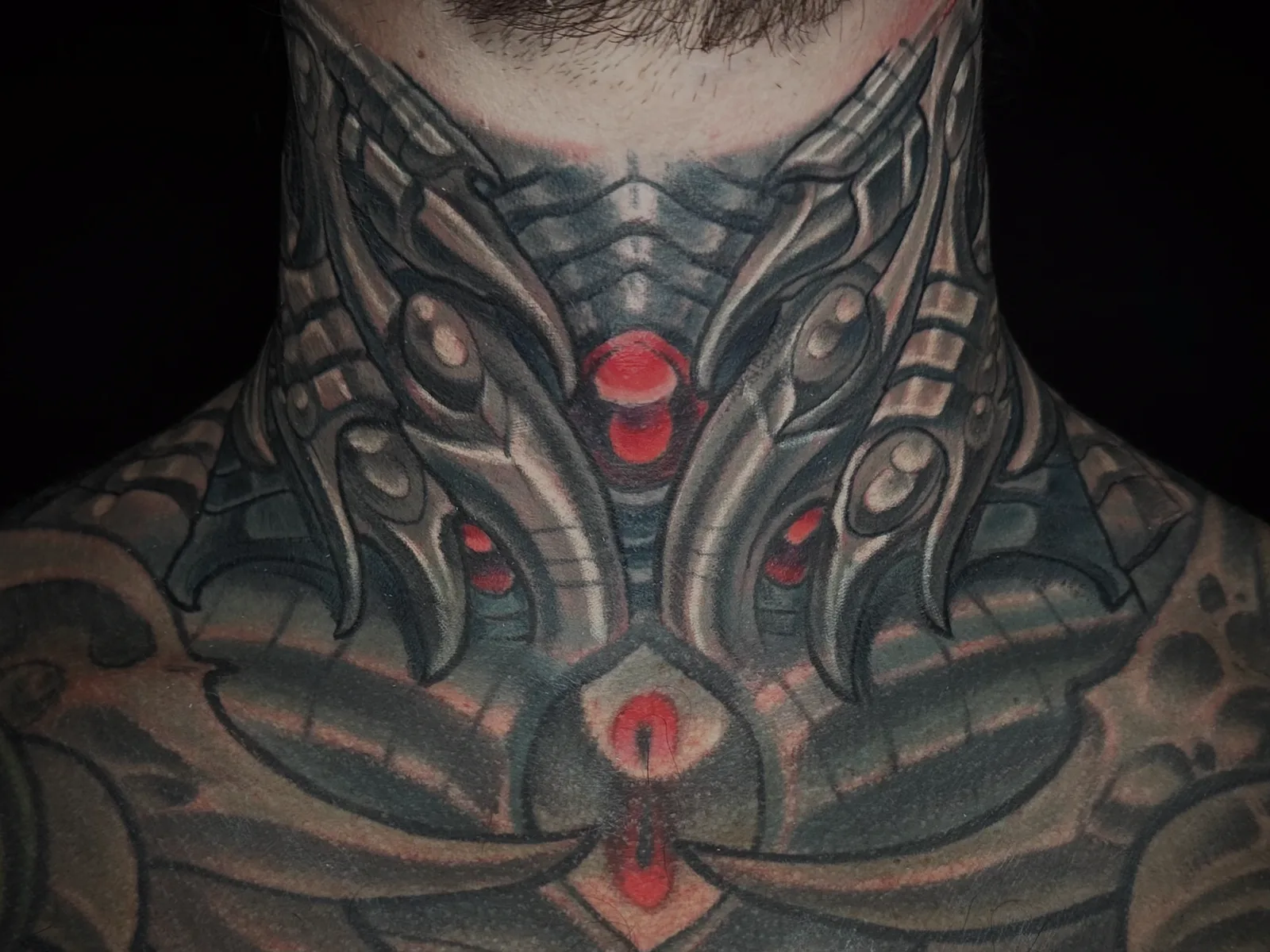
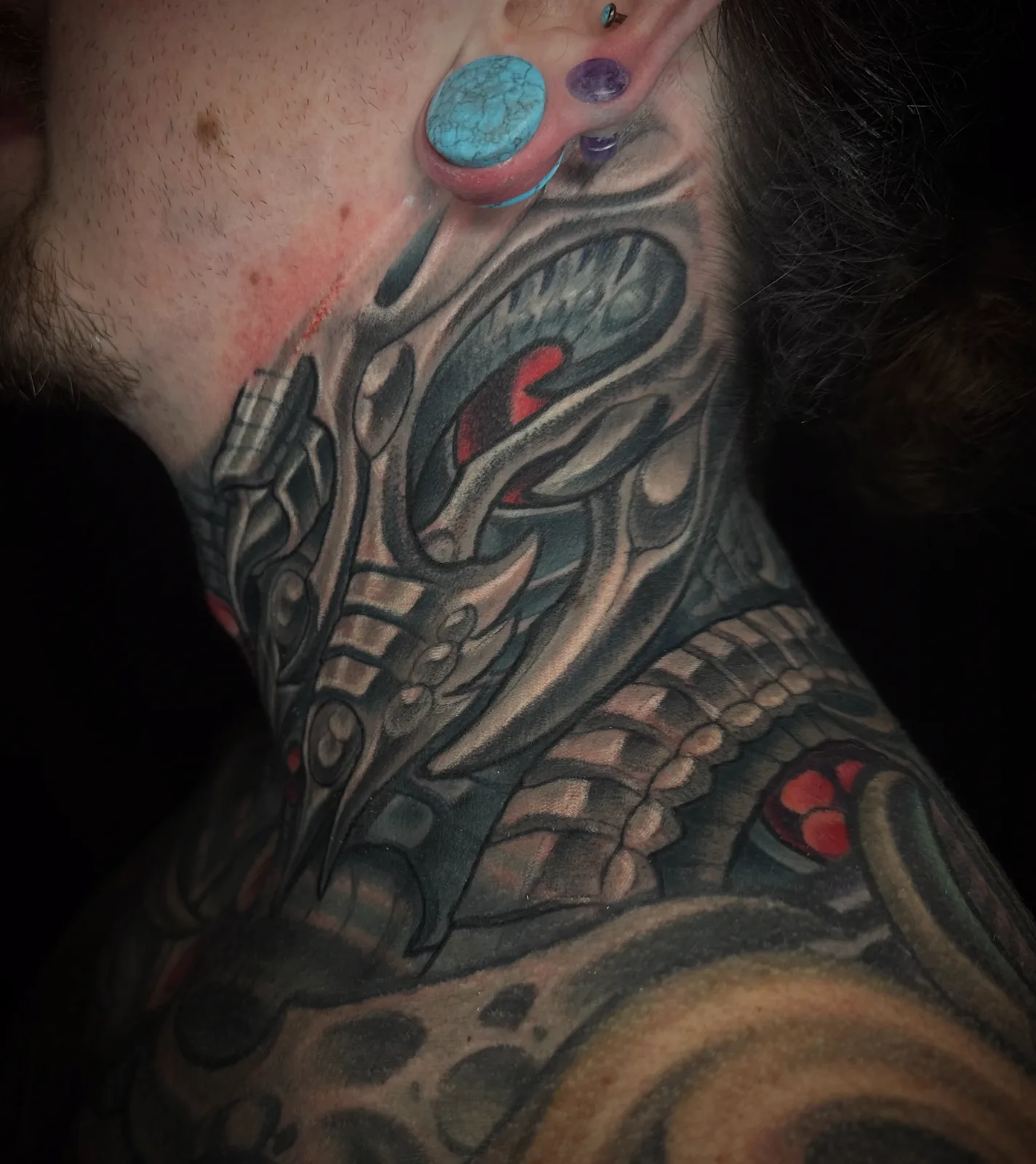
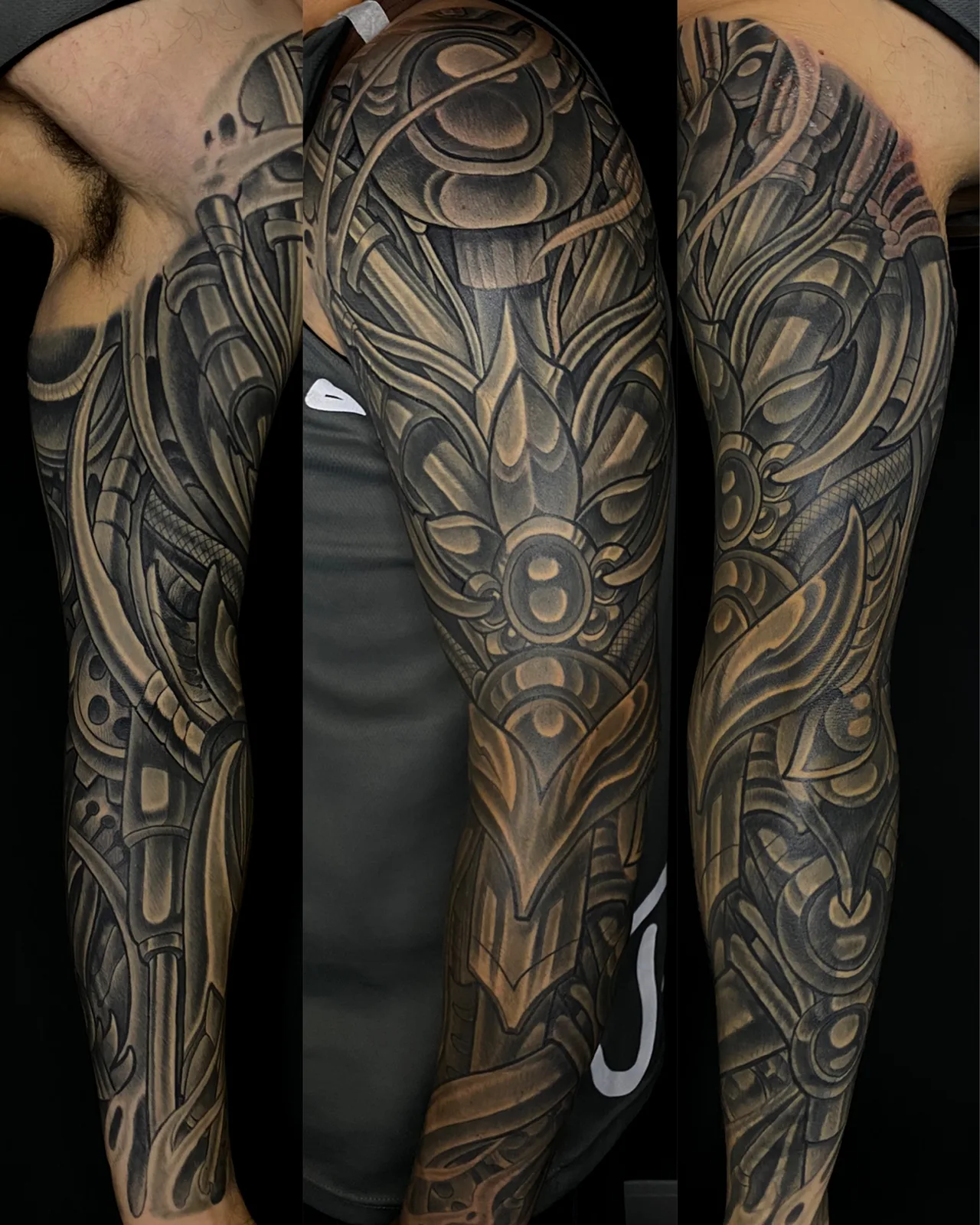
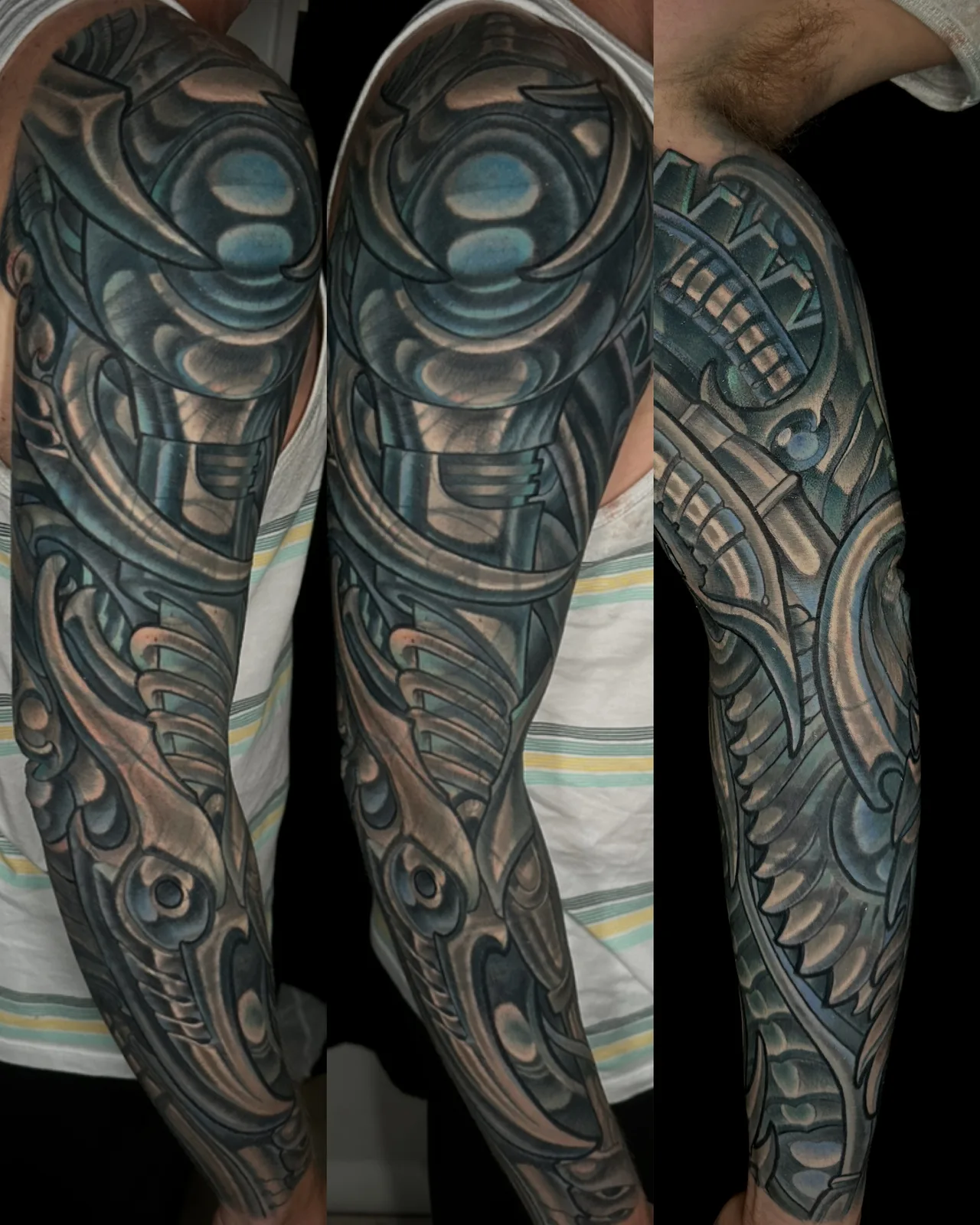
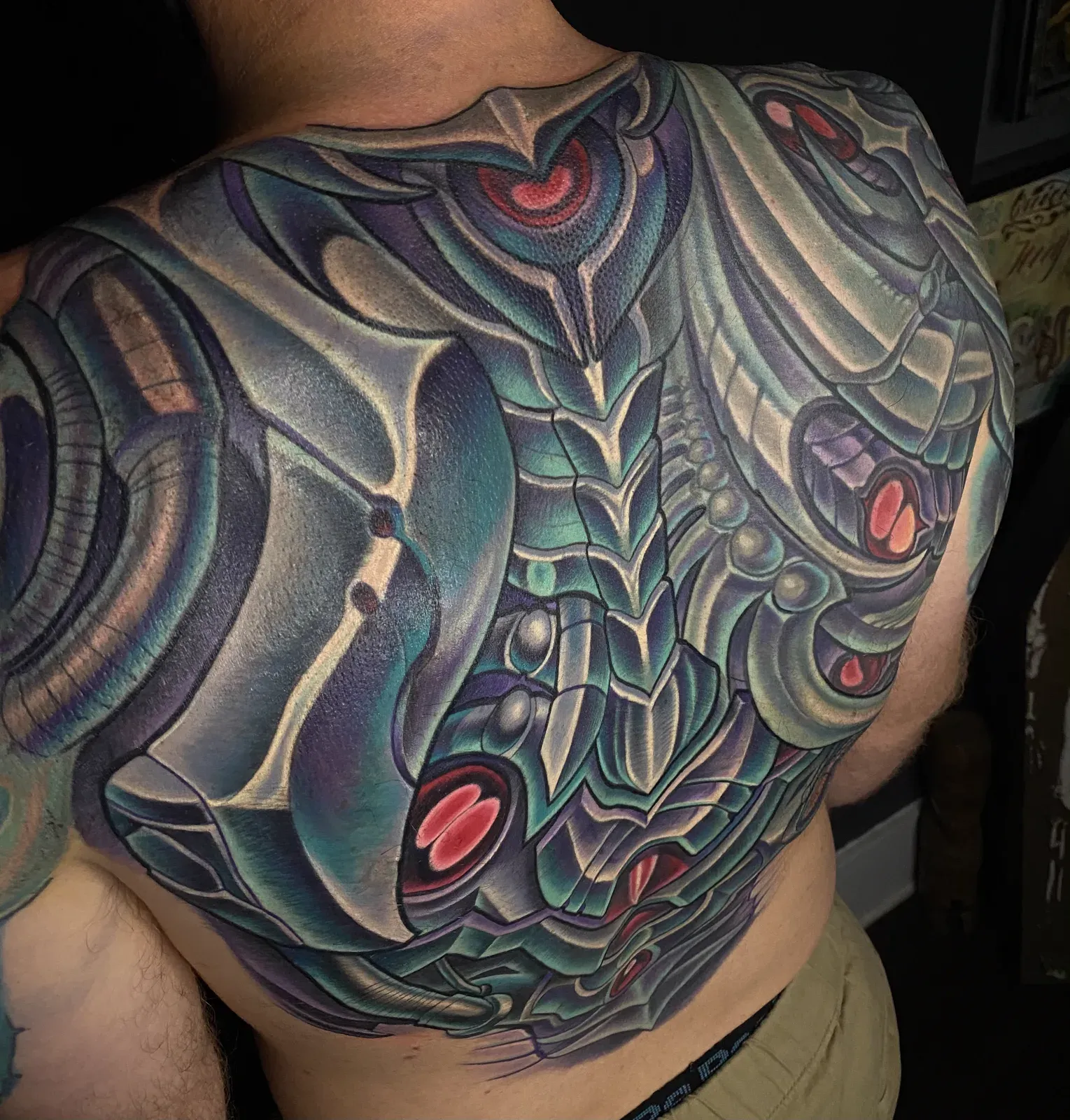
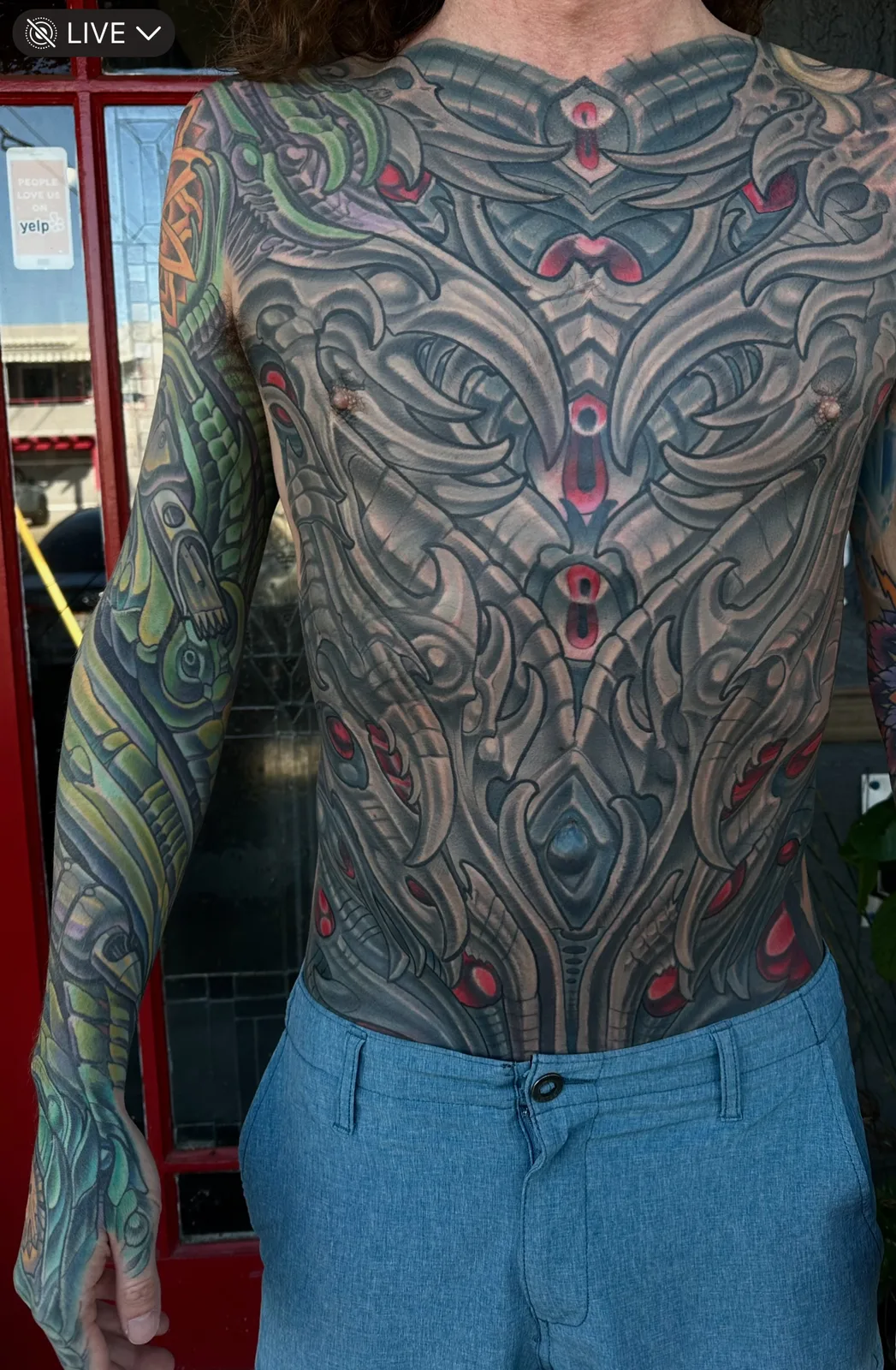
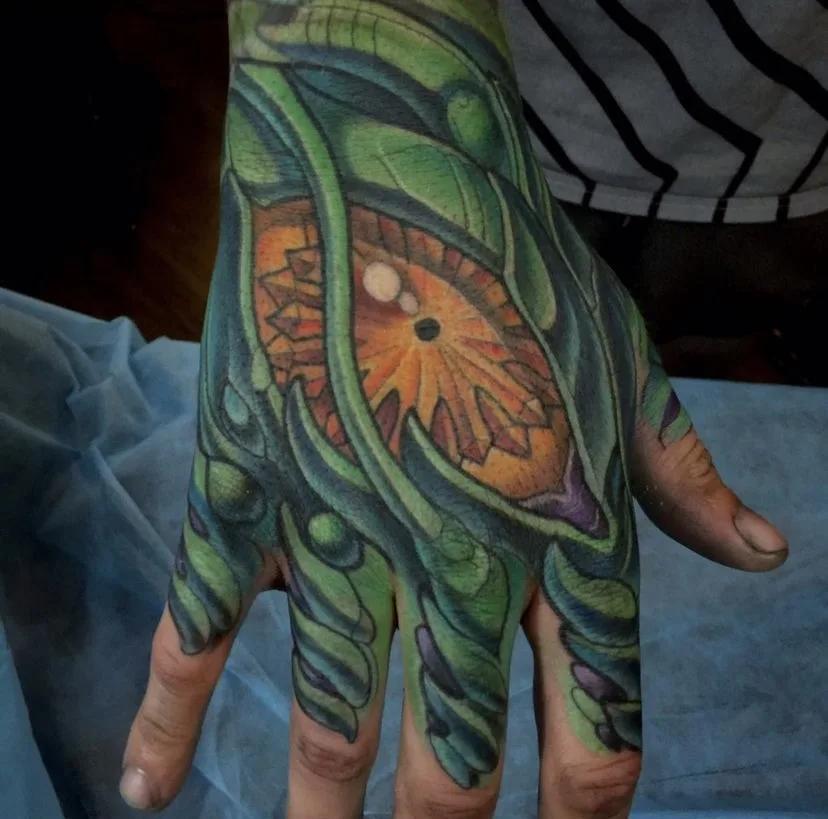
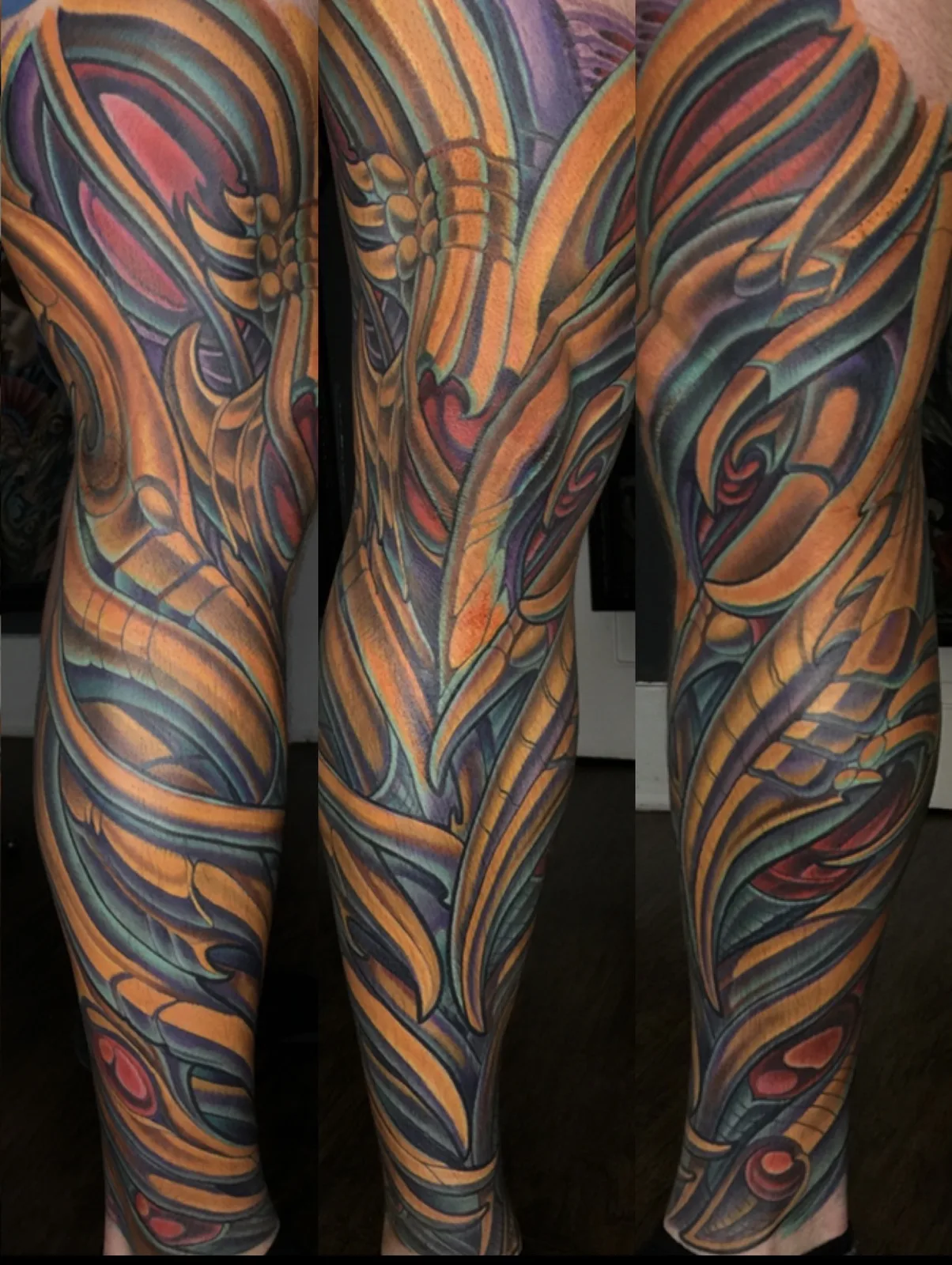
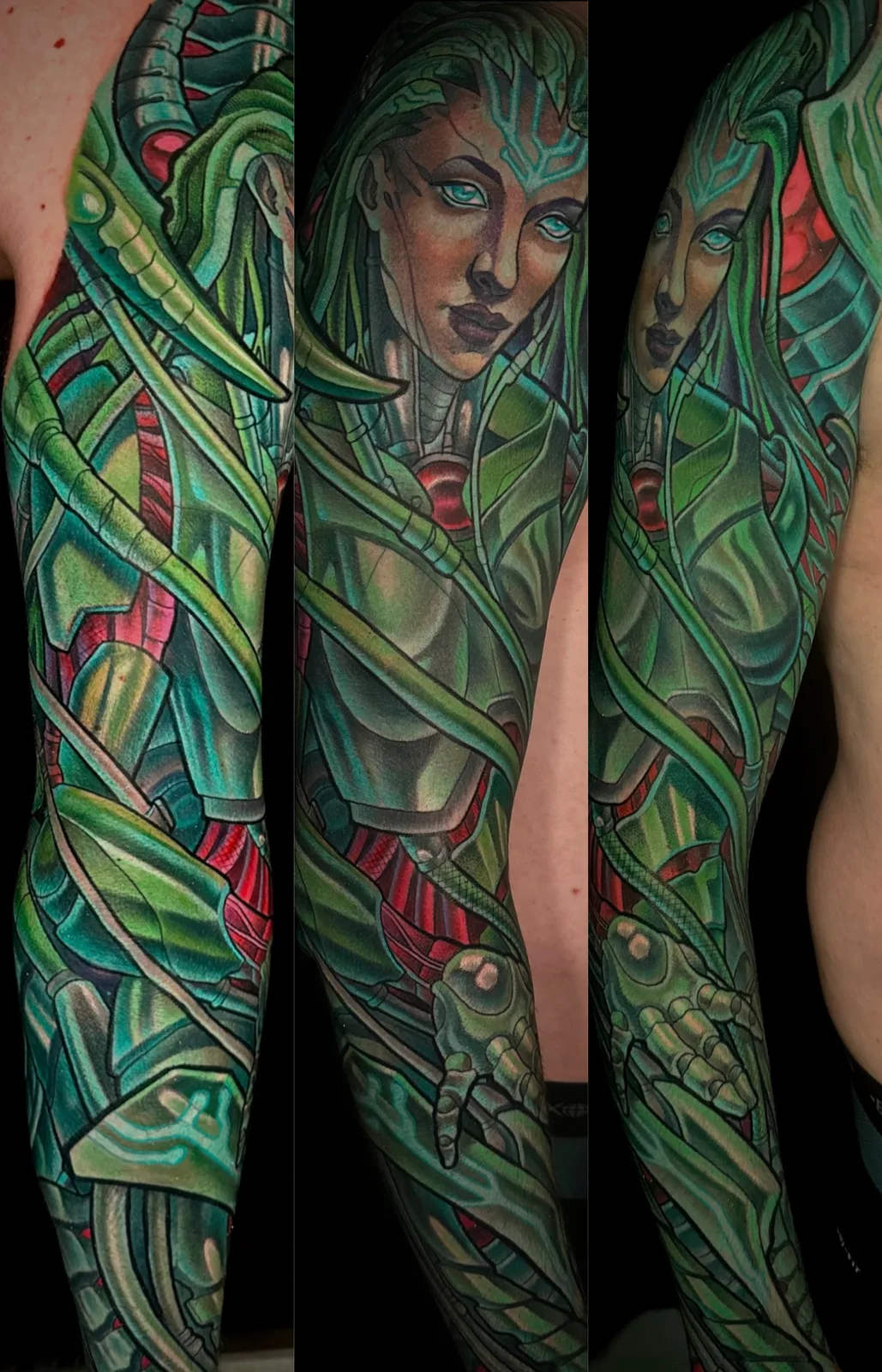
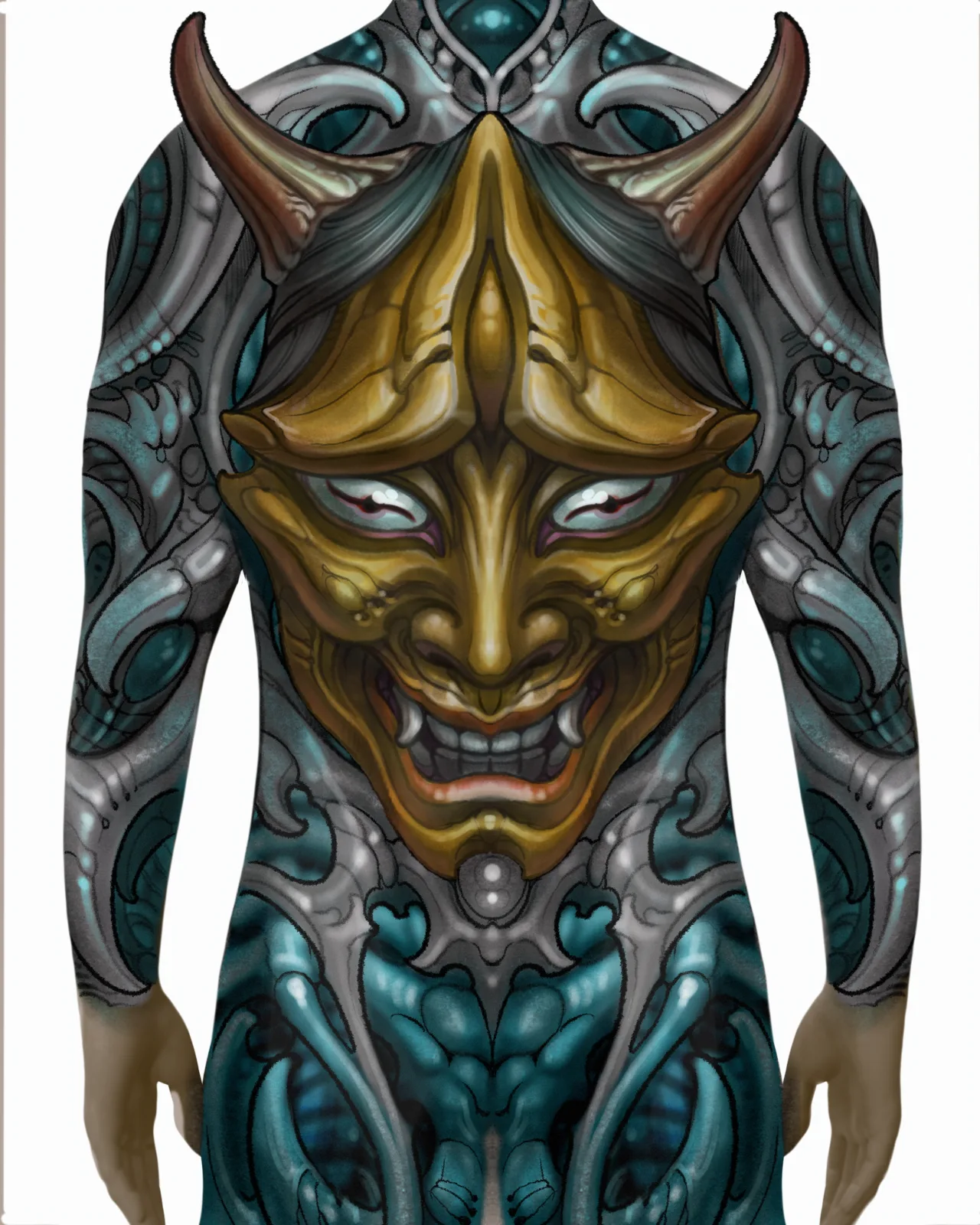
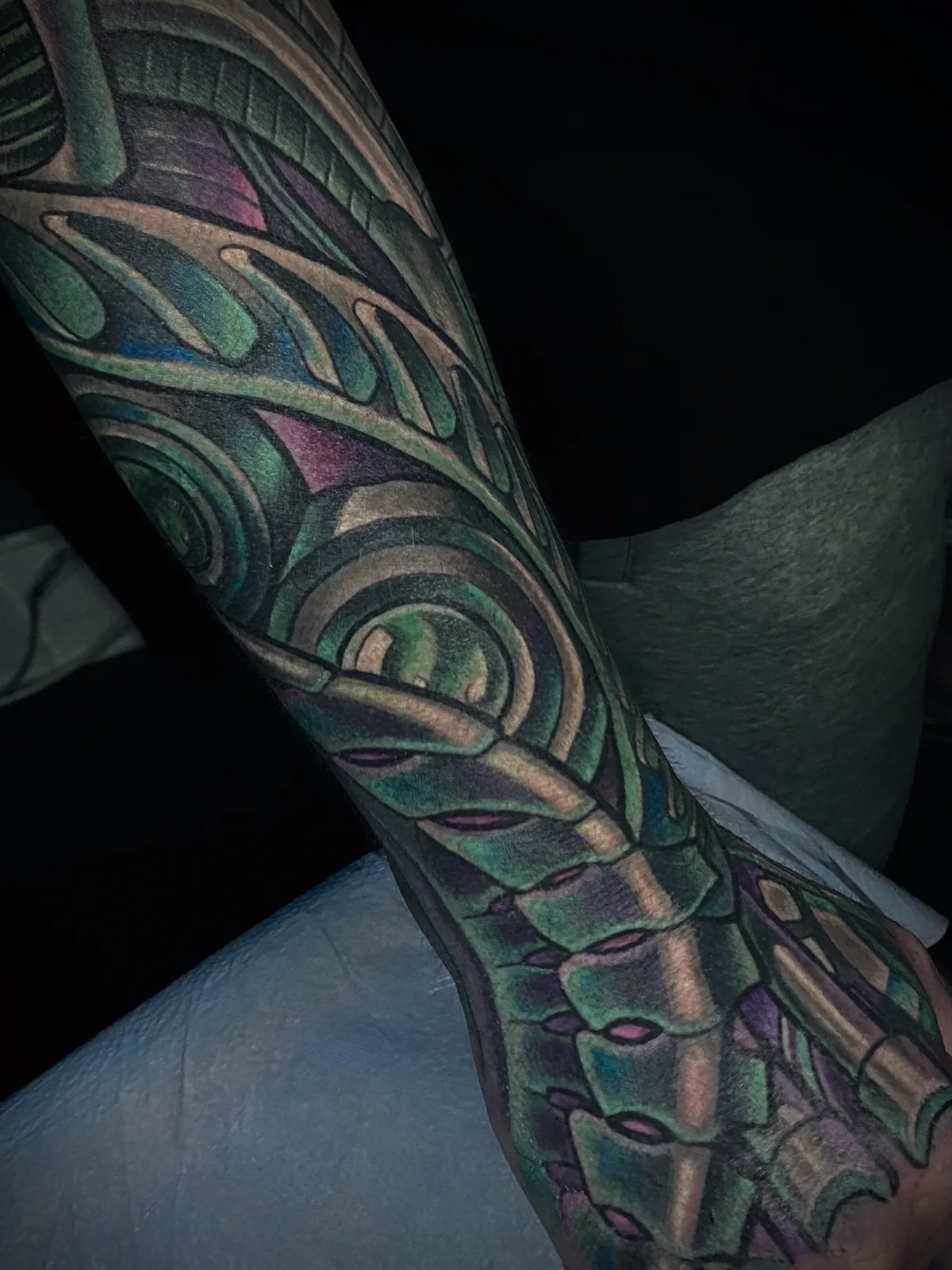
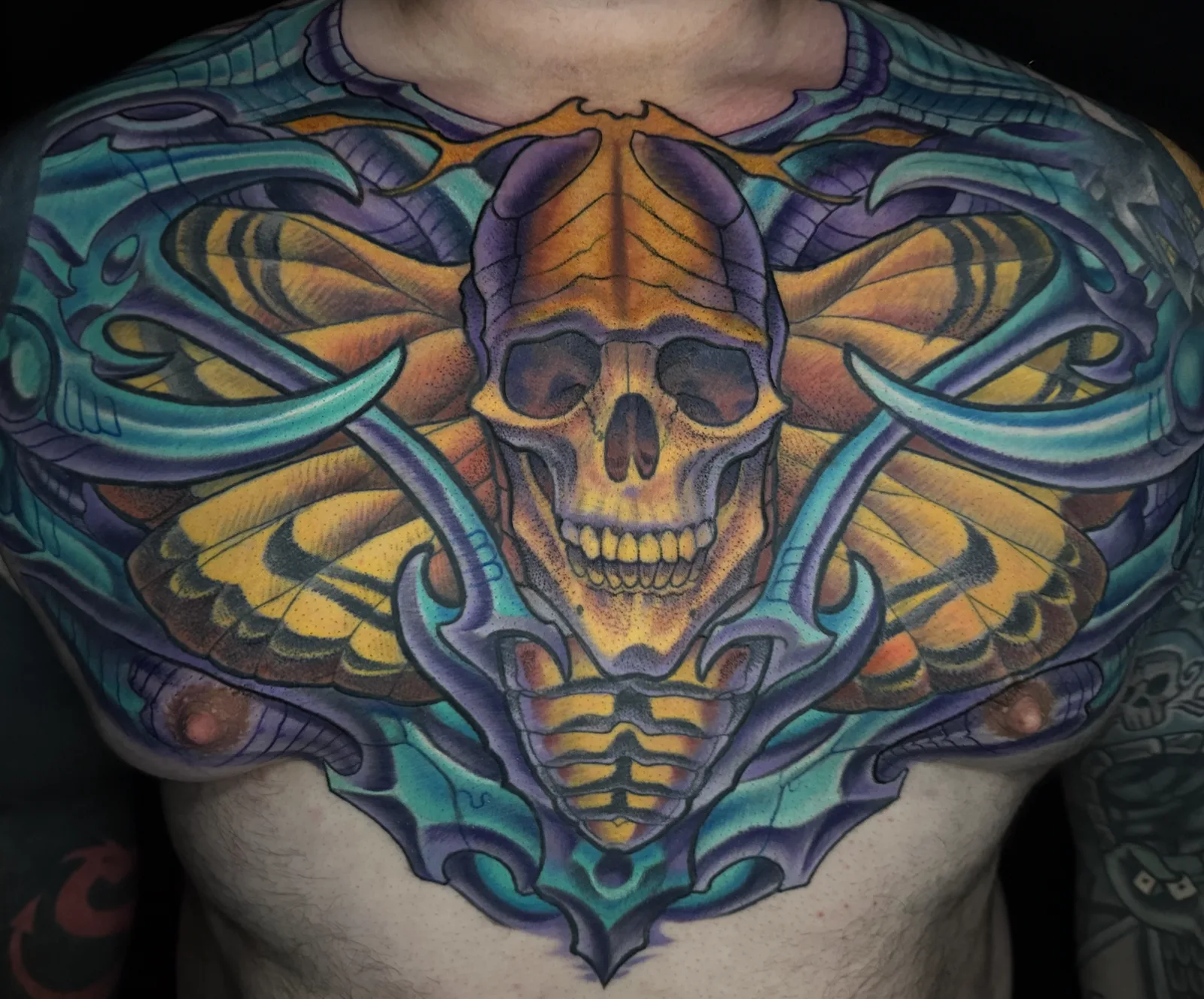
Every piece below is actual client work — drawn from scratch and built to wrap the body. Sleeves, legs, chest, and back pieces spanning full-color biomech, bio-organic, and black & grey.
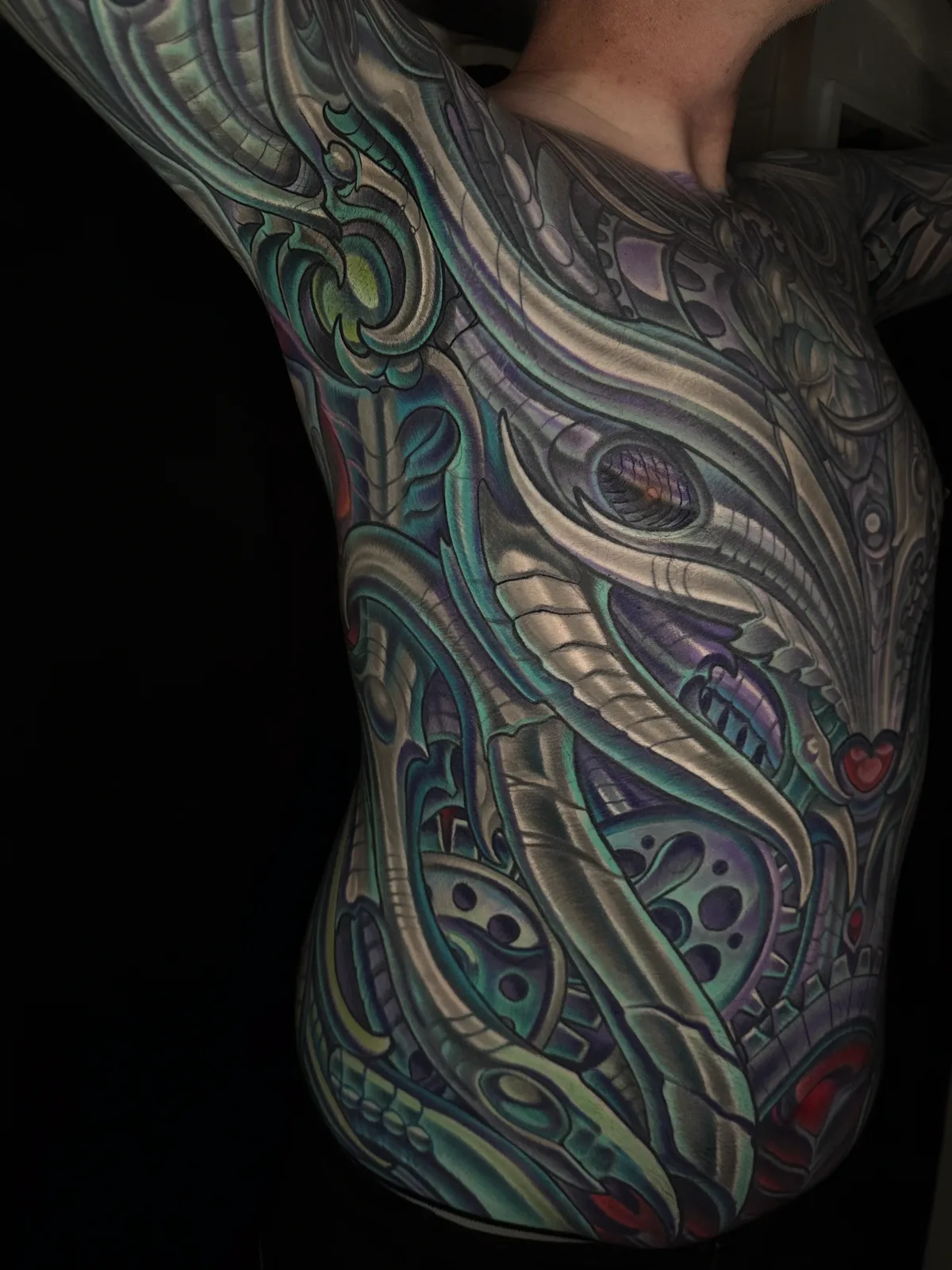
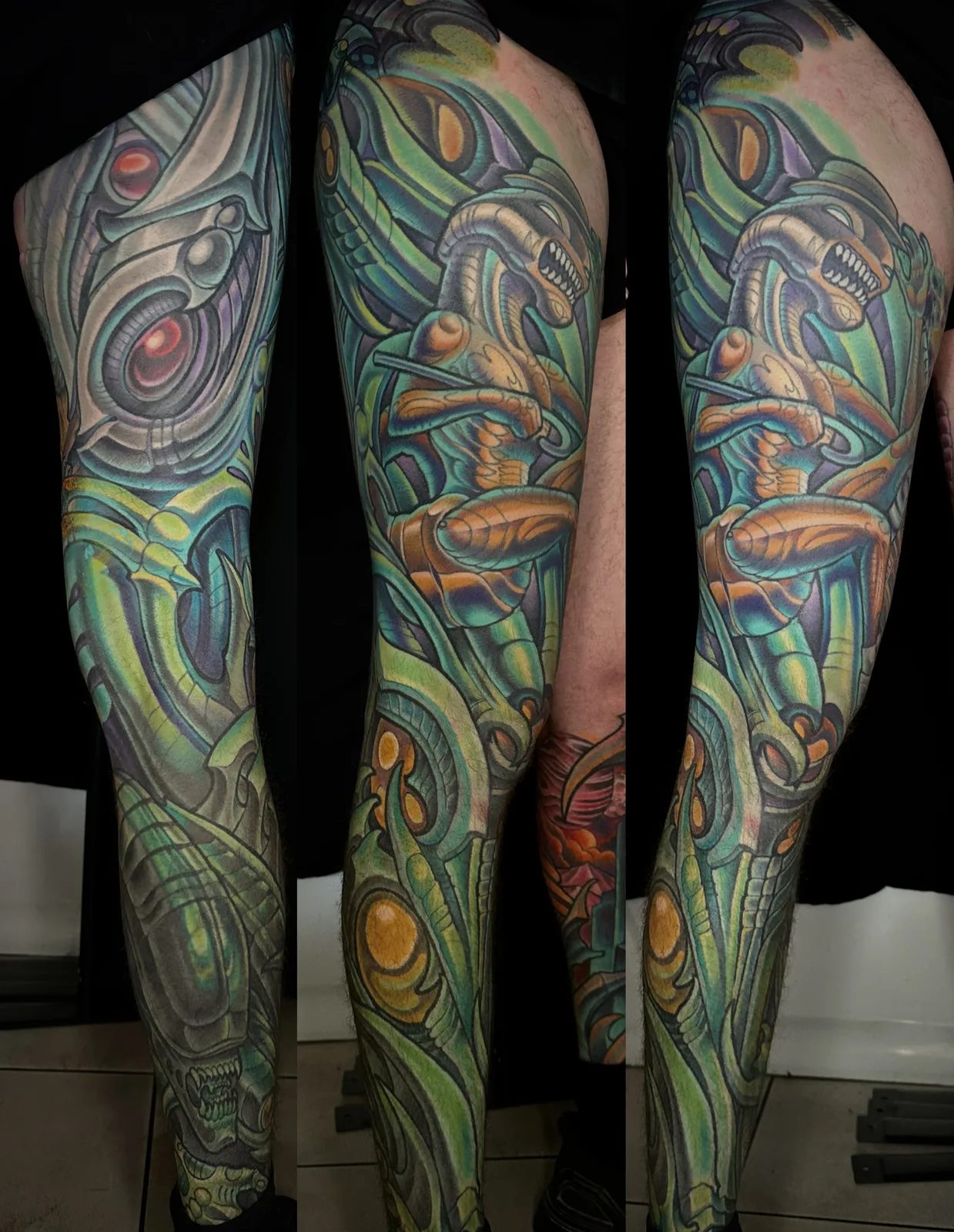
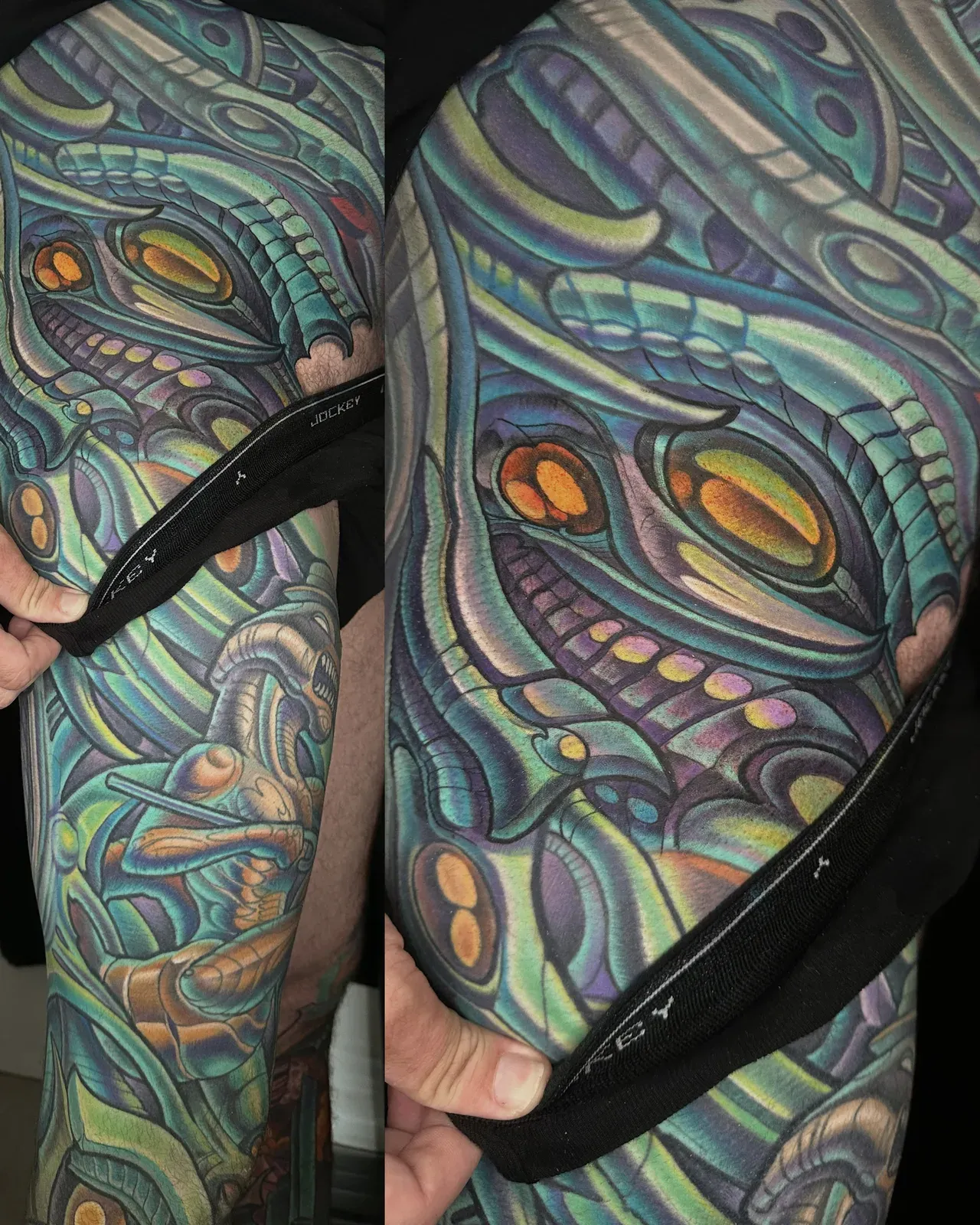

See more biomechanical & bio-organic work in the full portfolio →
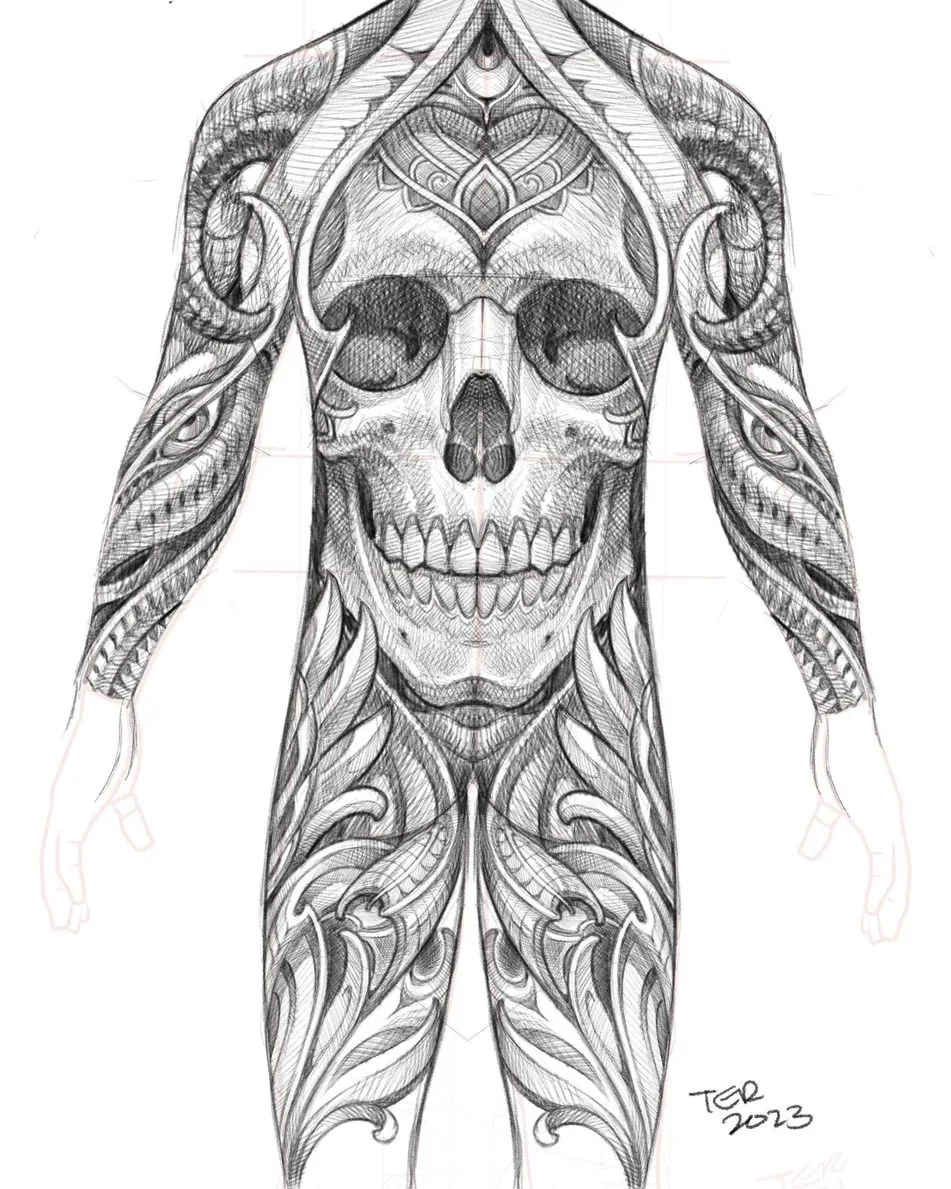
From the Drawing Table
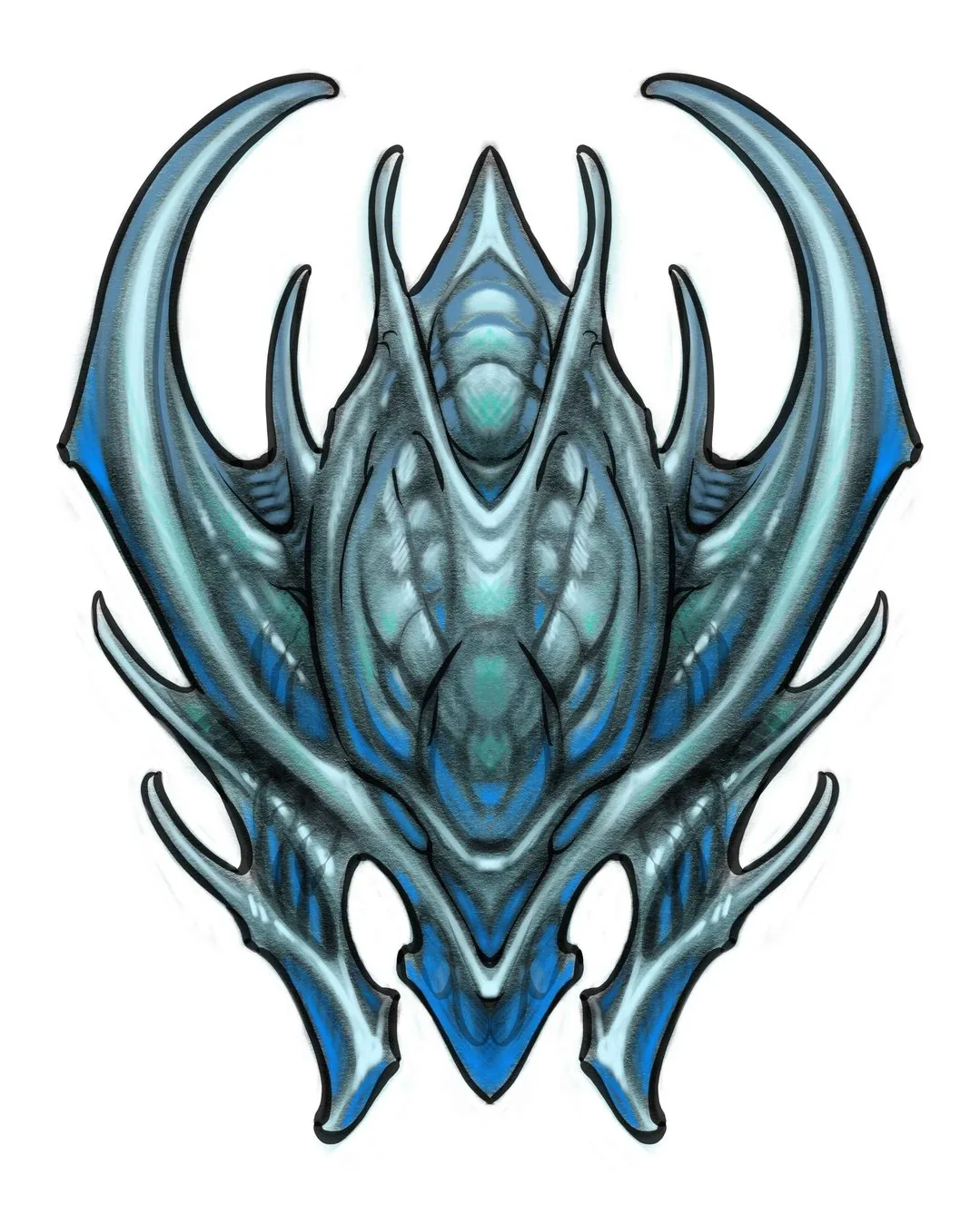
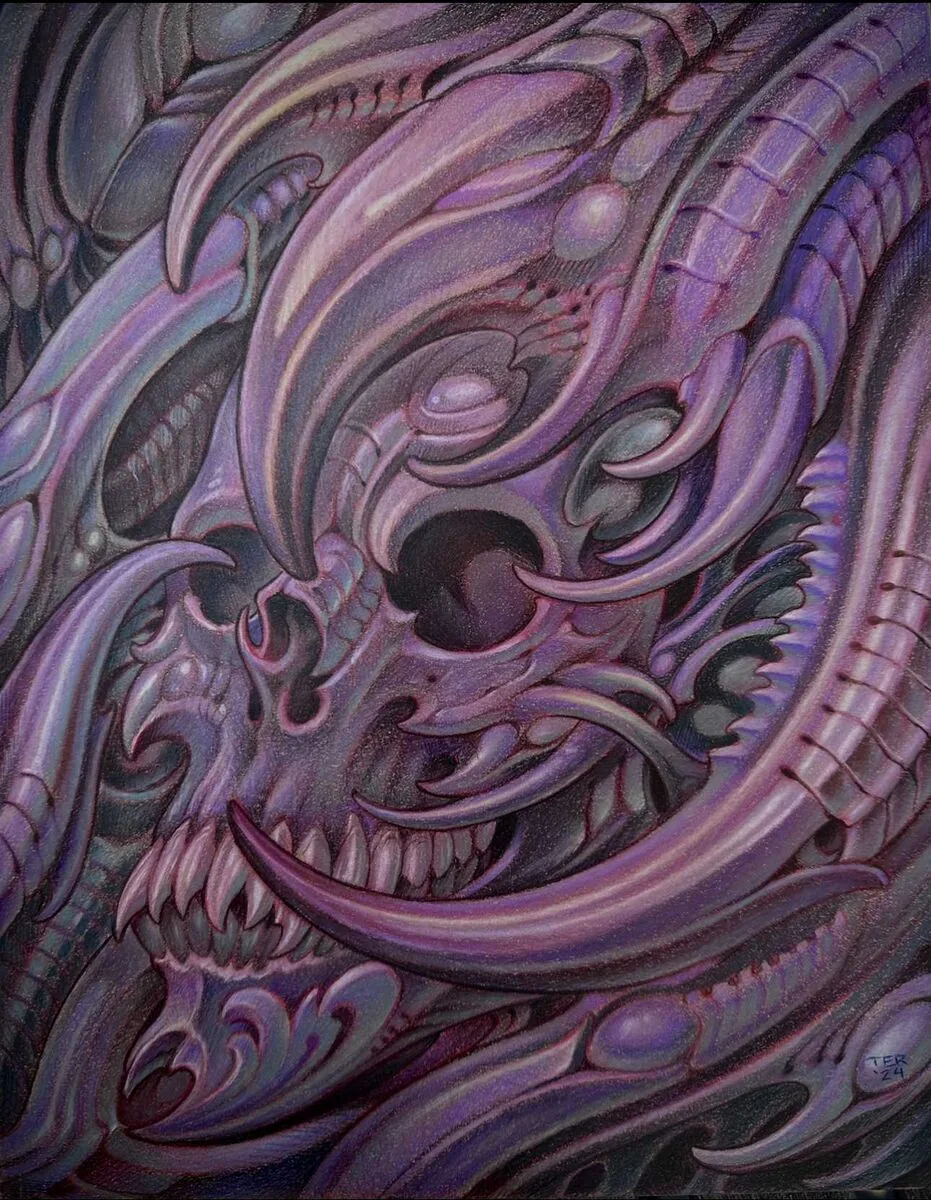
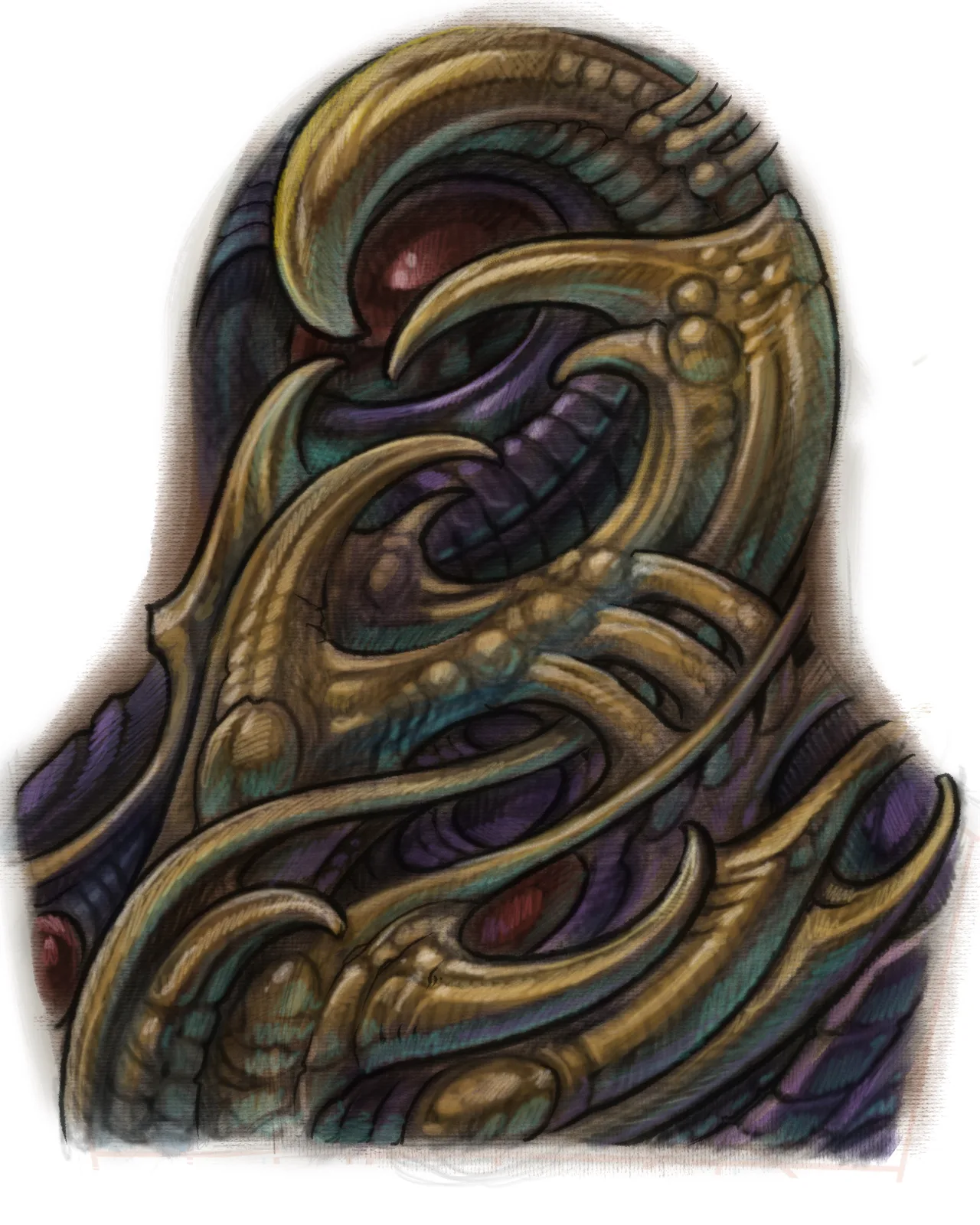
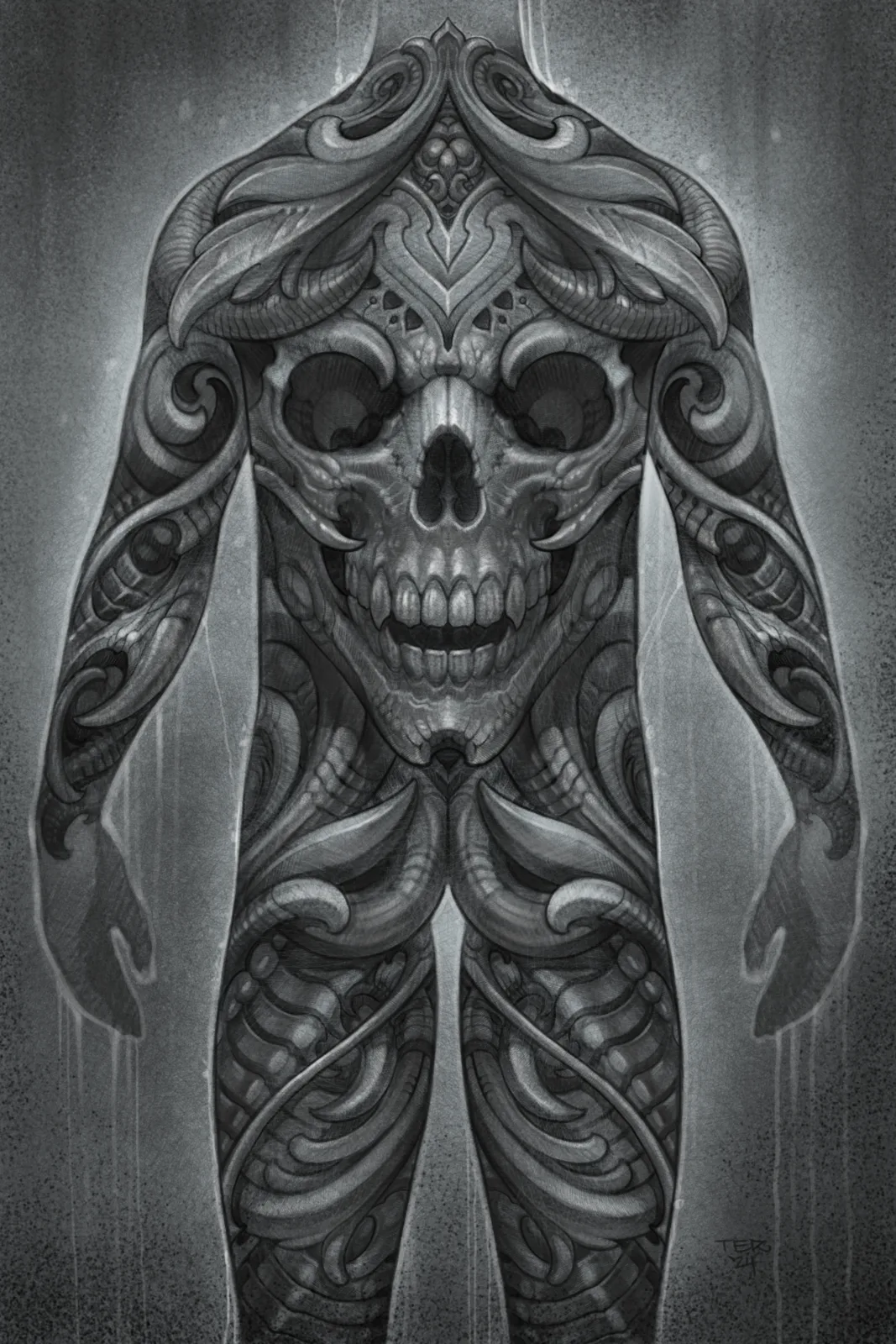
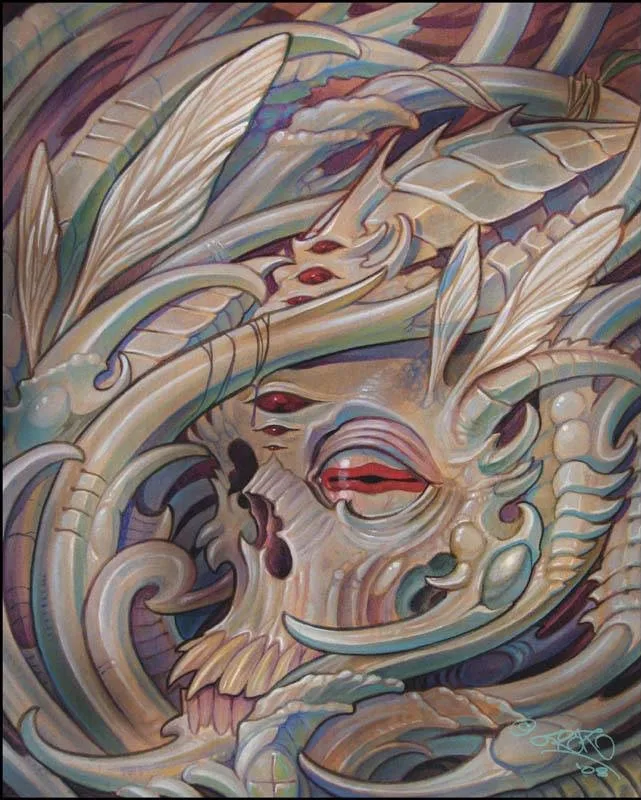
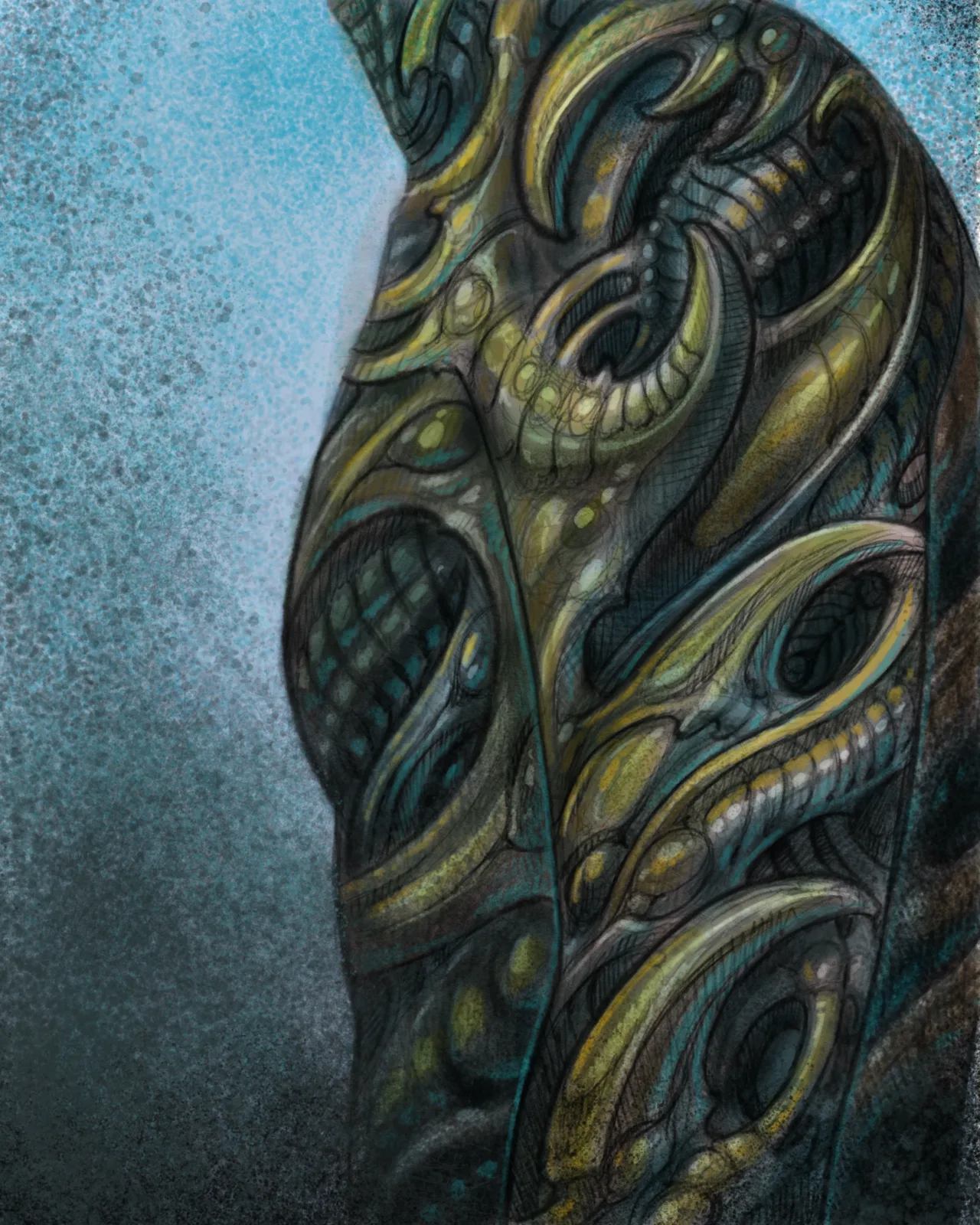
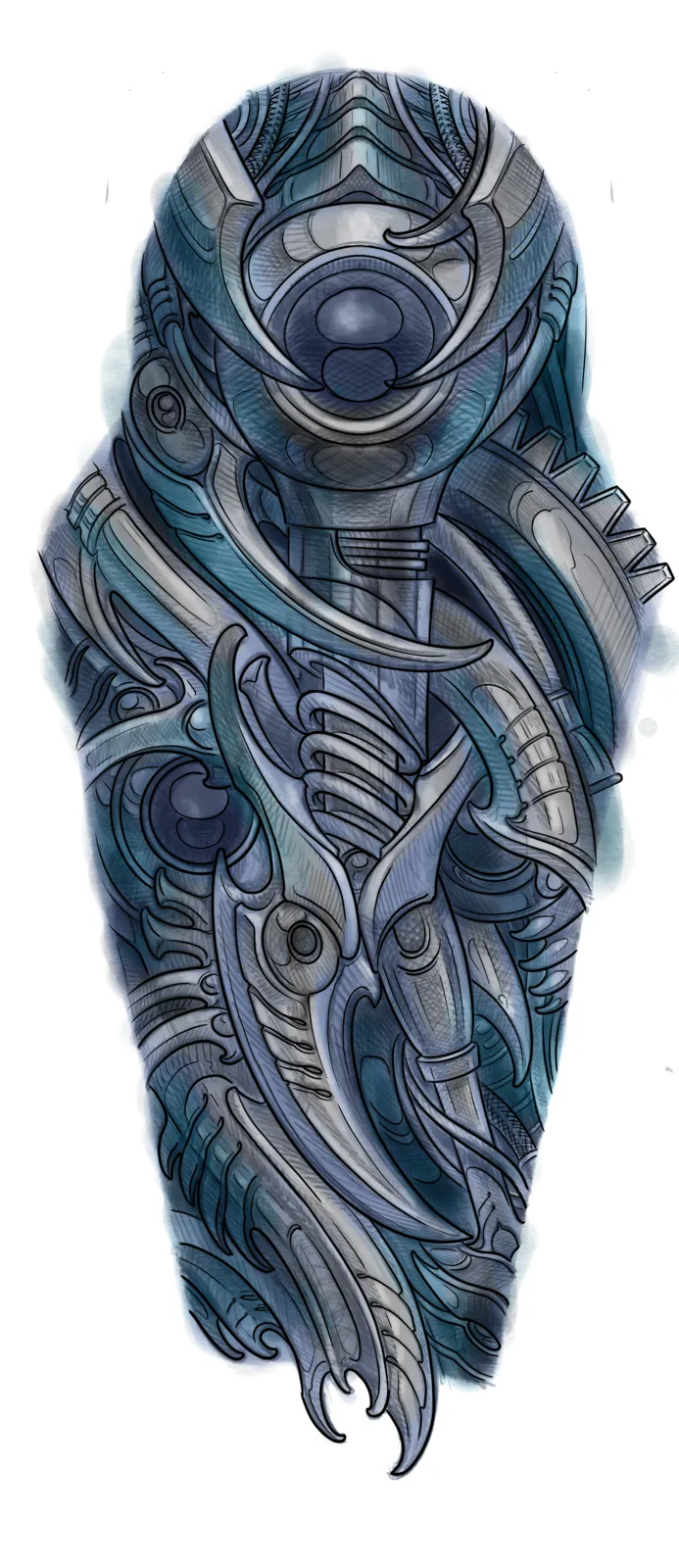
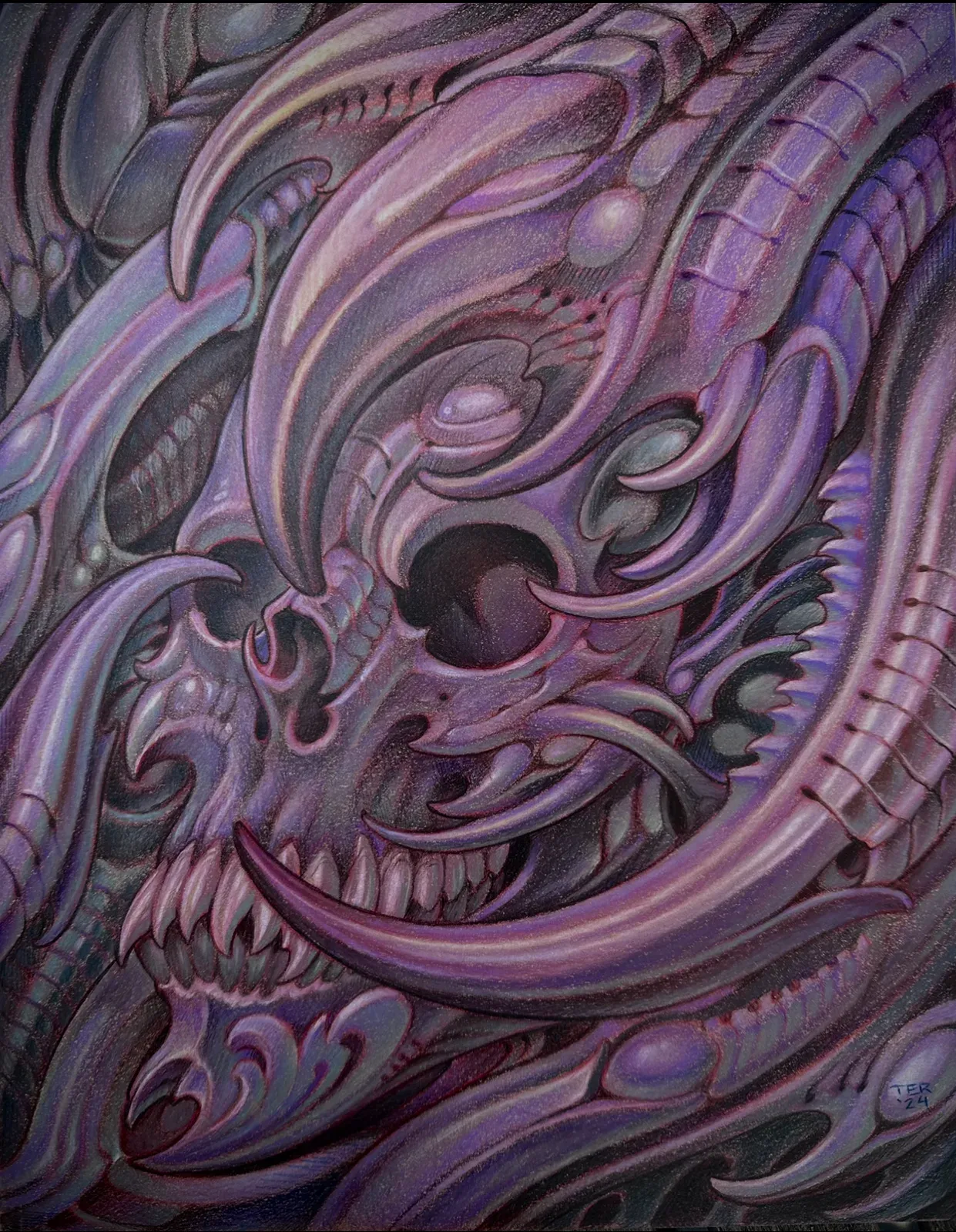
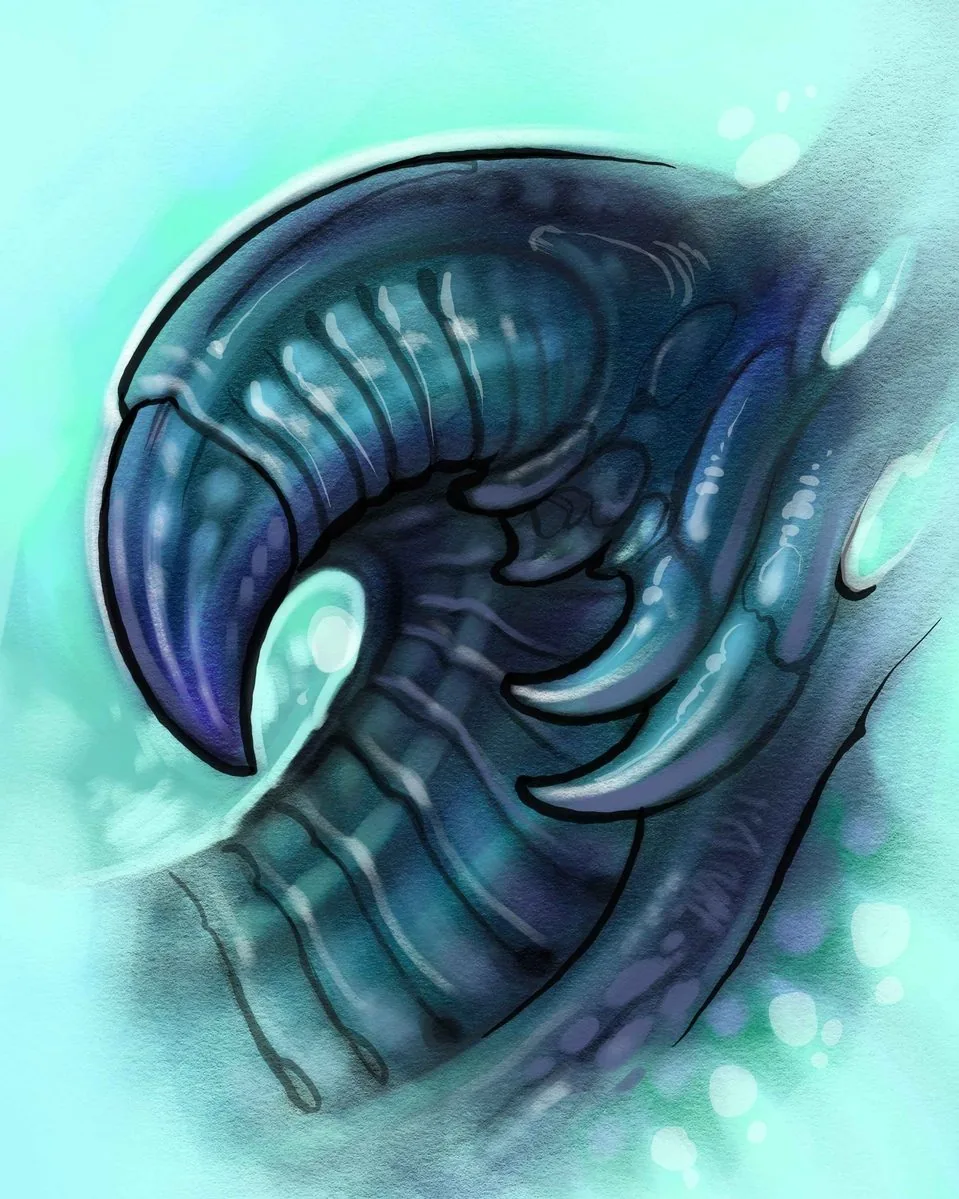
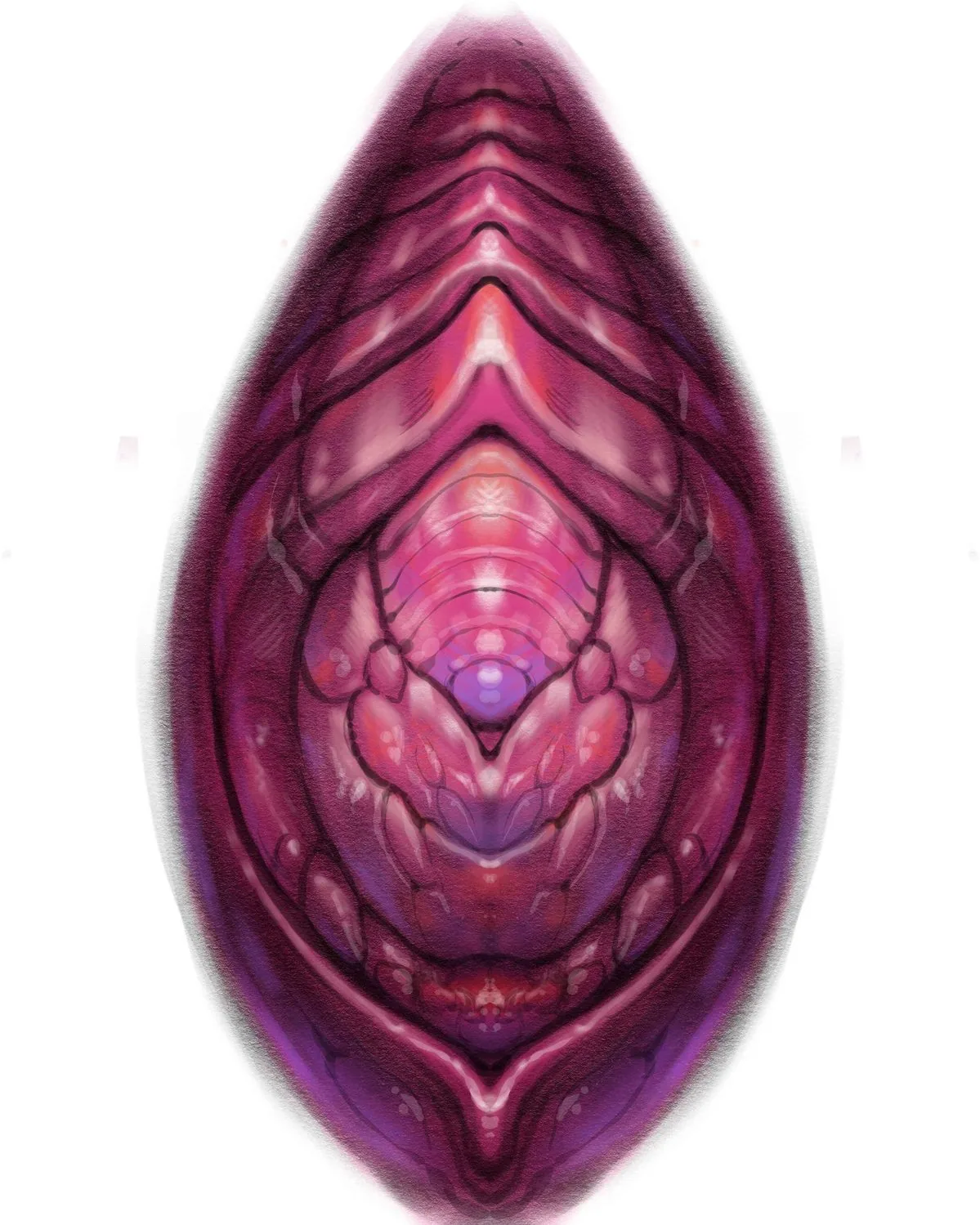
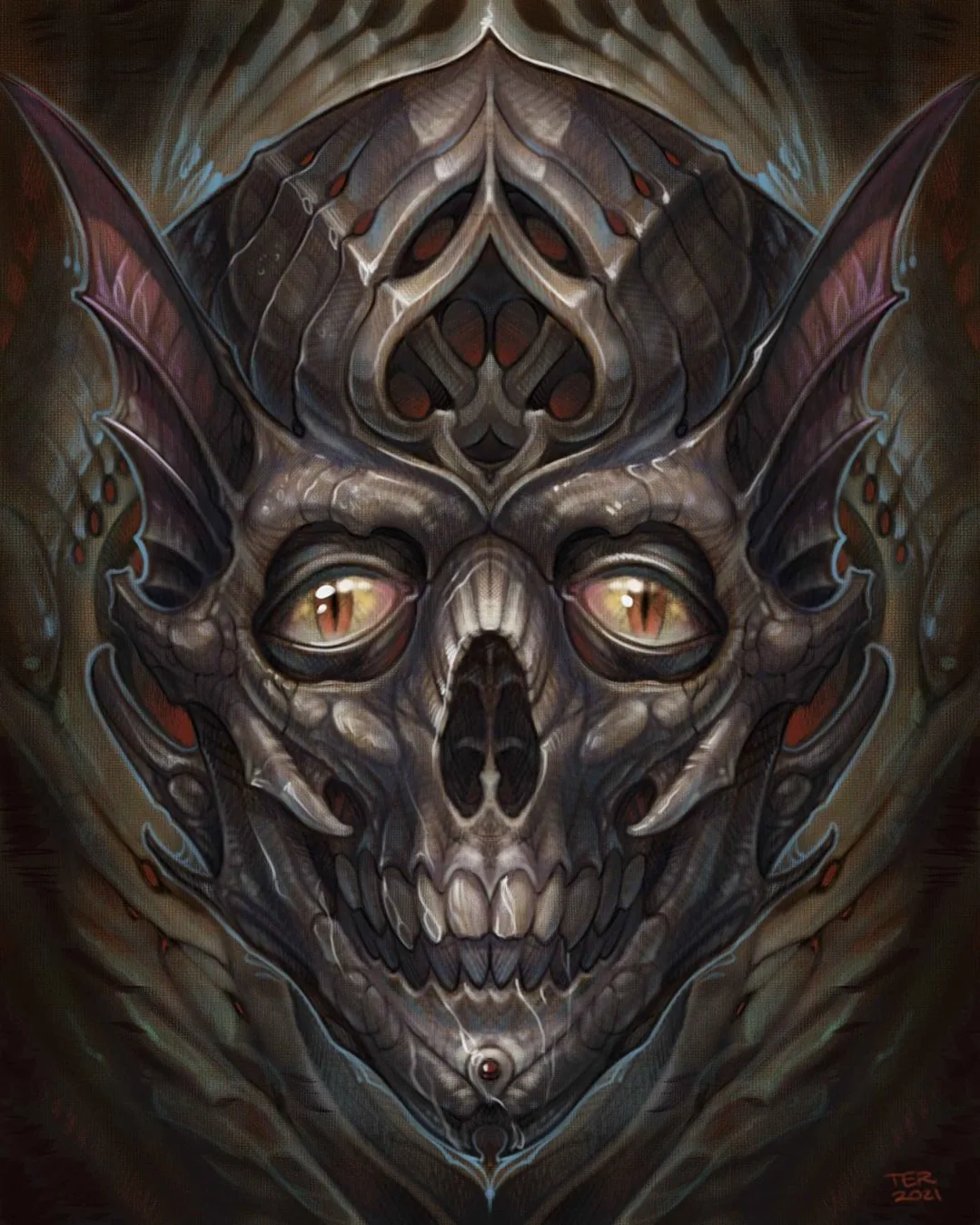
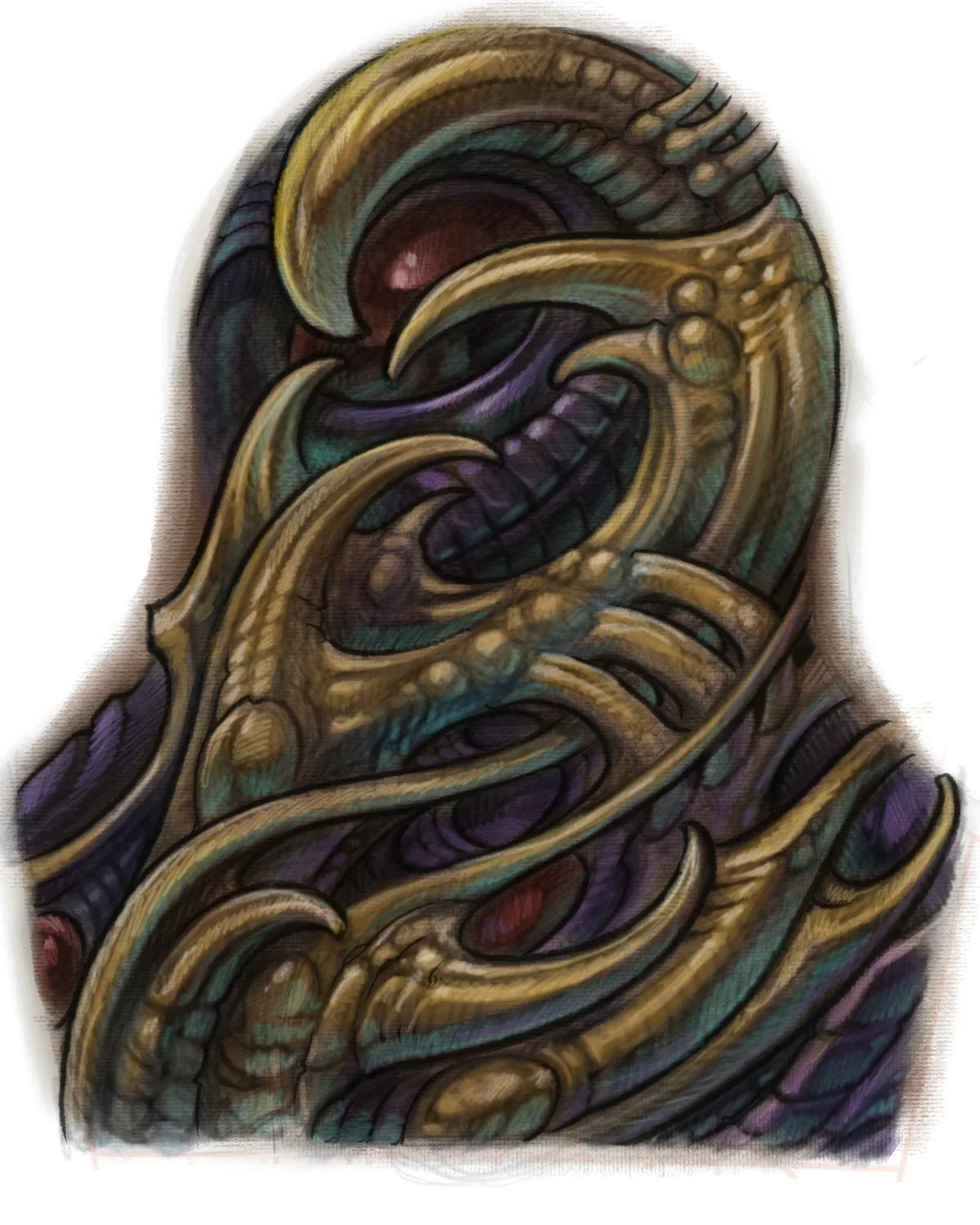
Alien anatomy, drawn from scratch
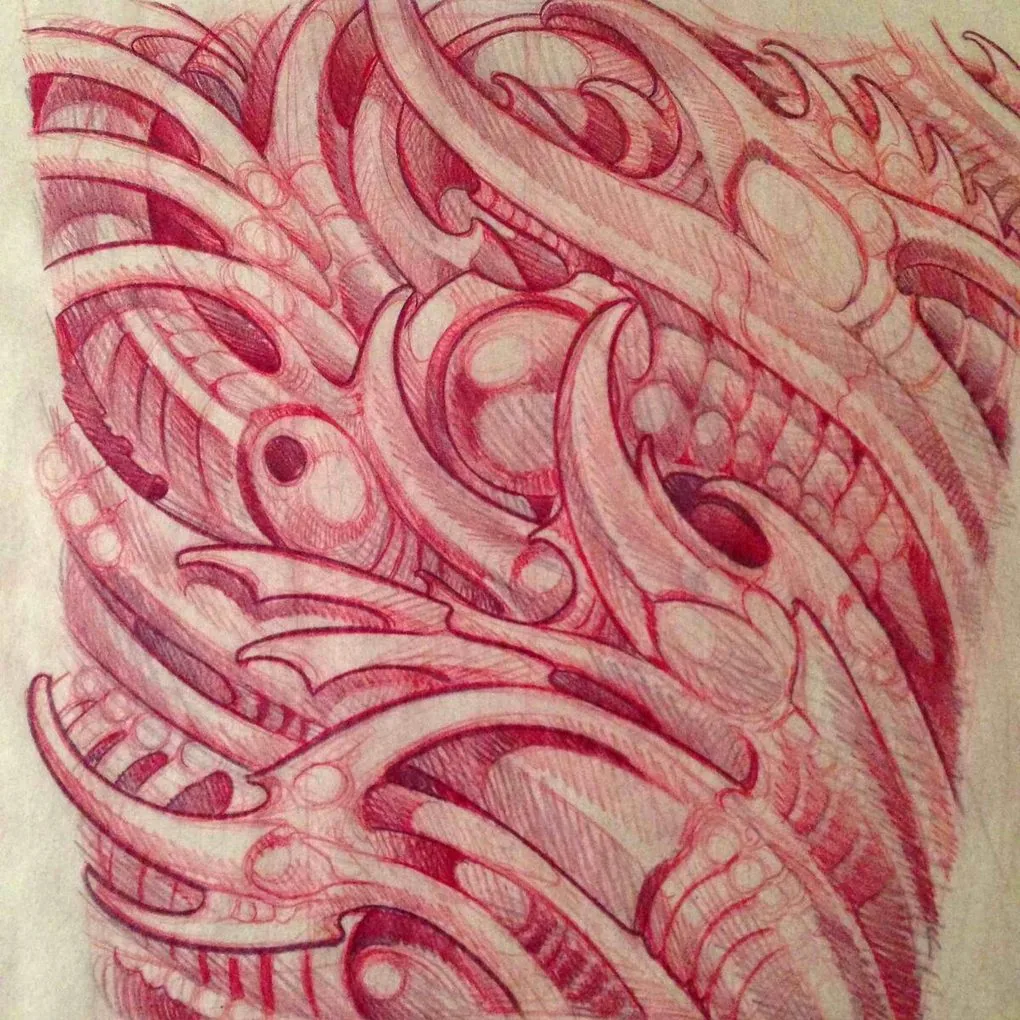
Every biomech piece begins as an original drawing — pencil, colored pencil, and digital. This is where the machinery gets invented before it's ever mapped to skin.
Questions
Biomechanical tattoo FAQ
What's the difference between biomechanical and bio-organic tattoos?
Biomechanical work fuses mechanical forms — gears, pistons, tubes, exoskeleton — with the body, so it reads as machinery living under the skin. Bio-organic uses the same underlying idea with a natural vocabulary instead: bone, root, tendon, scale, and flora. Terry works across both, and many pieces blend the two. The design principles are identical; only the surface language changes.
Does biomechanical work age well?
When it's built correctly, yes. Terry establishes a strong black foundation first — linework and shadow structure — before any color or lighter values. That black base, along with deliberate contrast and scale, is what lets a biomech piece hold its depth and read clearly in 10, 20, and 30 years, not just on the day it's photographed.
Do you tattoo biomech in color or black and grey?
Both. Biomech is one of the styles that reads powerfully in either. Terry does full-color biomech and bio-organic as well as pure black & grey — the choice is yours. Every version is built on the same black structural foundation, so it lasts regardless of palette.
How big does a biomechanical tattoo need to be?
Biomech rewards scale. The illusion of structure under the skin depends on room to flow around muscle and joint, so sleeves, legs, chest and back pieces are ideal. Smaller pieces are possible, but the style is at its strongest as large-scale work — and Terry designs every piece to connect if you decide to grow it into a body suit later.
Can you cover an old tattoo with biomechanical work?
Often, yes. Biomechanical and bio-organic designs are unusually good for cover-ups because their dark structure and interlocking forms can absorb existing ink. Terry has been doing cover-ups for over 20 years and factors the old tattoo into the composition from the first sketch.
How much does it cost, and how far out are you booked?
Terry's hourly rate is $250, and clients are billed only for time on skin. A $500 non-refundable retainer secures your dates and comes off the total. A full color sleeve or back piece typically takes 18–21 hours. The waitlist is currently close to one year, with large-scale clients booked as ongoing projects. Full details are on the booking page.
Start the Conversation
Ready to build something from the inside out?
Take time with the portfolio first and make sure the work speaks to you. If it does, reach out — every biomech piece starts with a single conversation at Remington Tattoo in North Park, San Diego.
If you're weighing what a project like this comes to, see pricing for large-scale biomechanical work.