Remington Tattoo · San Diego, CA
Japanese tattoos, tradition drawn forward.
Dragons, koi, hannya, phoenix, and samurai — the iconography of Japanese tattooing, drawn from scratch and pushed through Terry Ribera's contemporary illustrative lens. Large-scale sleeves, back pieces, and body suits built on the flow and background work the tradition is known for, and made to age for decades.
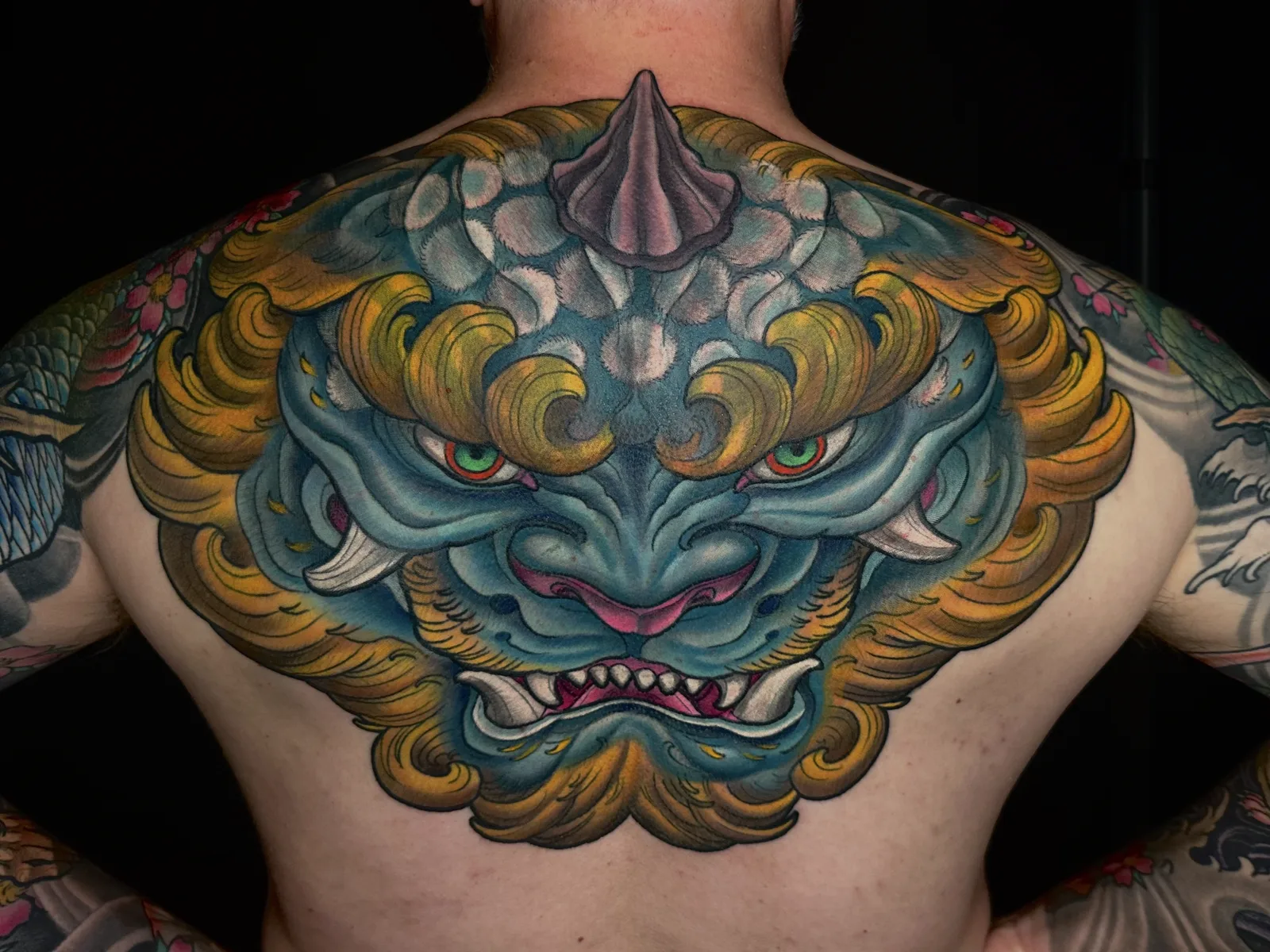
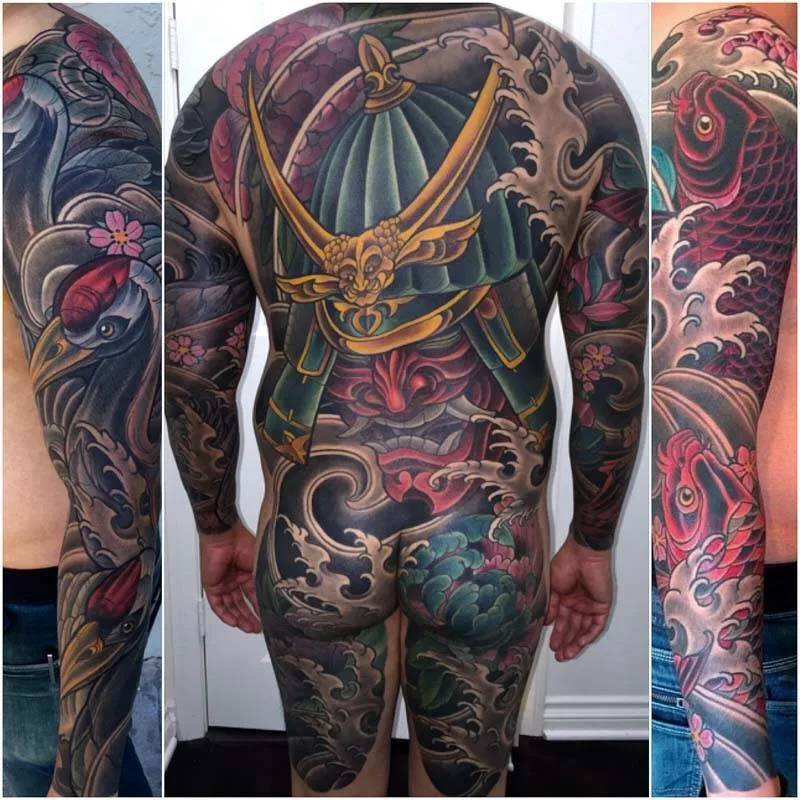
“The work should visually enhance the person wearing it — following the body's contours and complementing how they move.”Terry Ribera — Design Philosophy
The Style
What makes Neo Japanese different
Japanese tattooing is a system, not just a set of subjects. The main figure — a dragon, a koi, a hannya — sits inside a world of wind bars, finger waves, cherry blossoms, and maple leaves that carry the composition around the body. Neo Japanese keeps that structure and that respect for the iconography, but renders it with a modern illustrative hand: richer depth, bolder color, and drawing that reads from across the room.
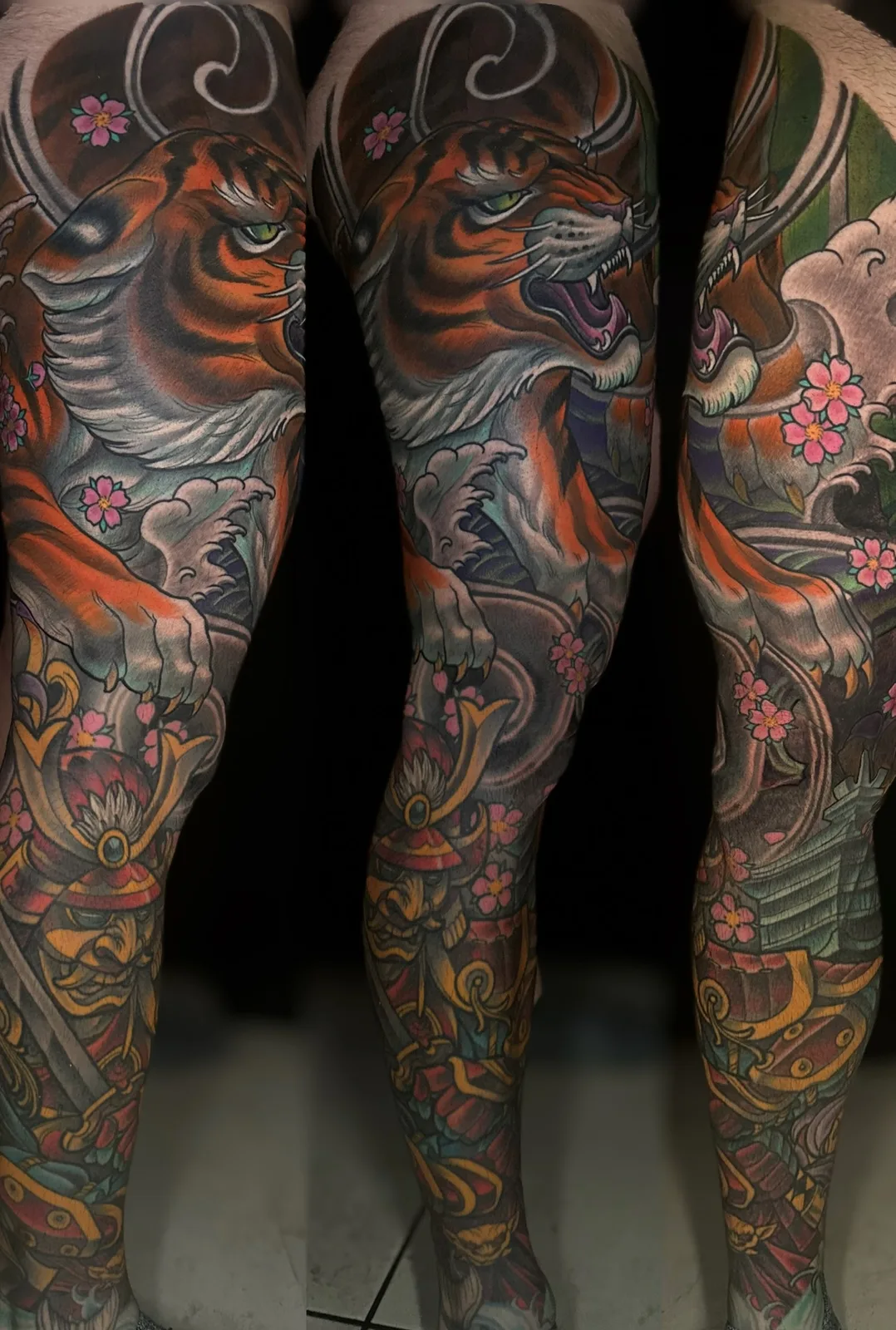
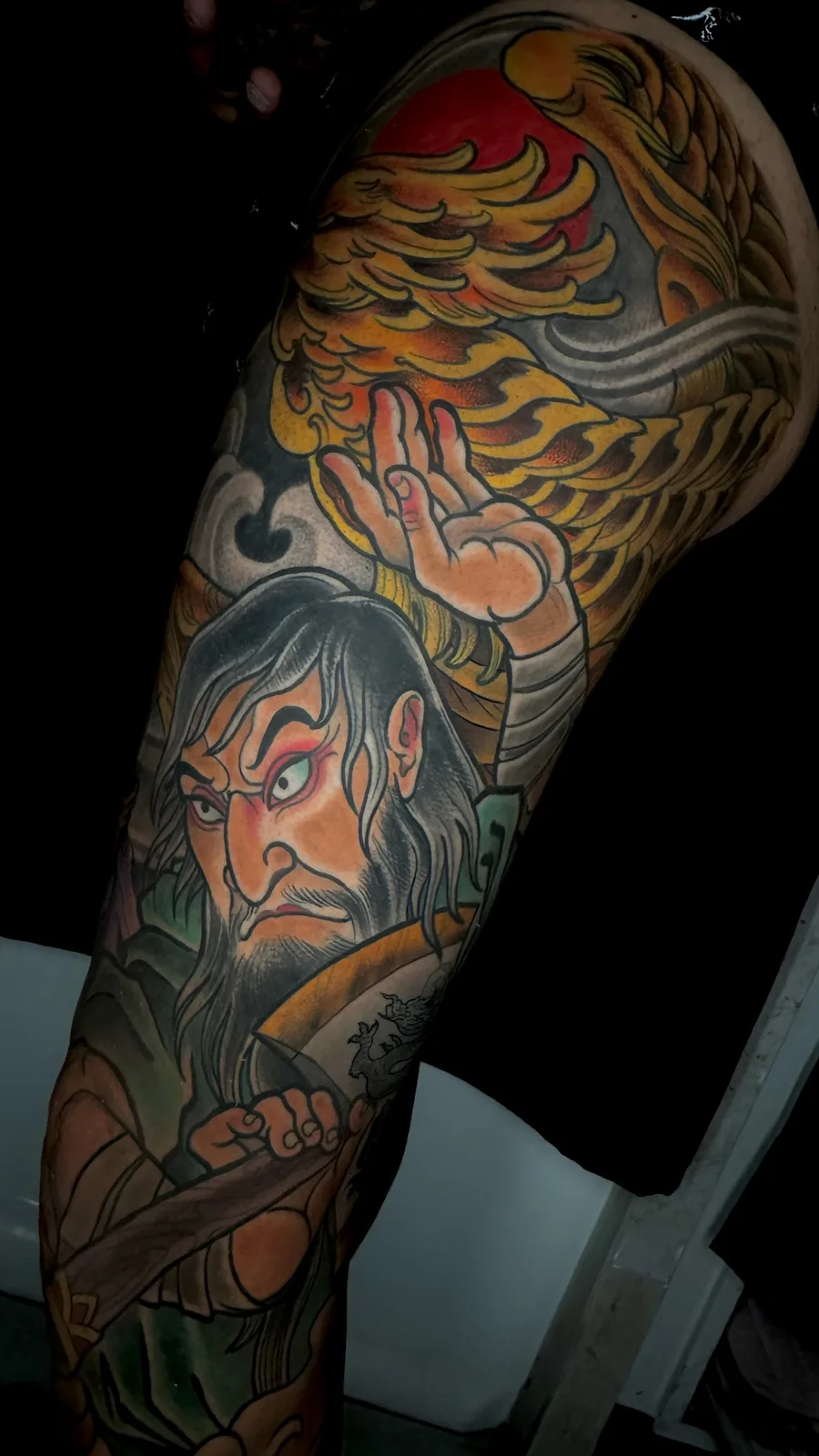
Terry's range runs across the broader Asian canon too — Buddhist and Hindu figures, kitsune, Sun Wukong, geisha, and tigers. Every piece is drawn from scratch for the body it wraps and built on a strong black foundation, so it holds up in black & grey or full color. Because the style flows so naturally around the limbs, it grows beautifully into a full body suit and works well for cover-ups.
Recognized Work
“With a flair for styles such as neo-traditional, illustrative, and neo Japanese, Terry continues to captivate his clients with custom designs that embody his talent for vivid color, shading, and line work.”— Sullen Clothing Artist Directory
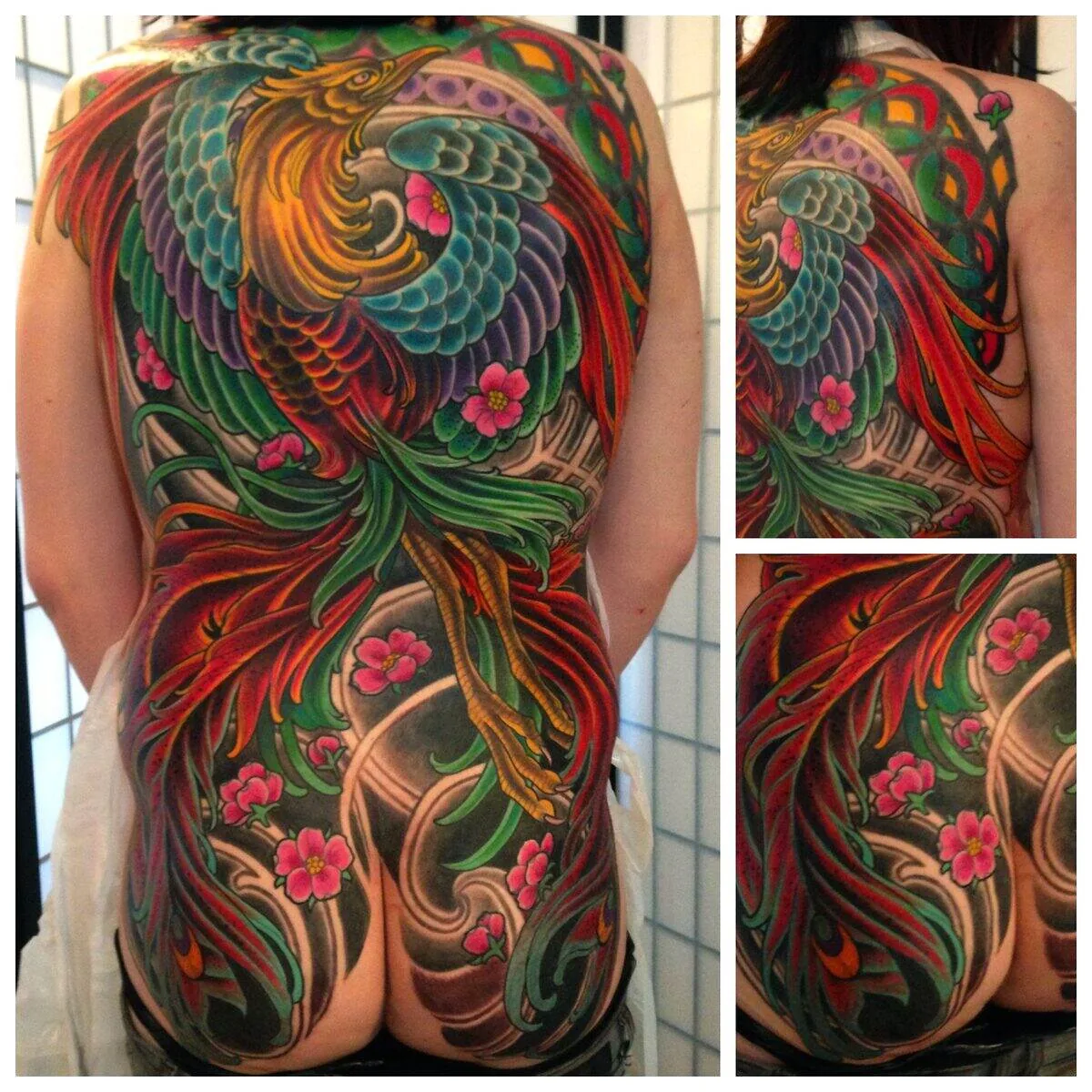
Over two decades of Japanese and illustrative work has put Terry in features and directories across the industry. The real record, though, is on skin: hundreds of large-scale Japanese pieces, every one drawn from scratch and built to last.
The Approach
How a Japanese piece comes together
Every piece follows the same sequence Terry has refined over 25 years and roughly 24,000 hours of tattooing. It's built to remove guesswork before the first session and to make sure the design still reads decades from now.
Concept & drawing
It starts with a real conversation. Drawing consultations run 2–3 hours with you in the room, where Terry develops the composition around the subjects and meaning that matter to you. Everything is drawn from scratch — nothing is copied from another artist or generated by AI.
Flow & background
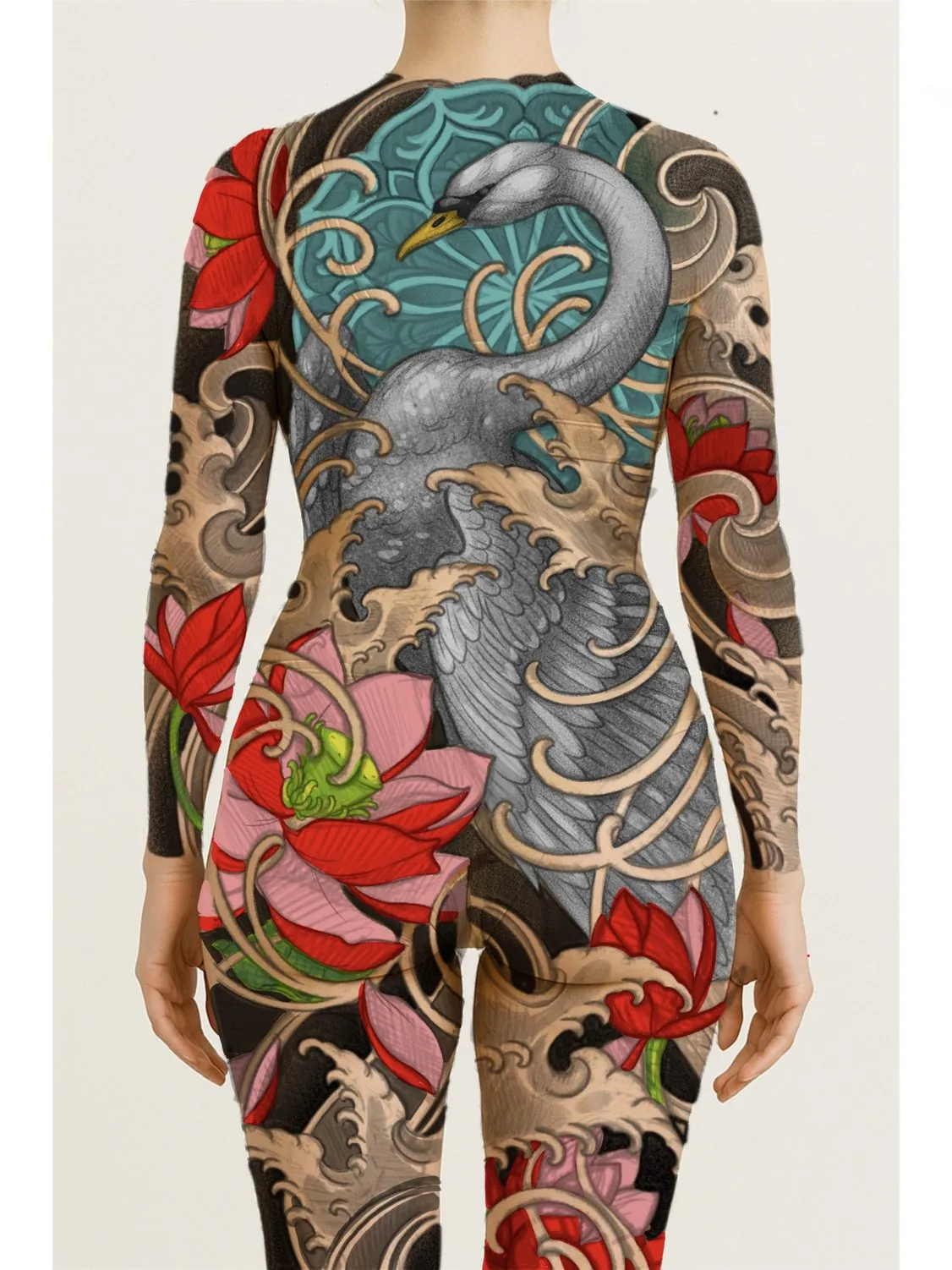
Japanese work lives on its background. Waves, wind, and blossoms aren't filler — they're the current that carries the main figure around the arm, leg, or back and ties everything together. Terry maps that flow to your anatomy first, so the piece moves with the body instead of sitting on it.
The black foundation
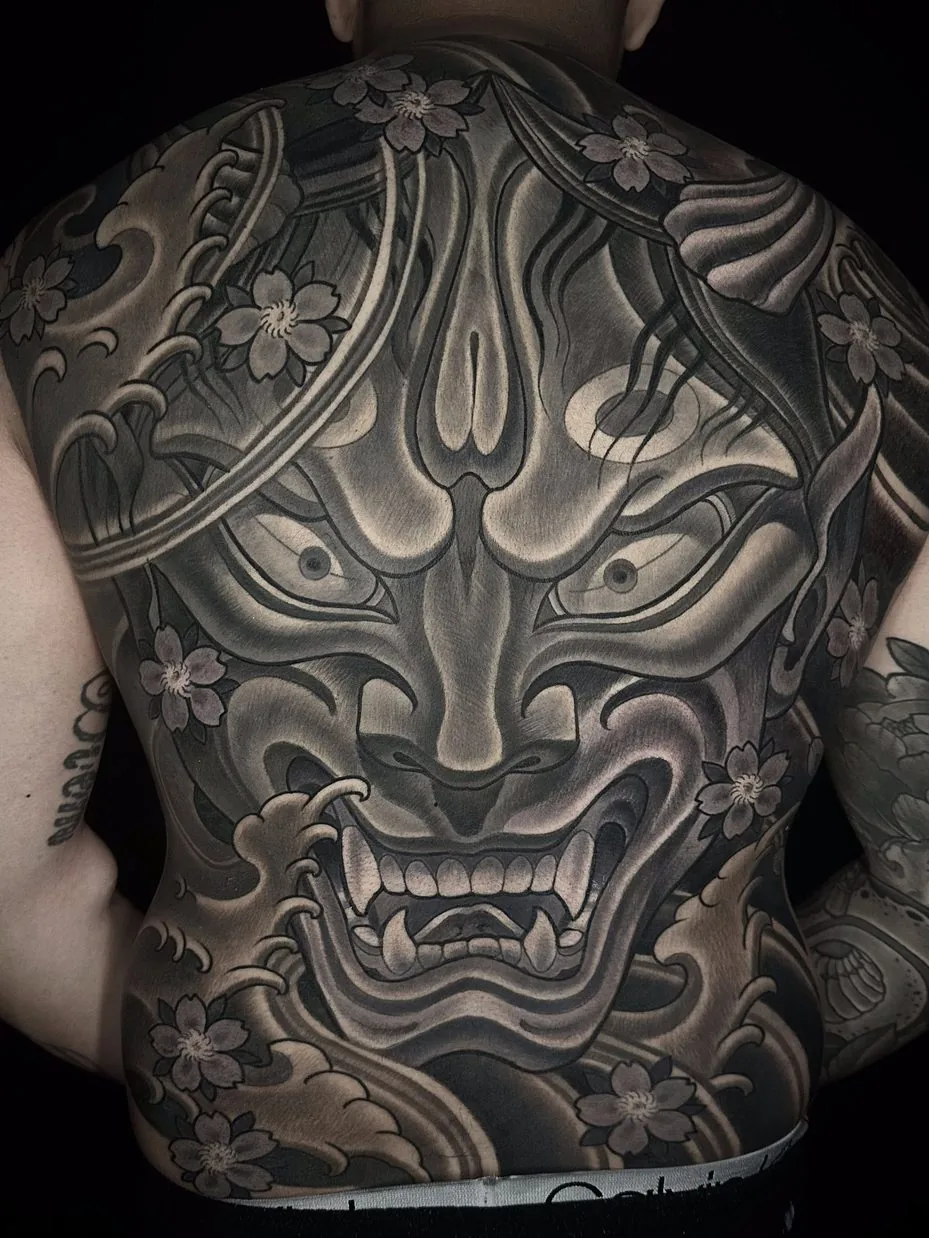
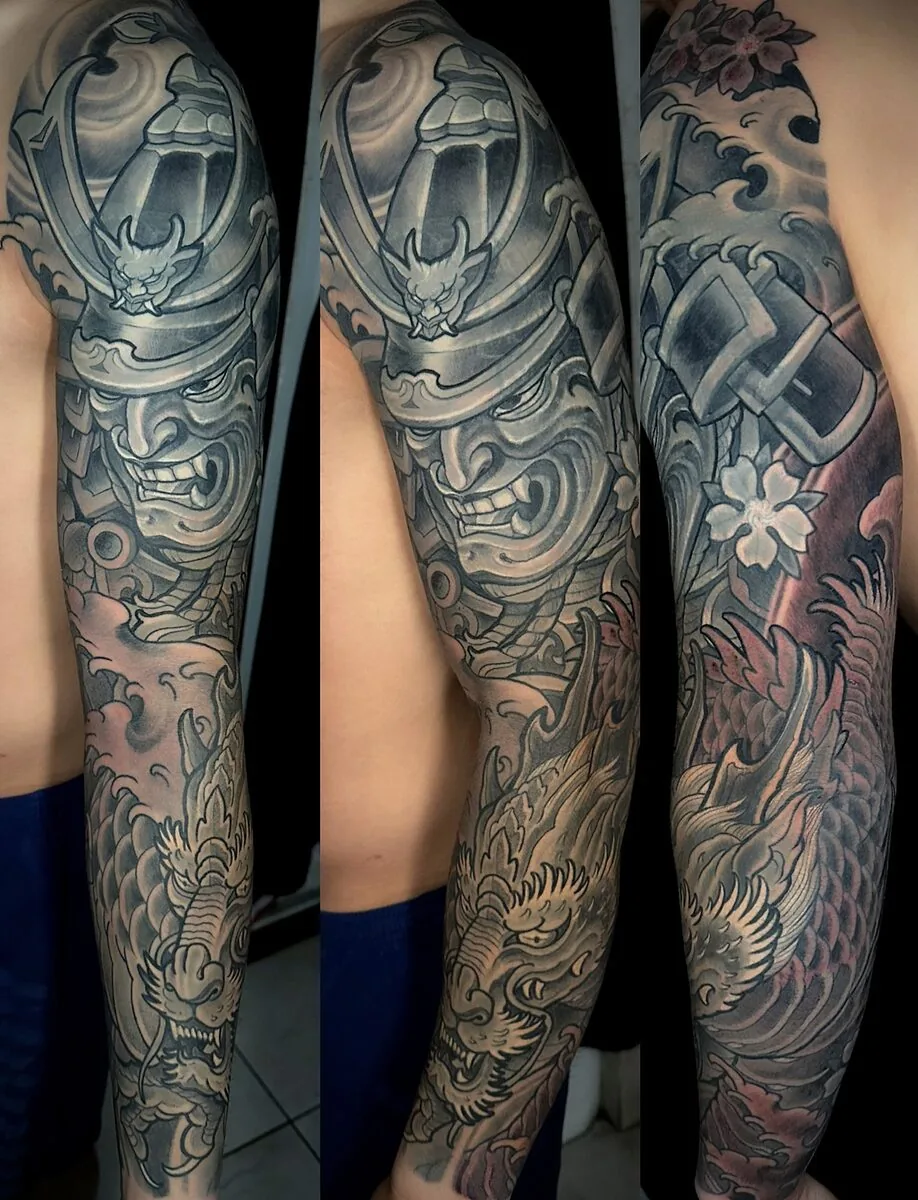
Longevity is the foundation of everything. Linework and shadow structure — the black base — are established first, before any color. It's what gives Japanese work its punch and lets it hold up in 10, 20, and 30 years, and it's why the style reads so beautifully in pure black & grey.
Color that lasts
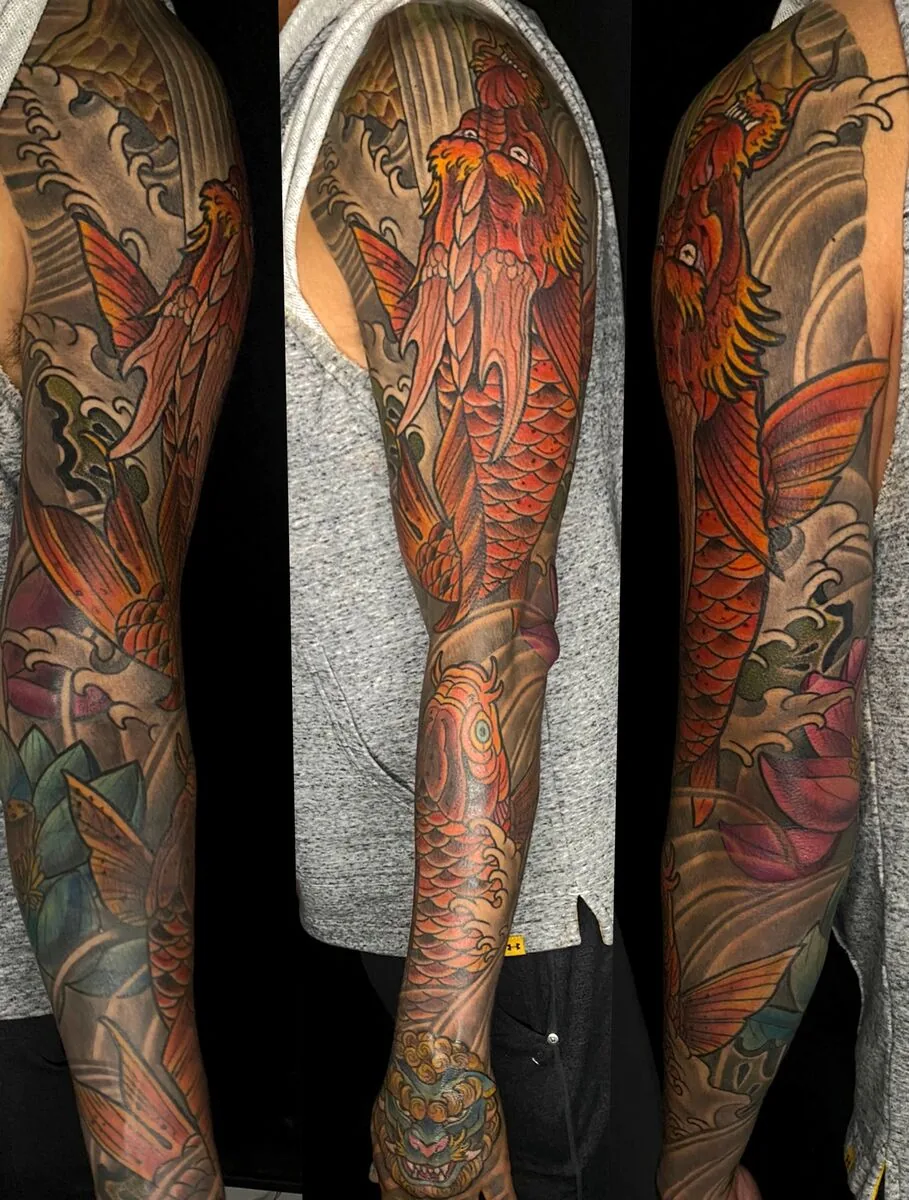
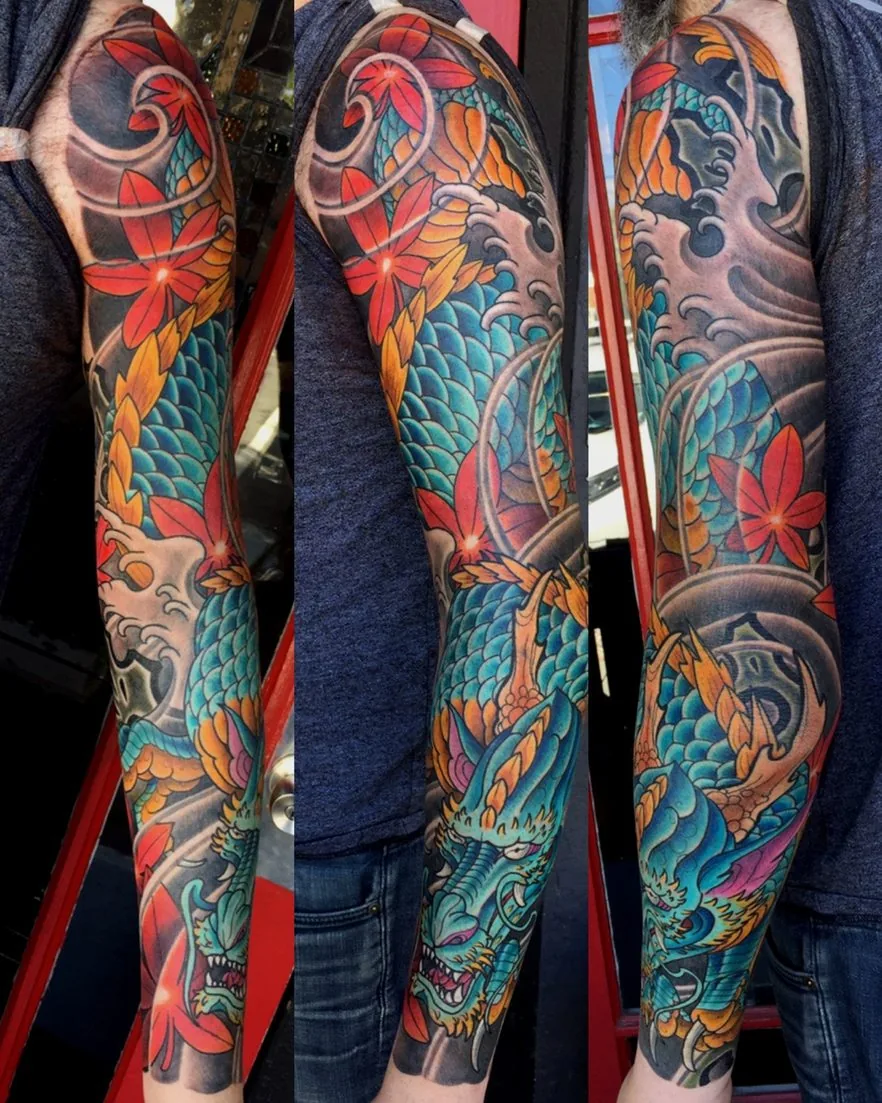
When a piece calls for color, it's chosen with a real understanding of how ink behaves in skin over decades — the saturated reds, golds, and greens Japanese work is known for, built on that same black structure so it never goes muddy. The goal is a piece that still reads from across the room years later.
On Skin
Neo Japanese & Asian work, on real clients
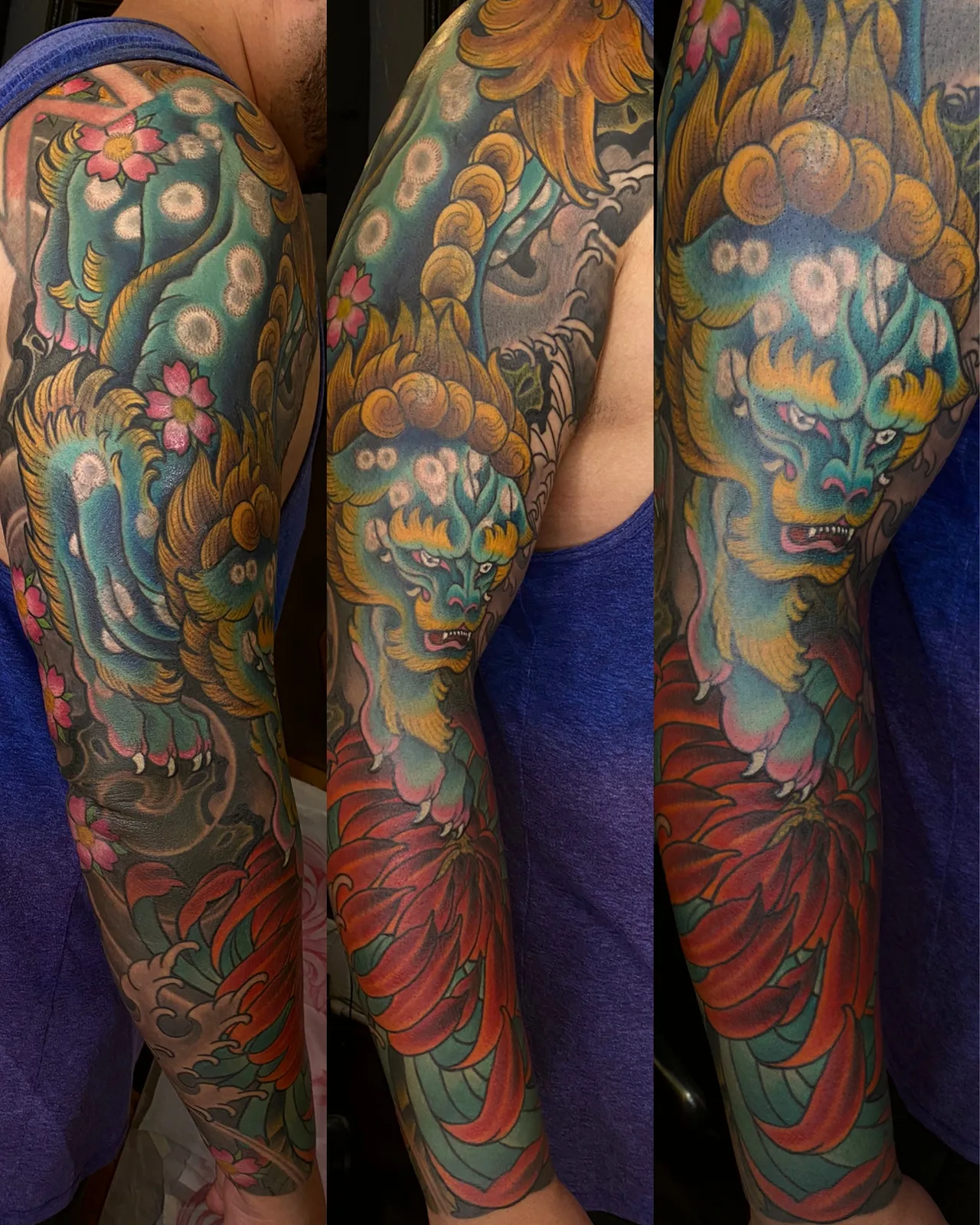
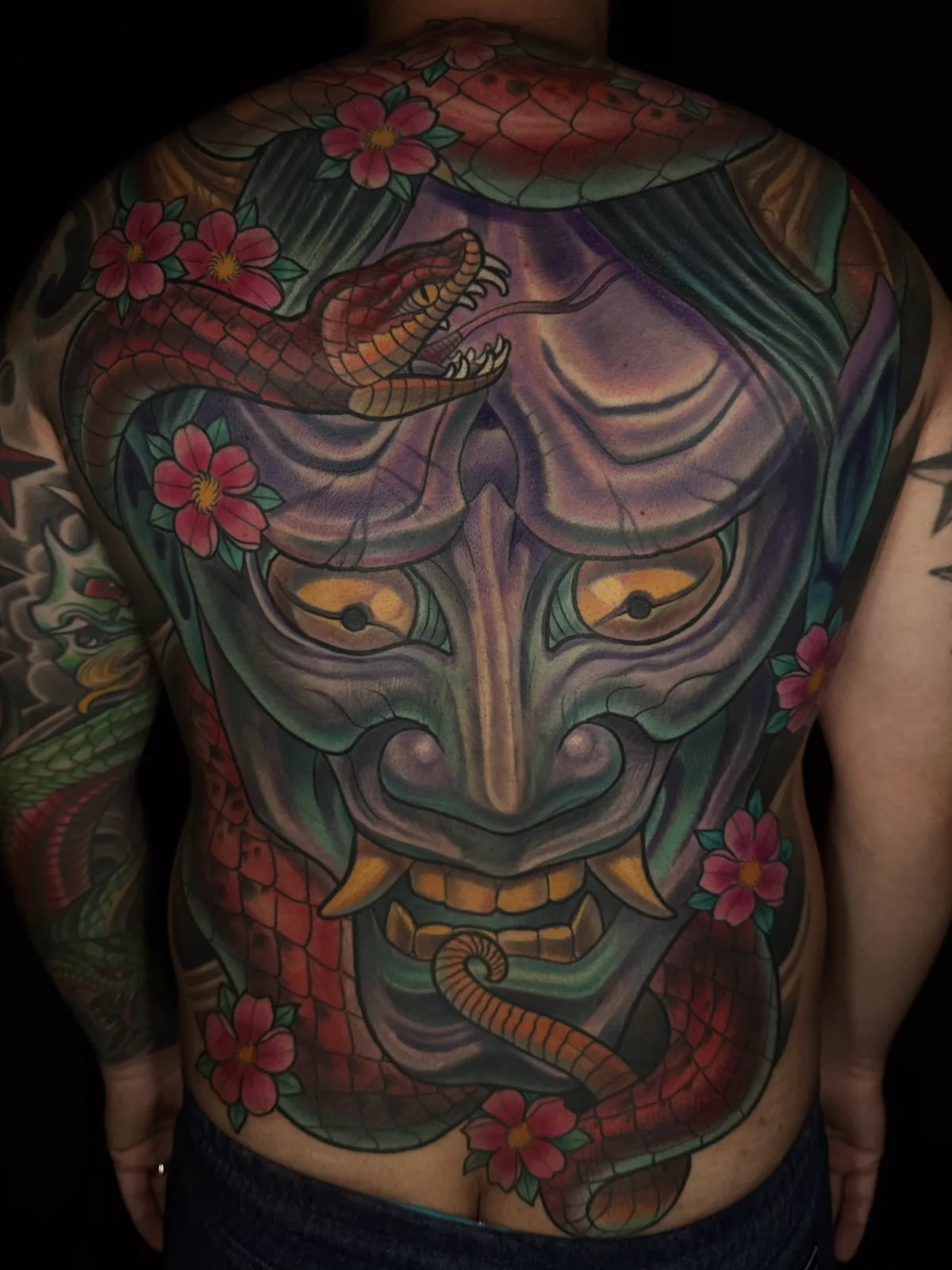
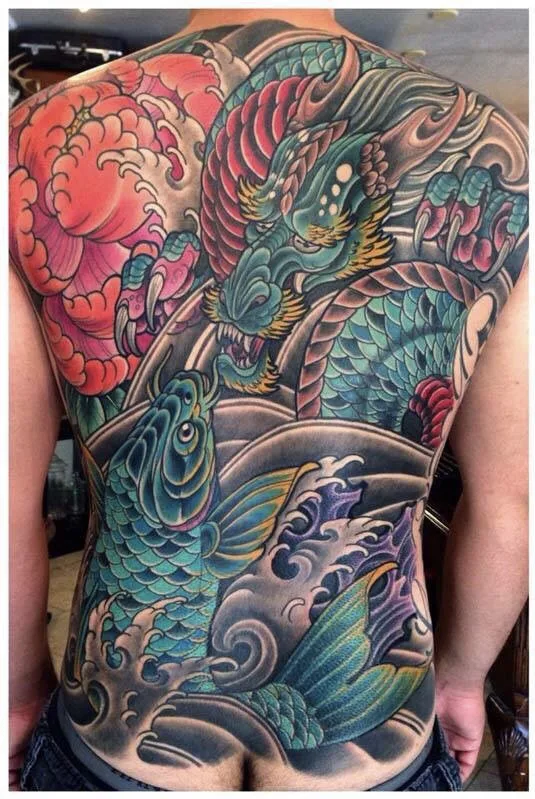
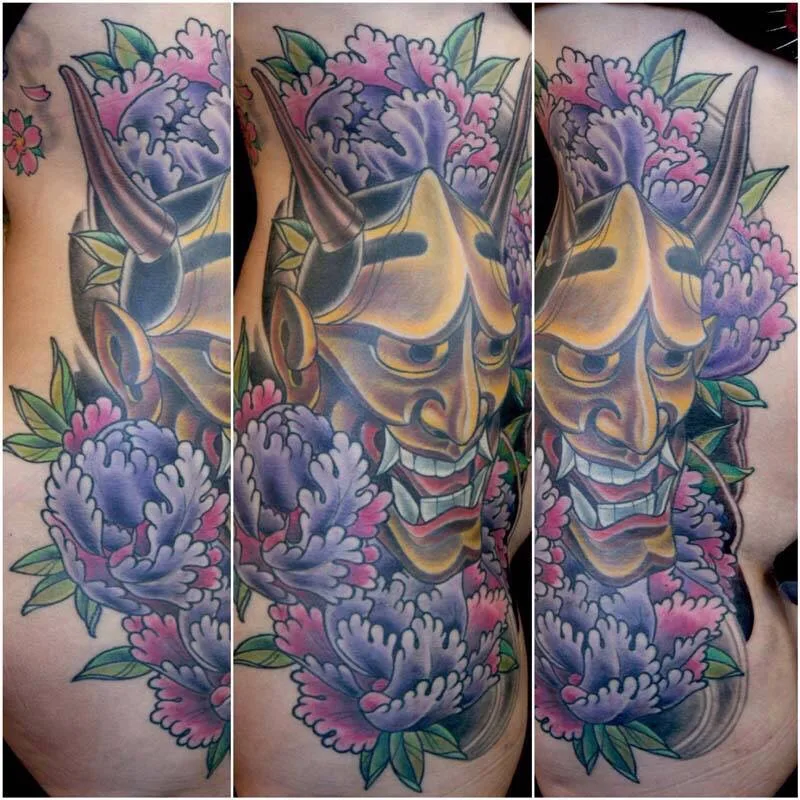
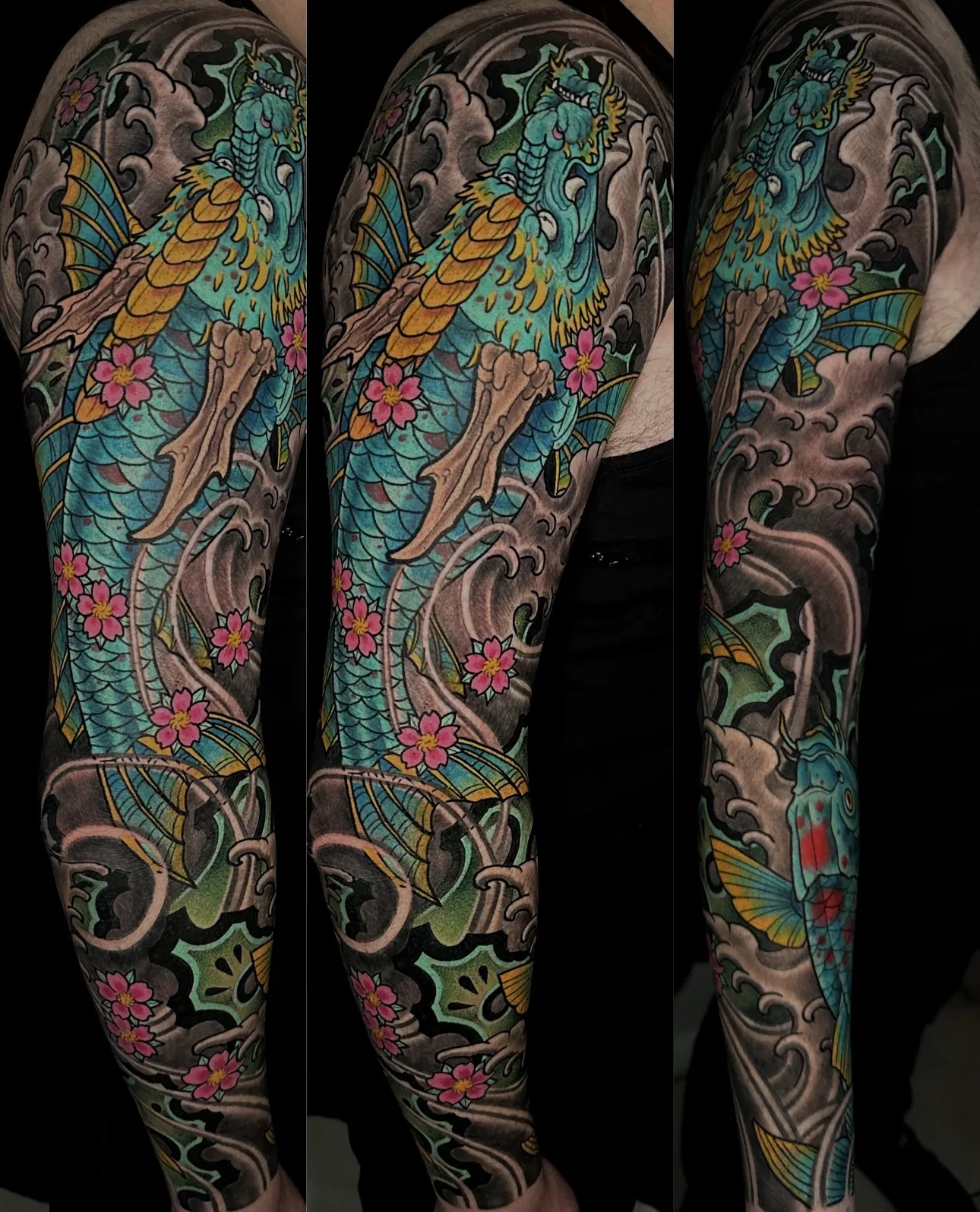
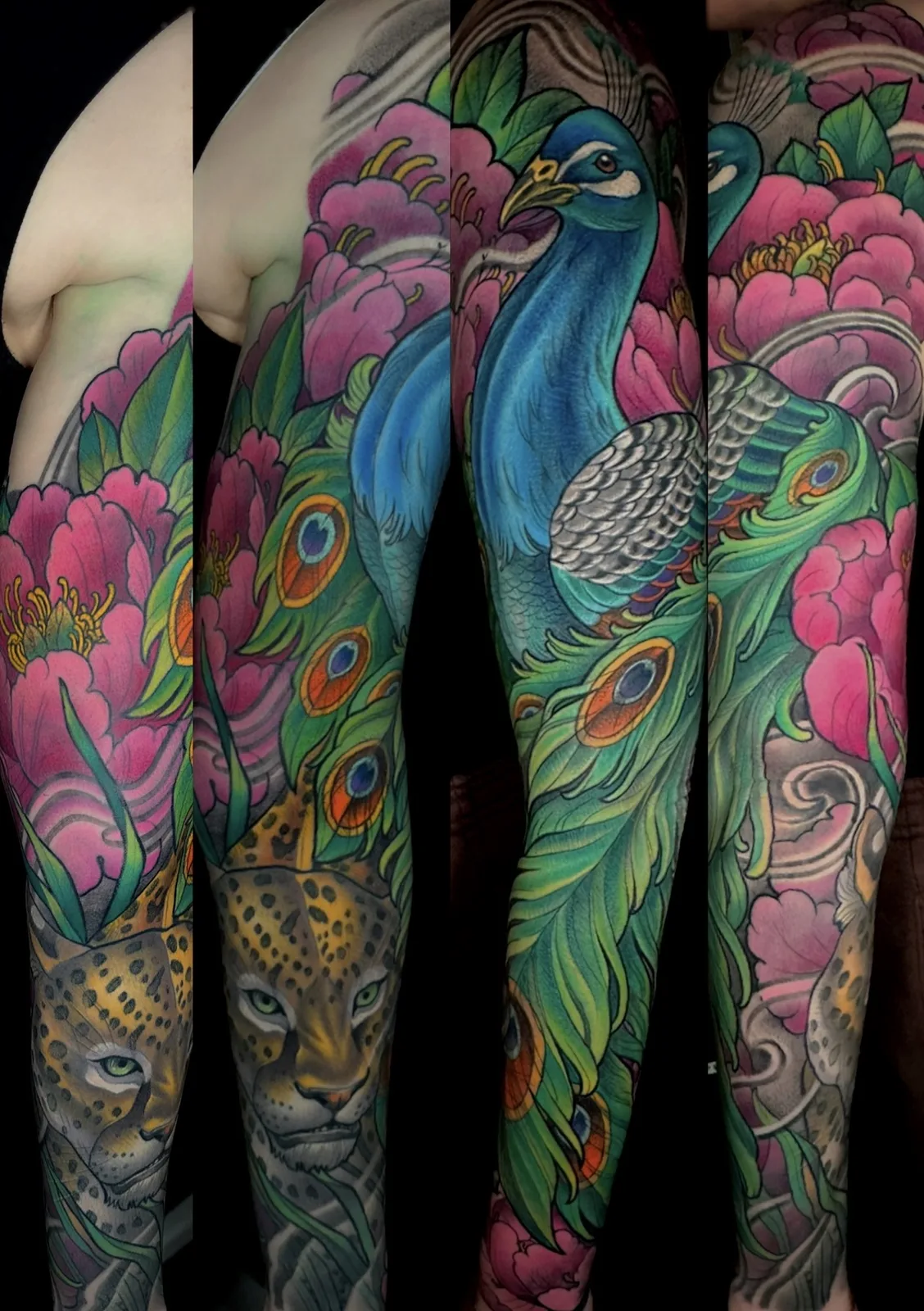
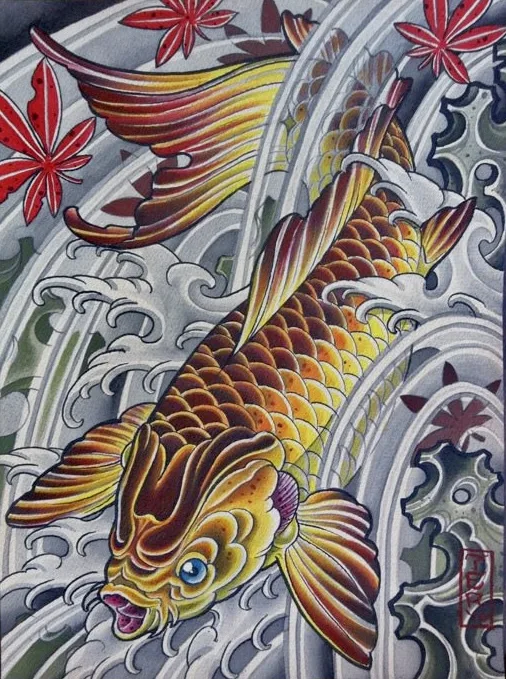
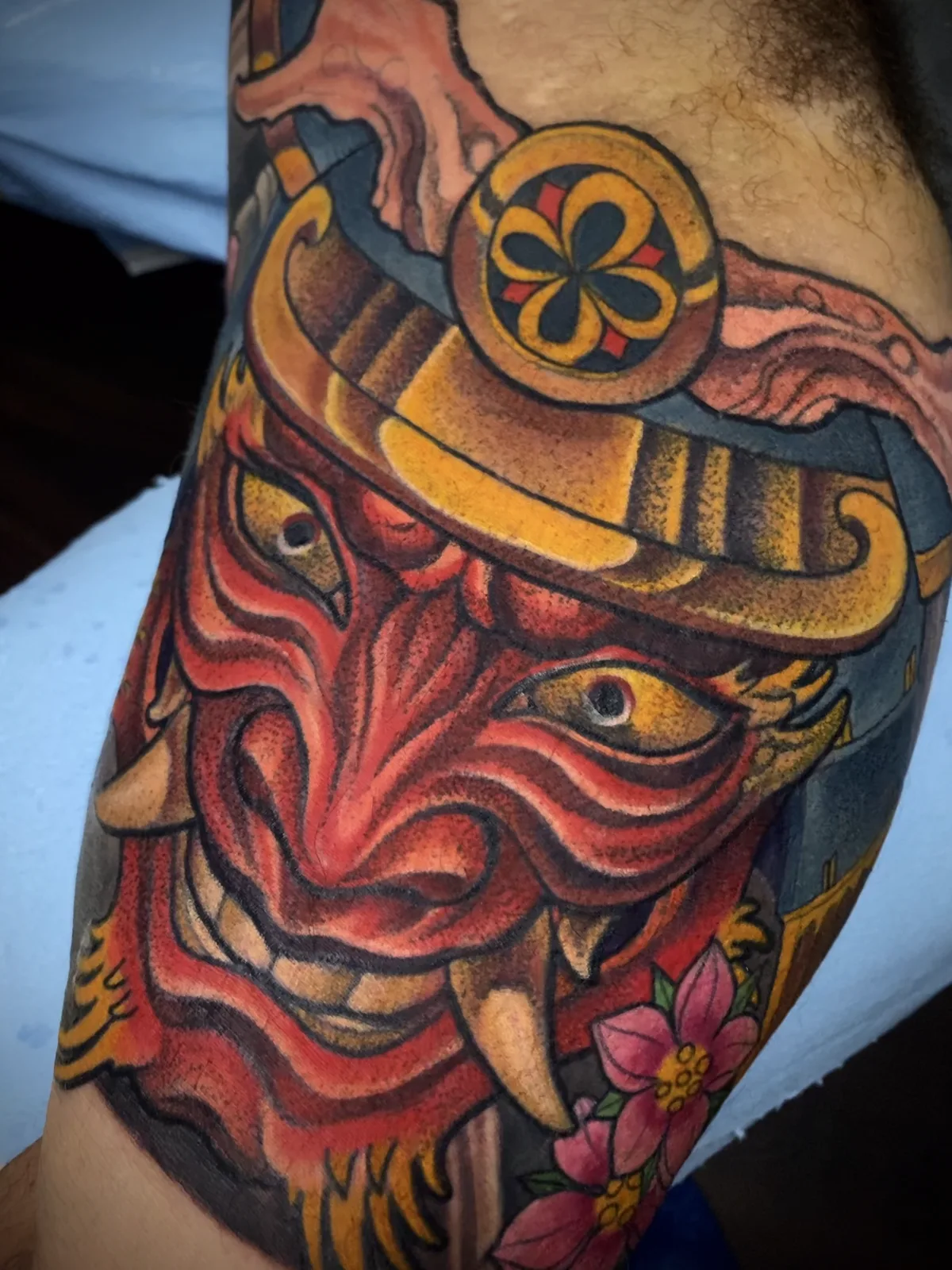
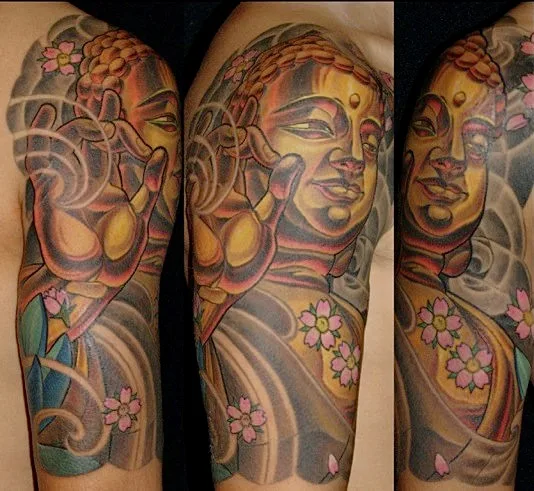
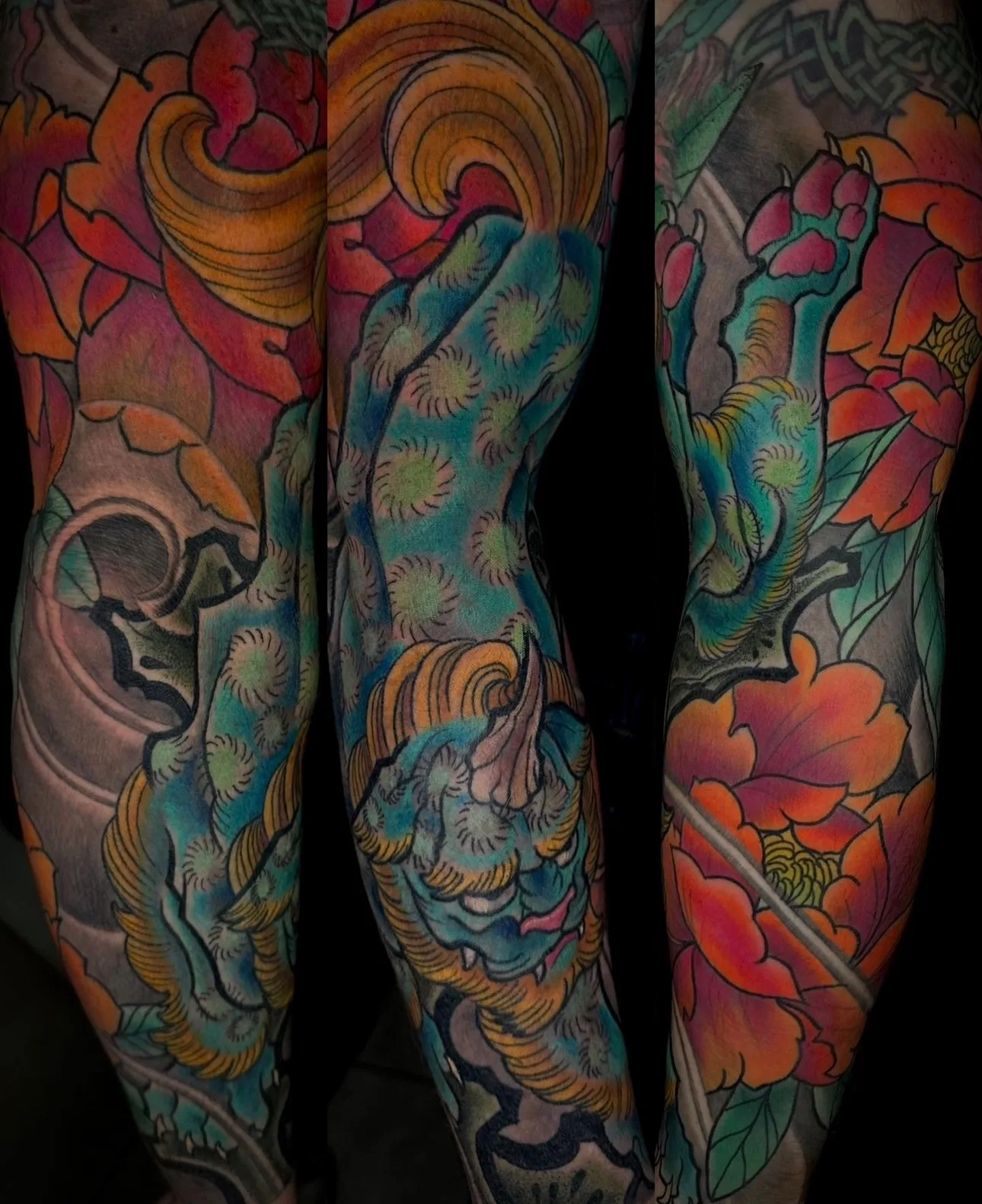
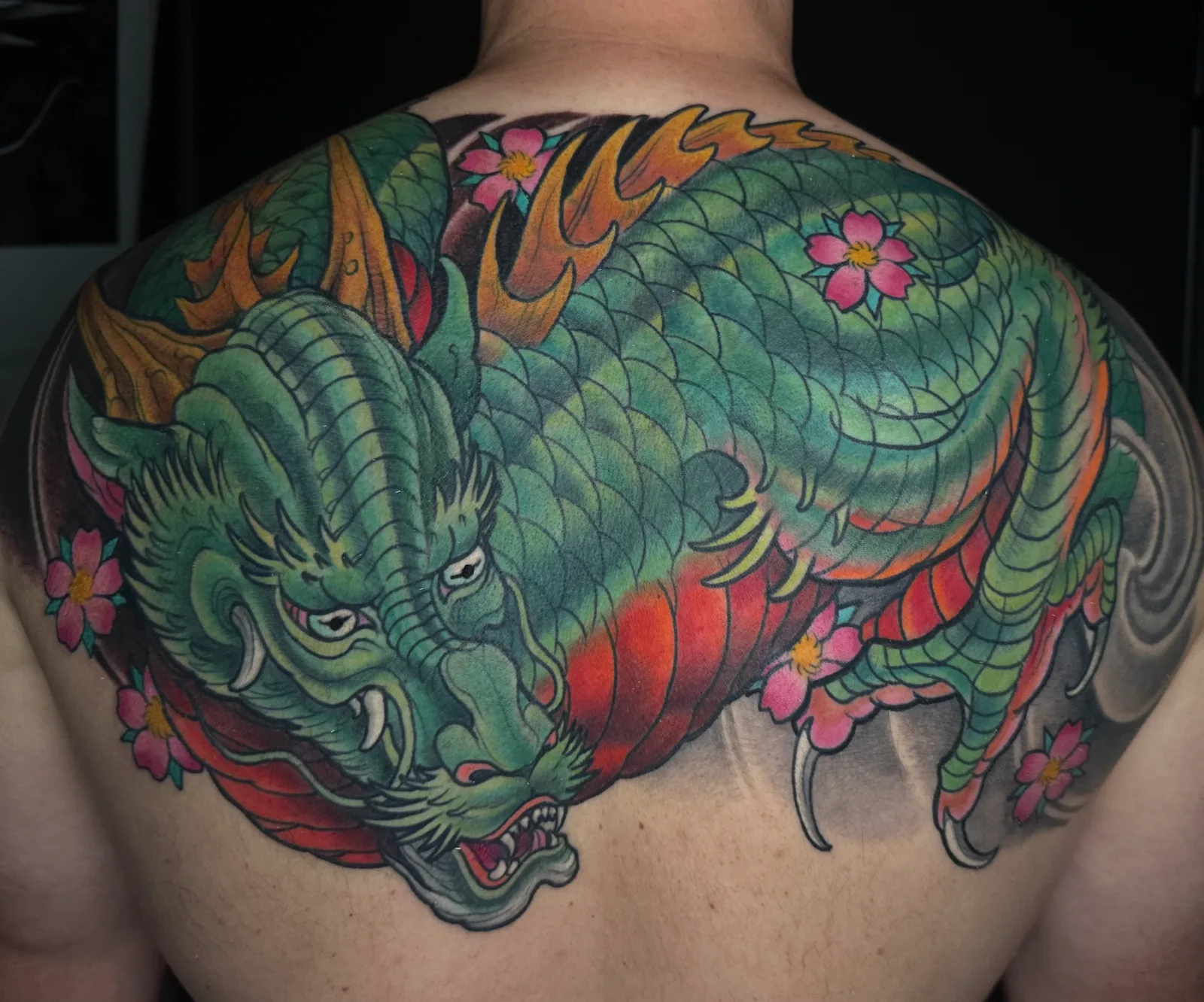
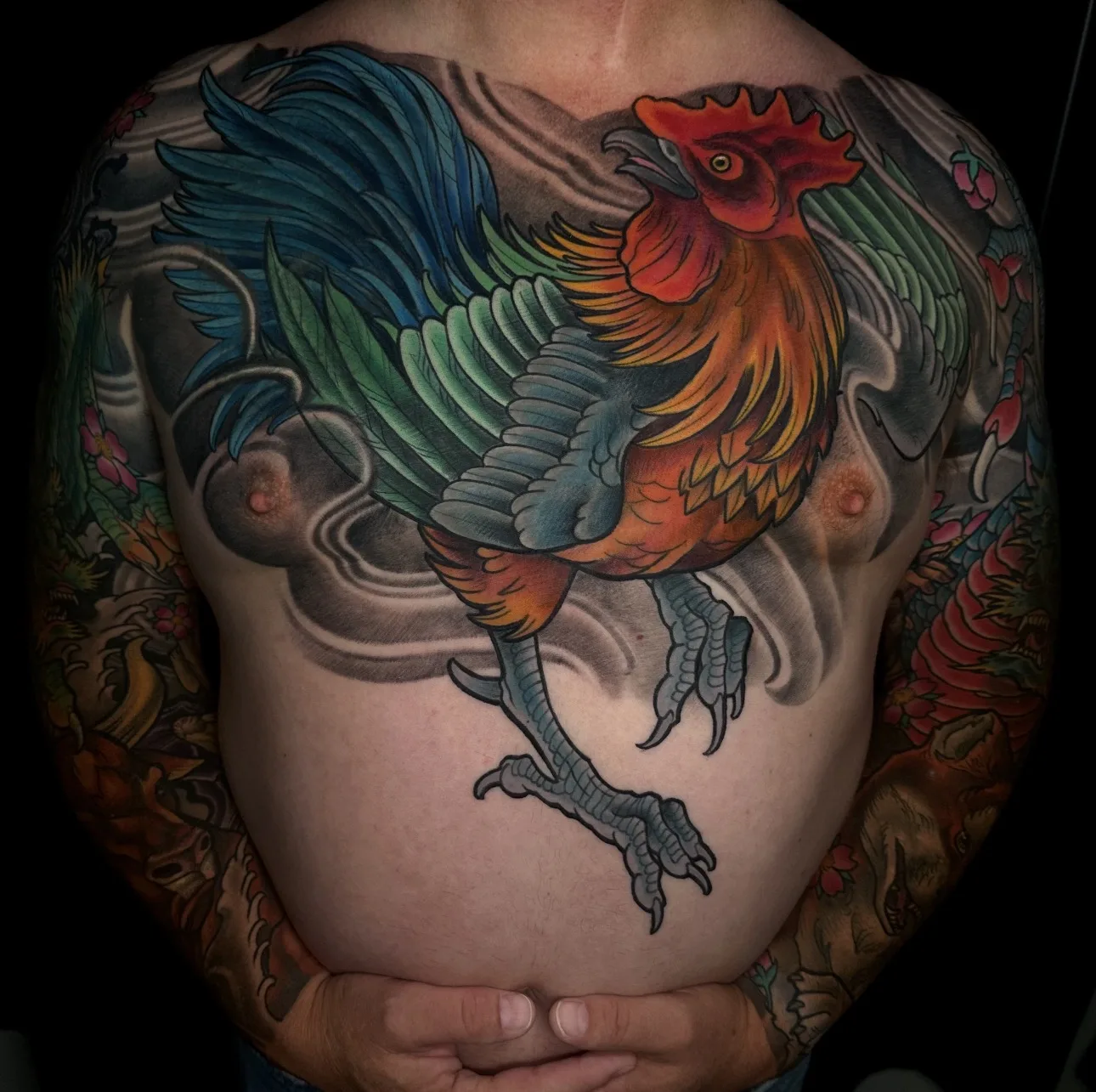
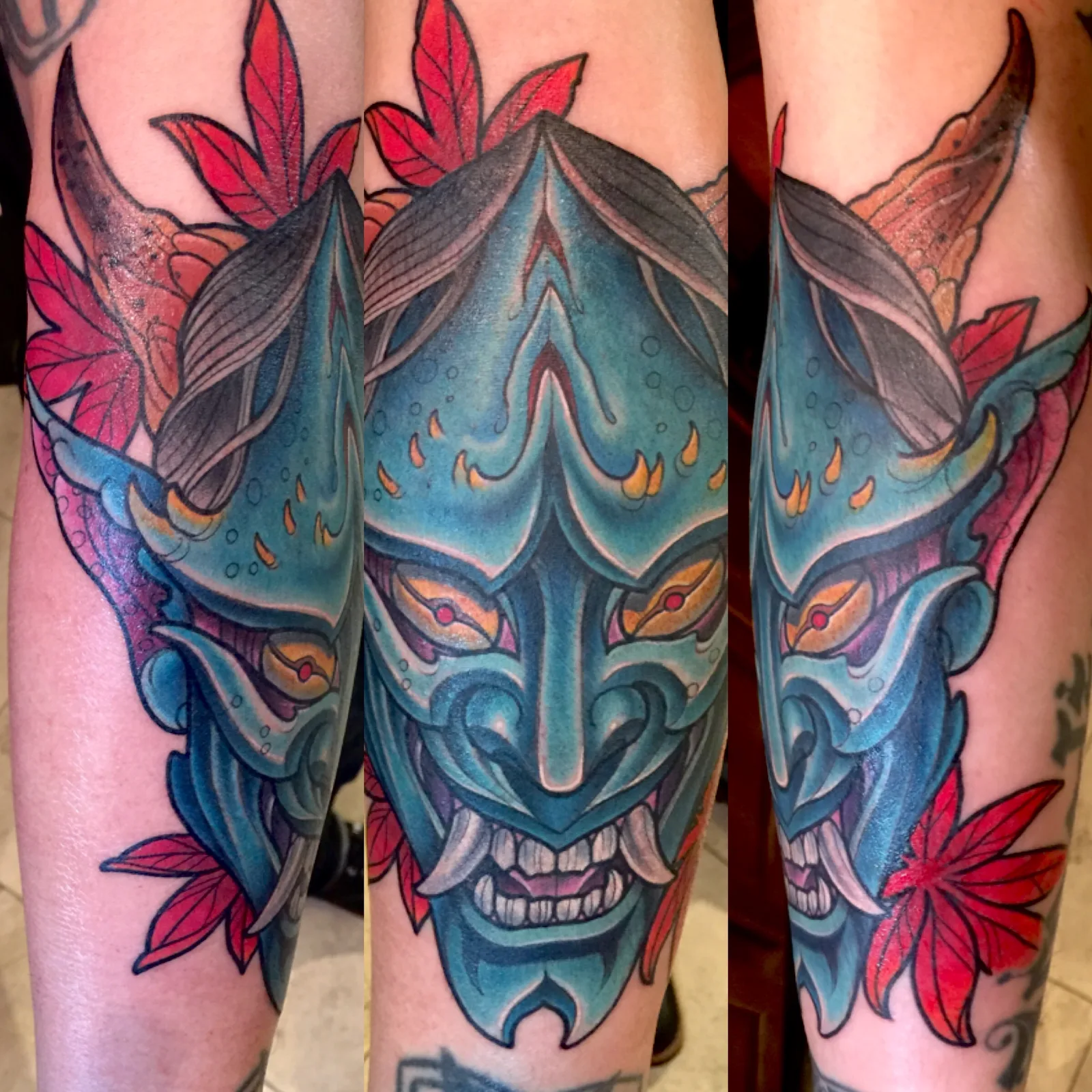
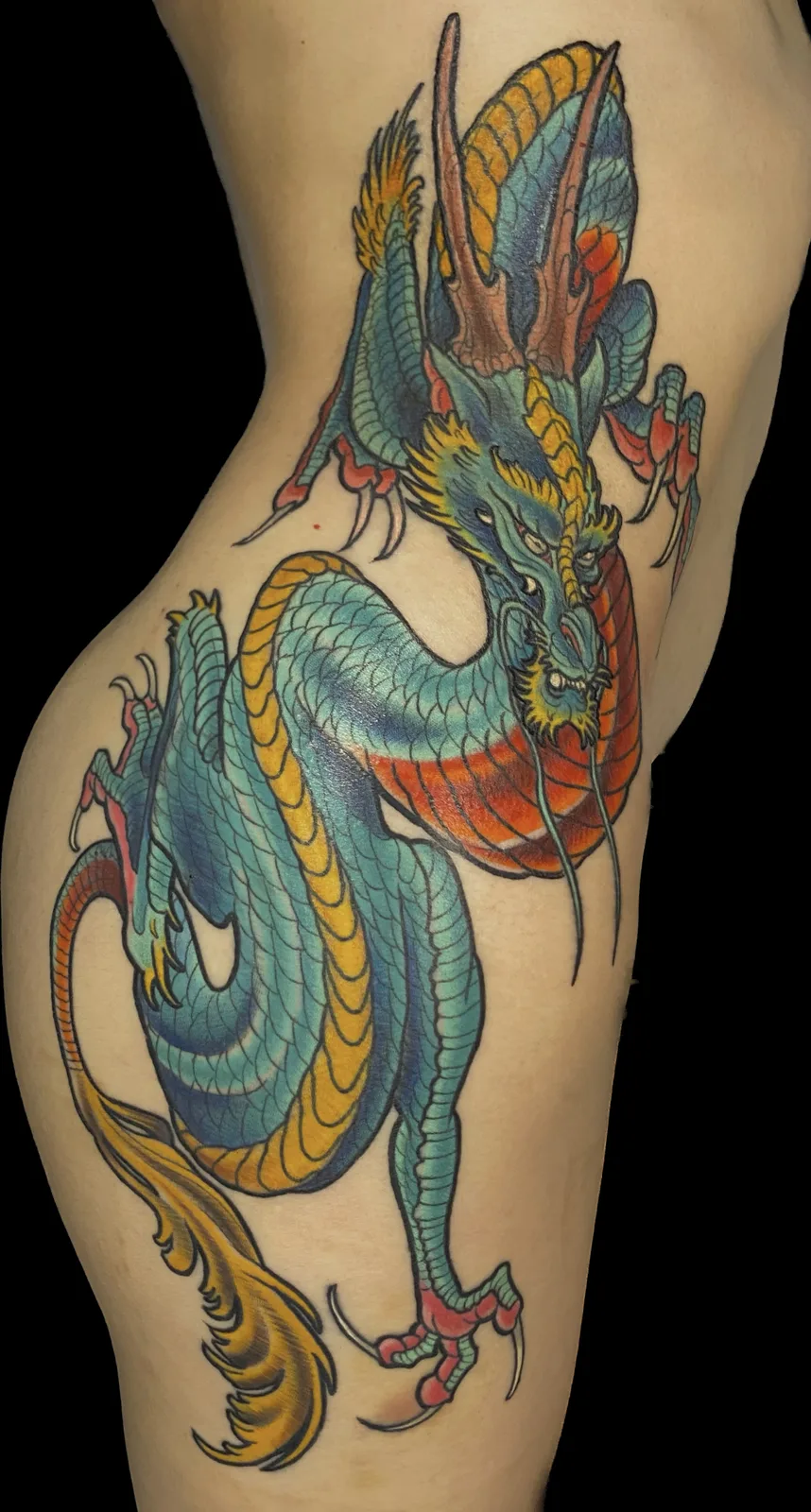
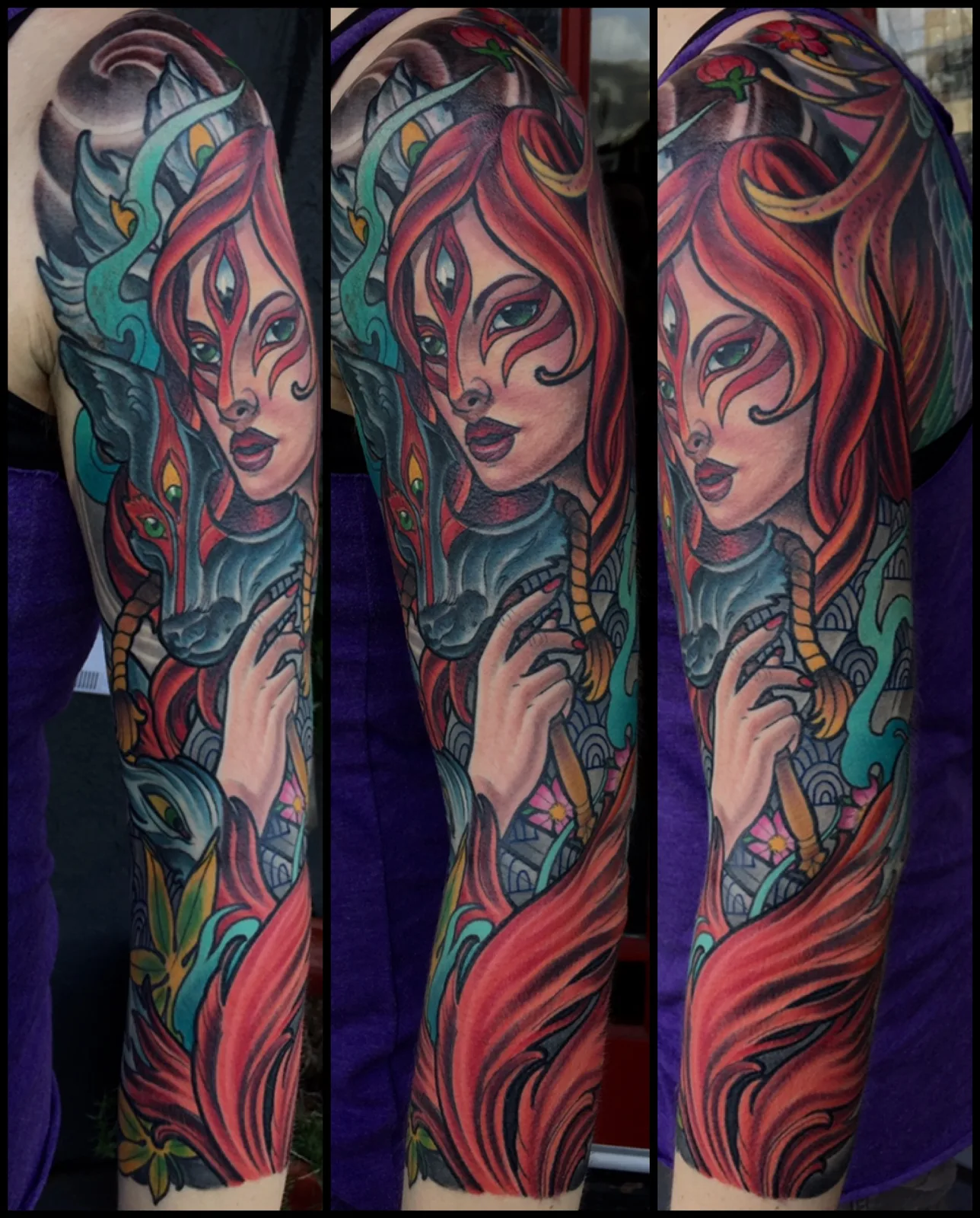
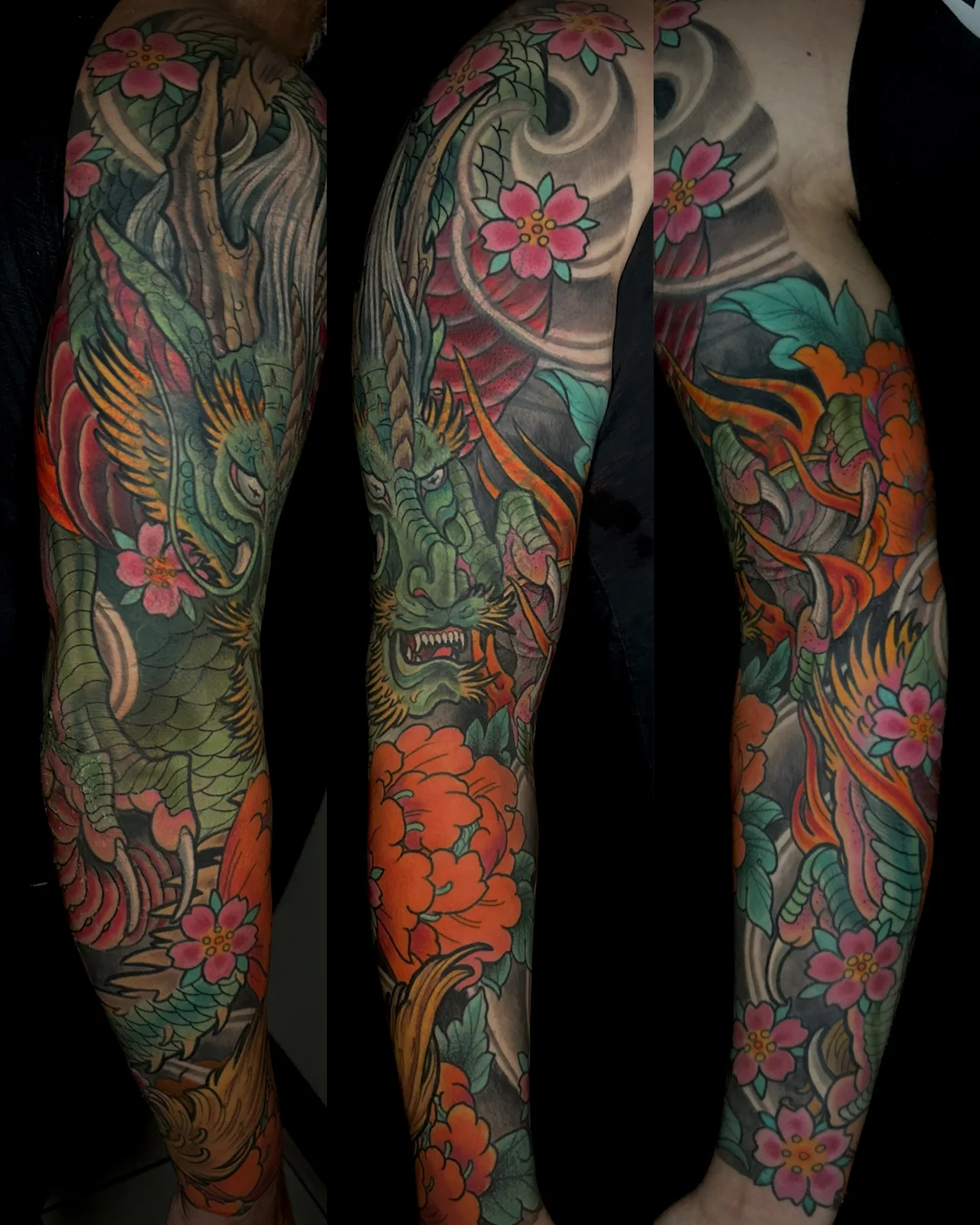
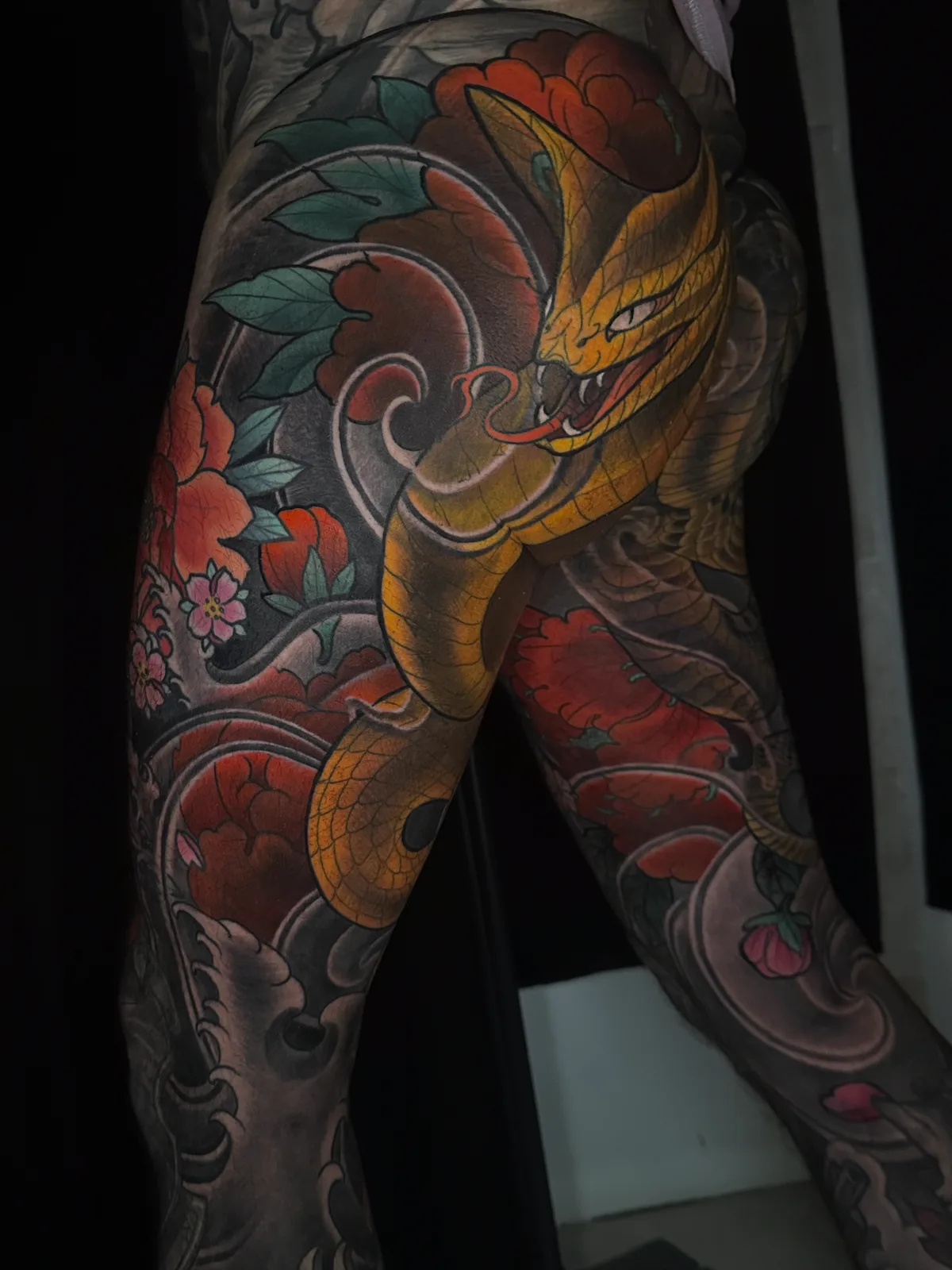
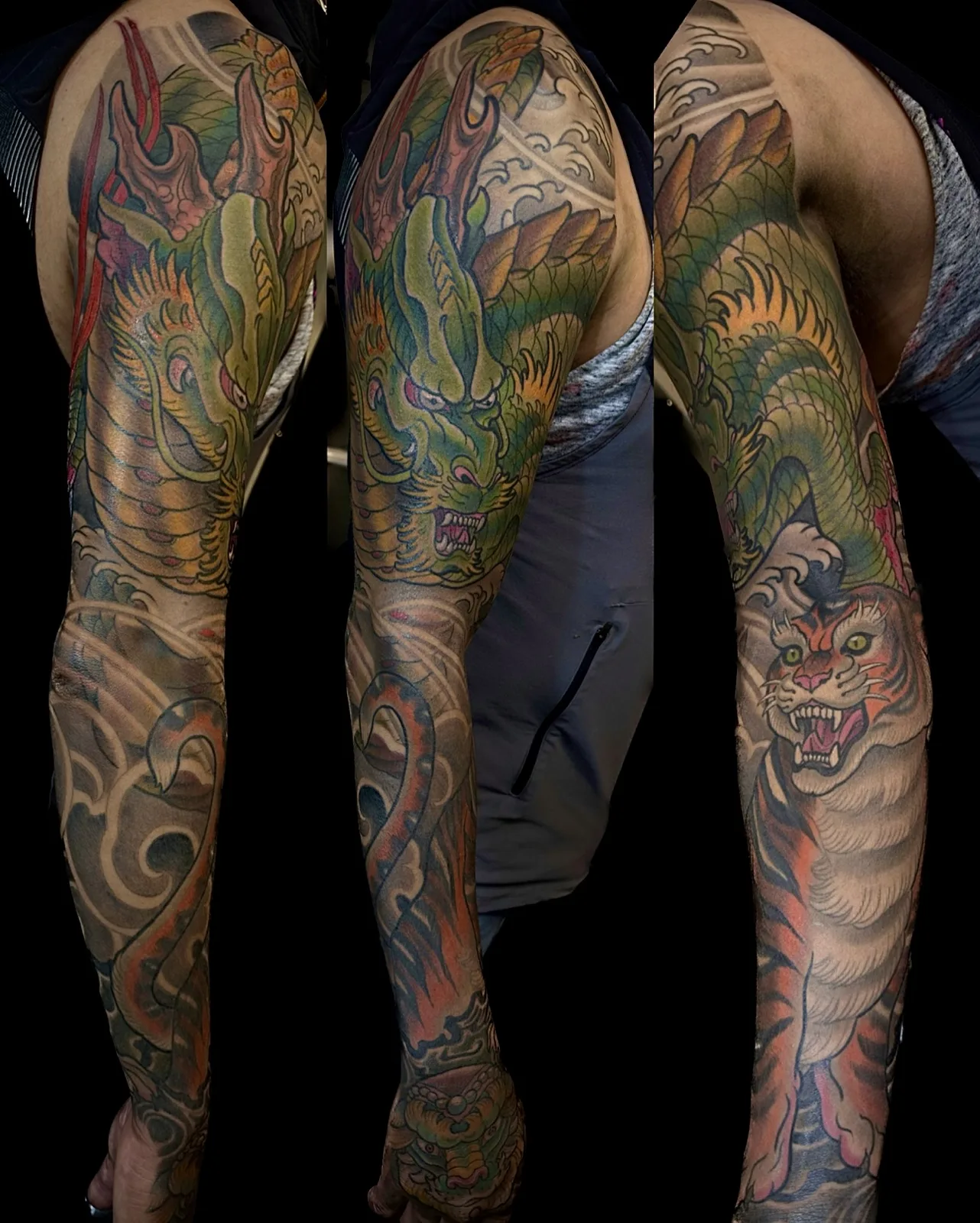
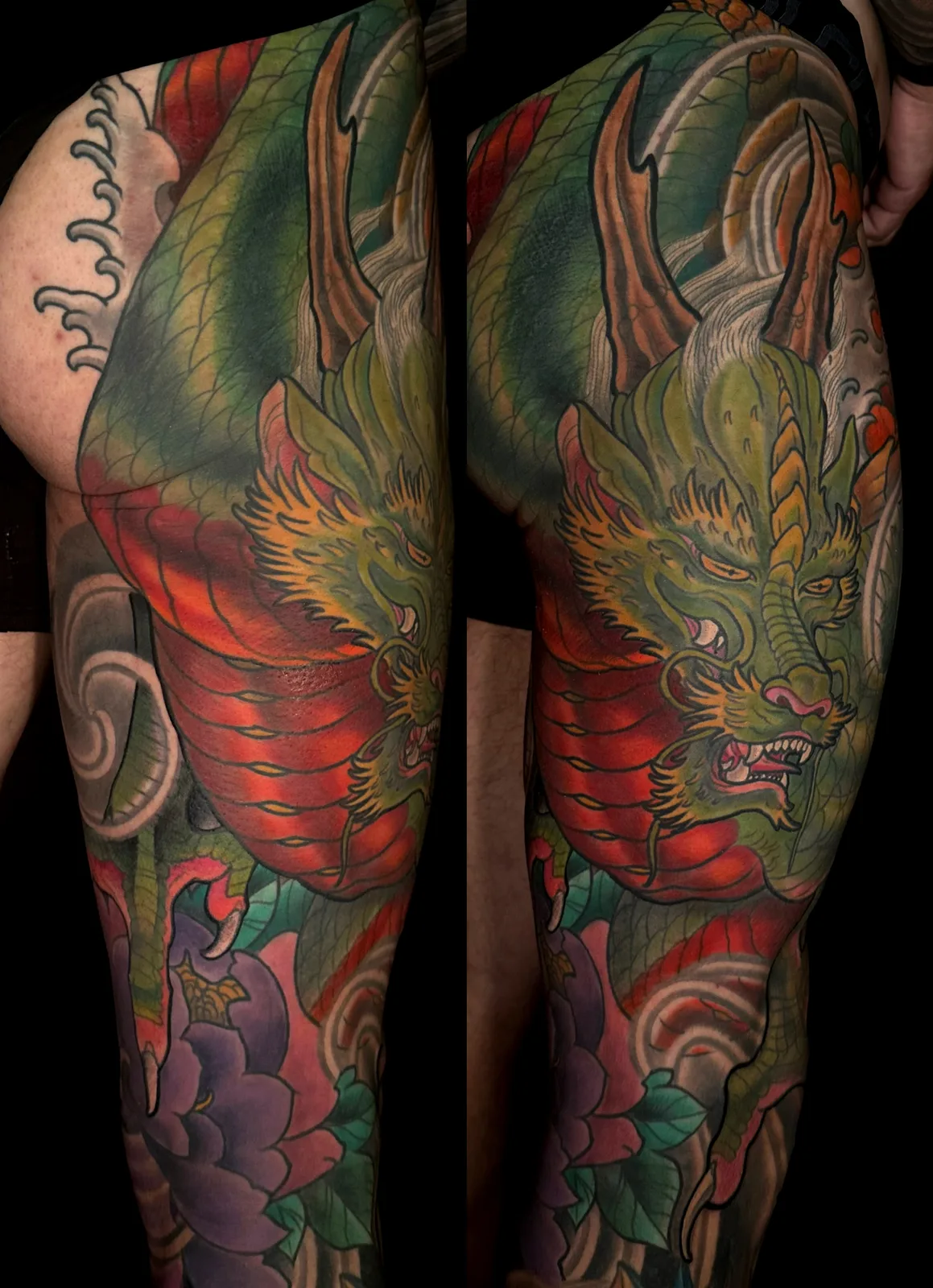
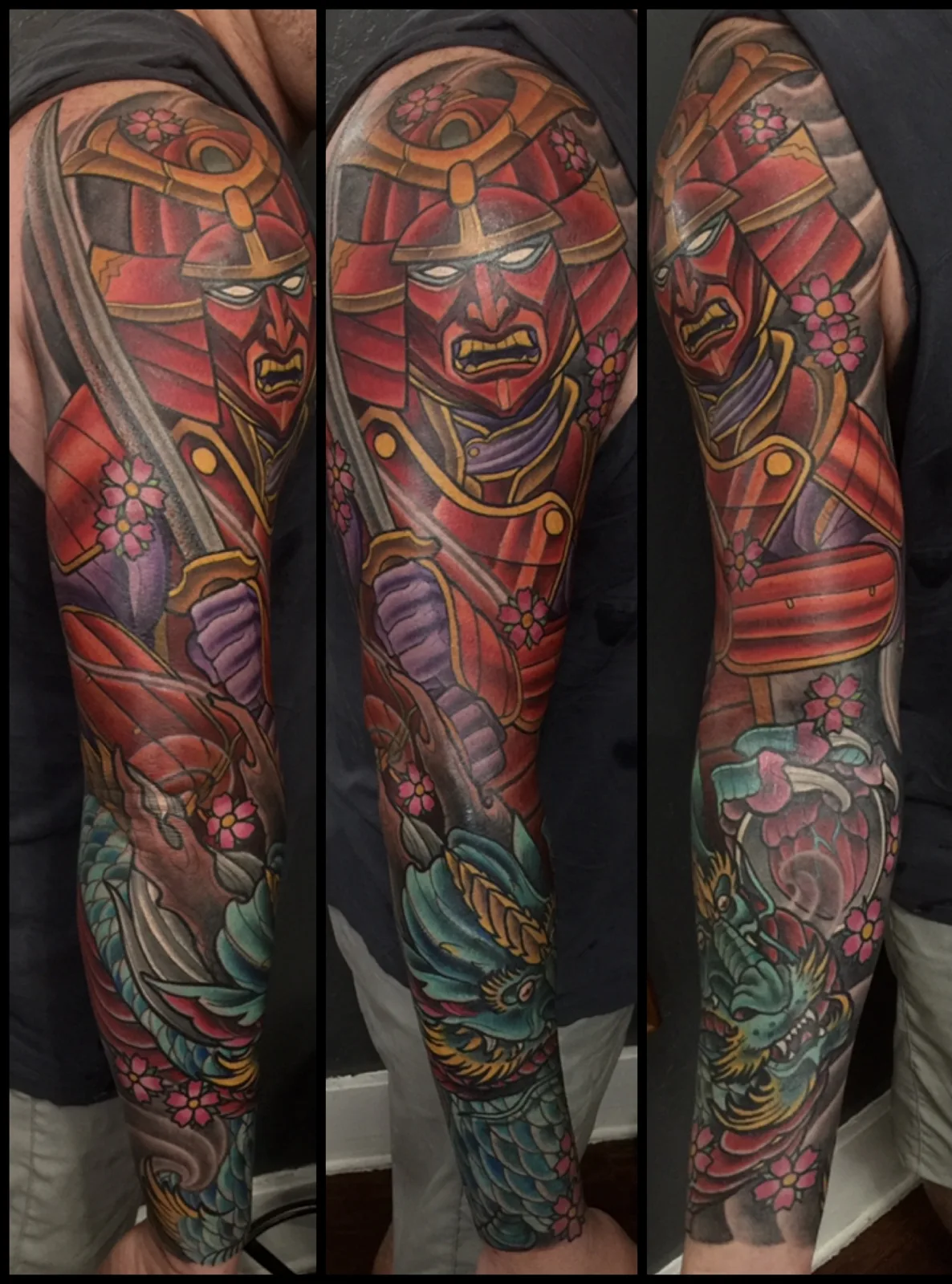
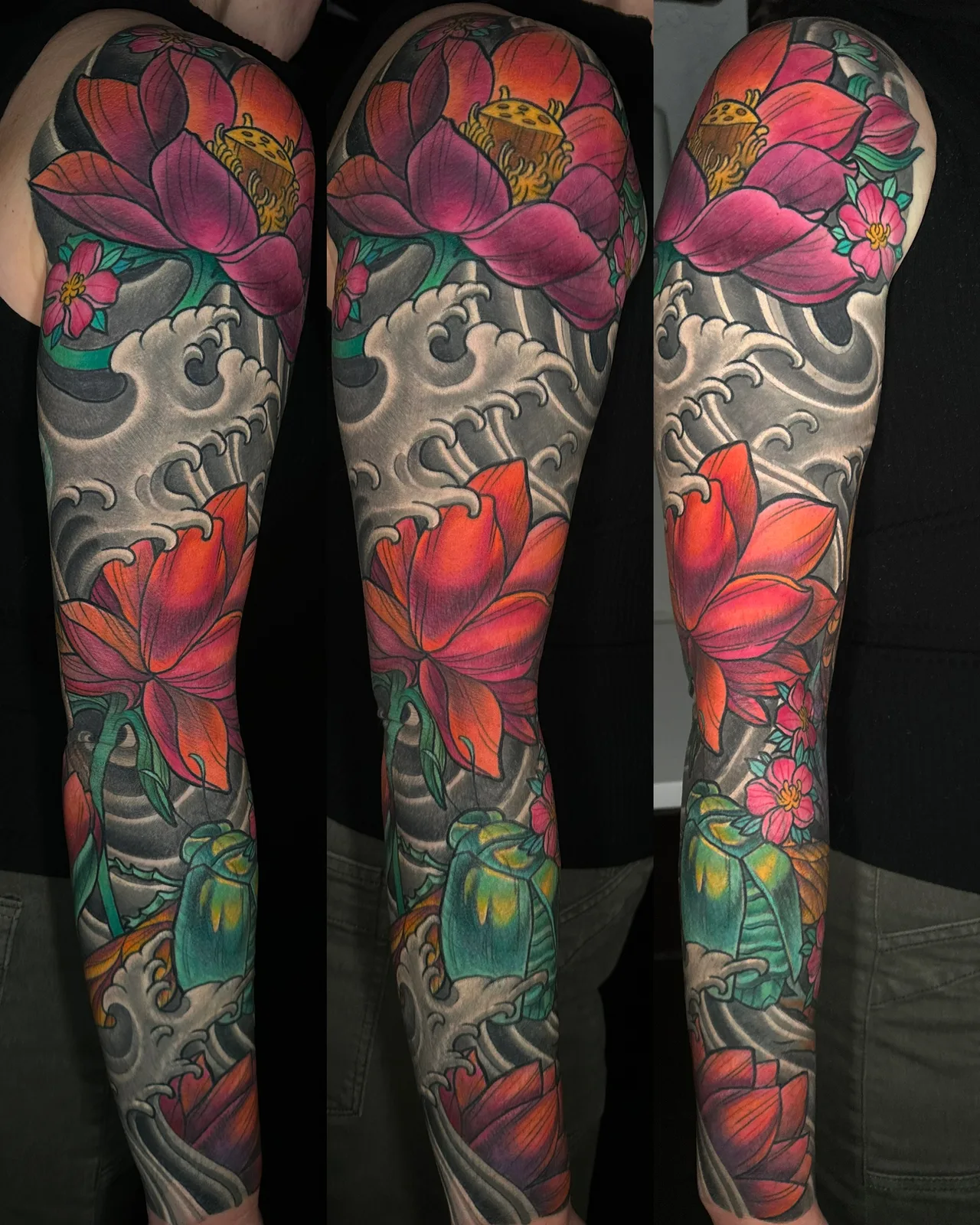
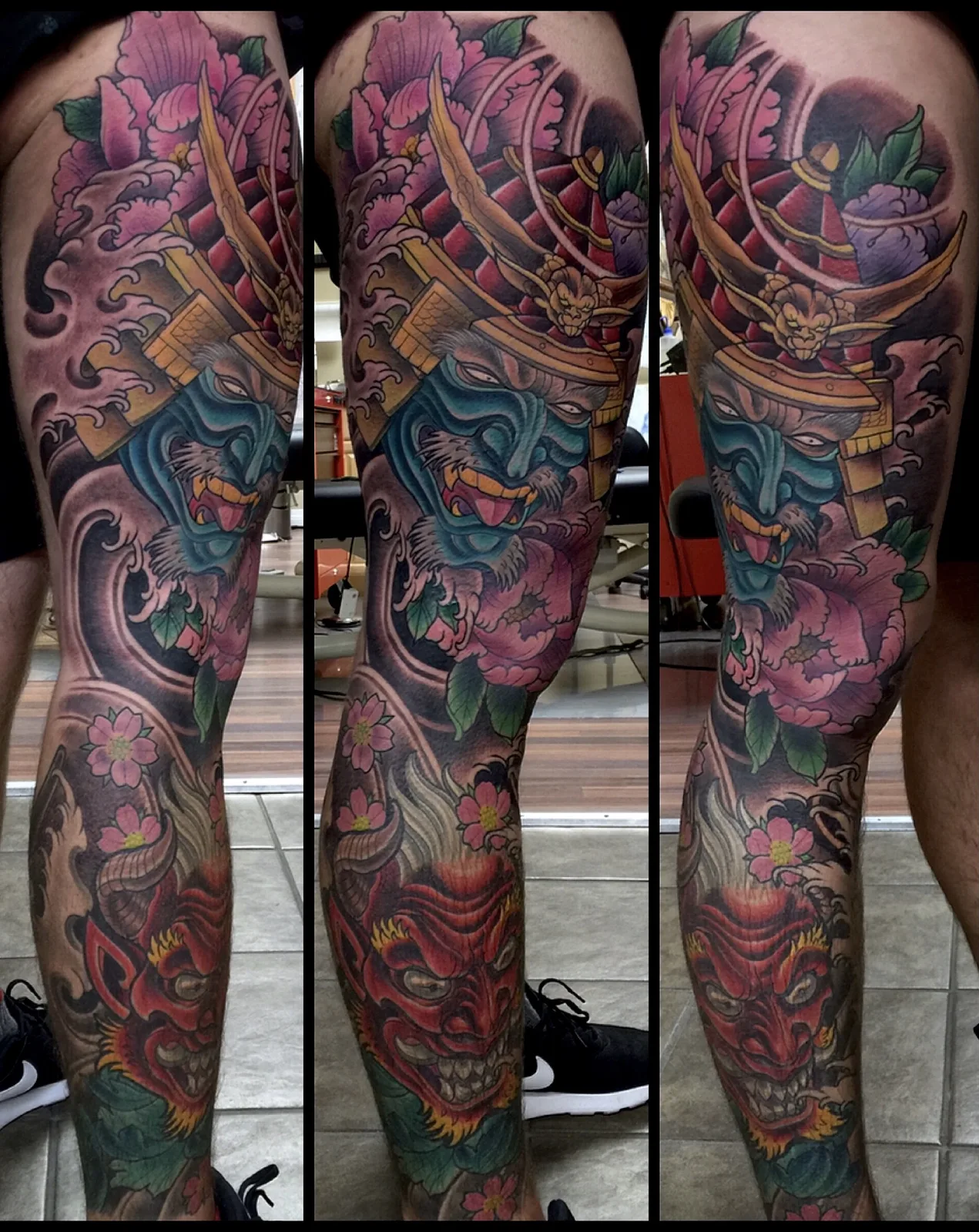
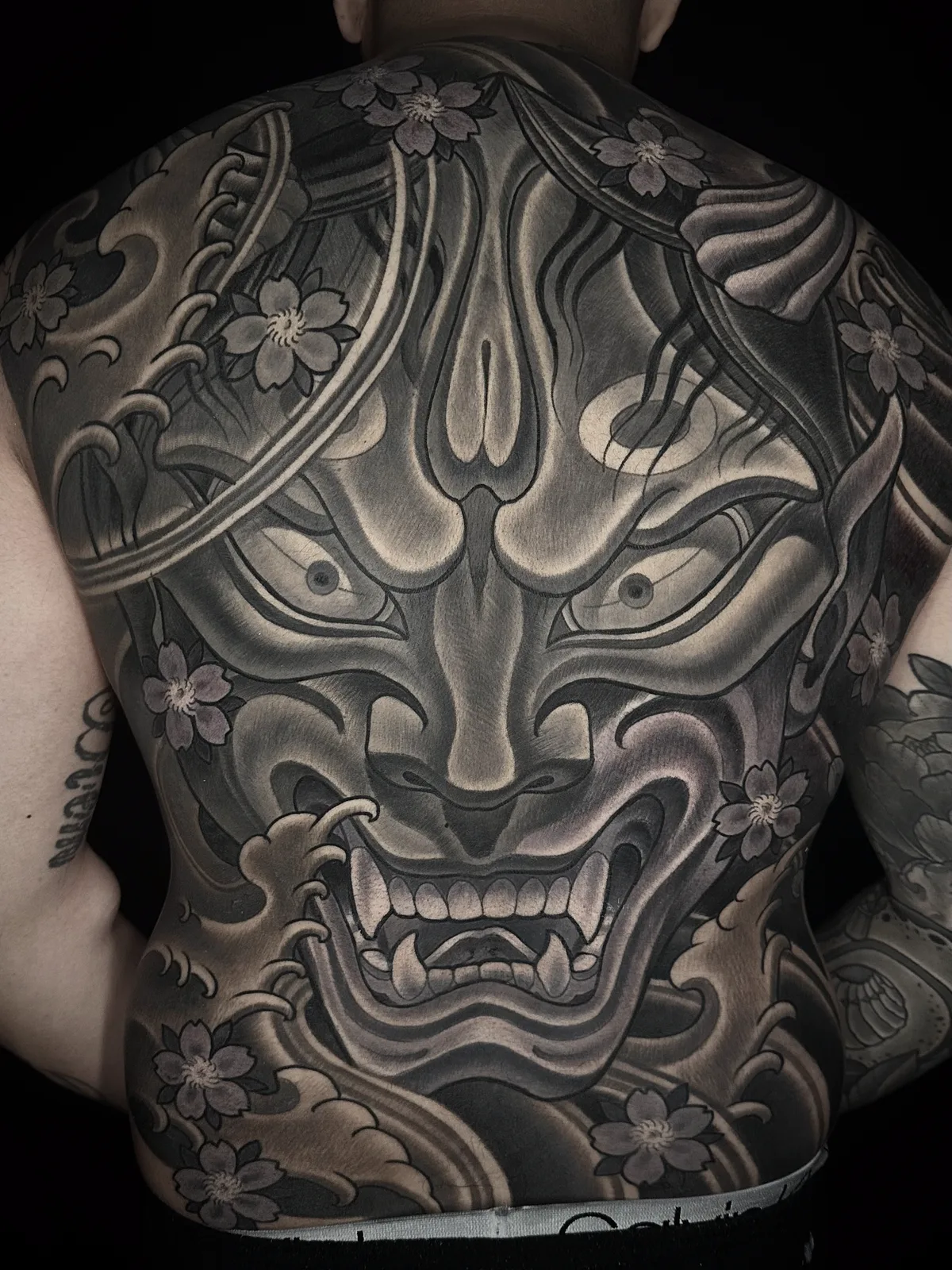
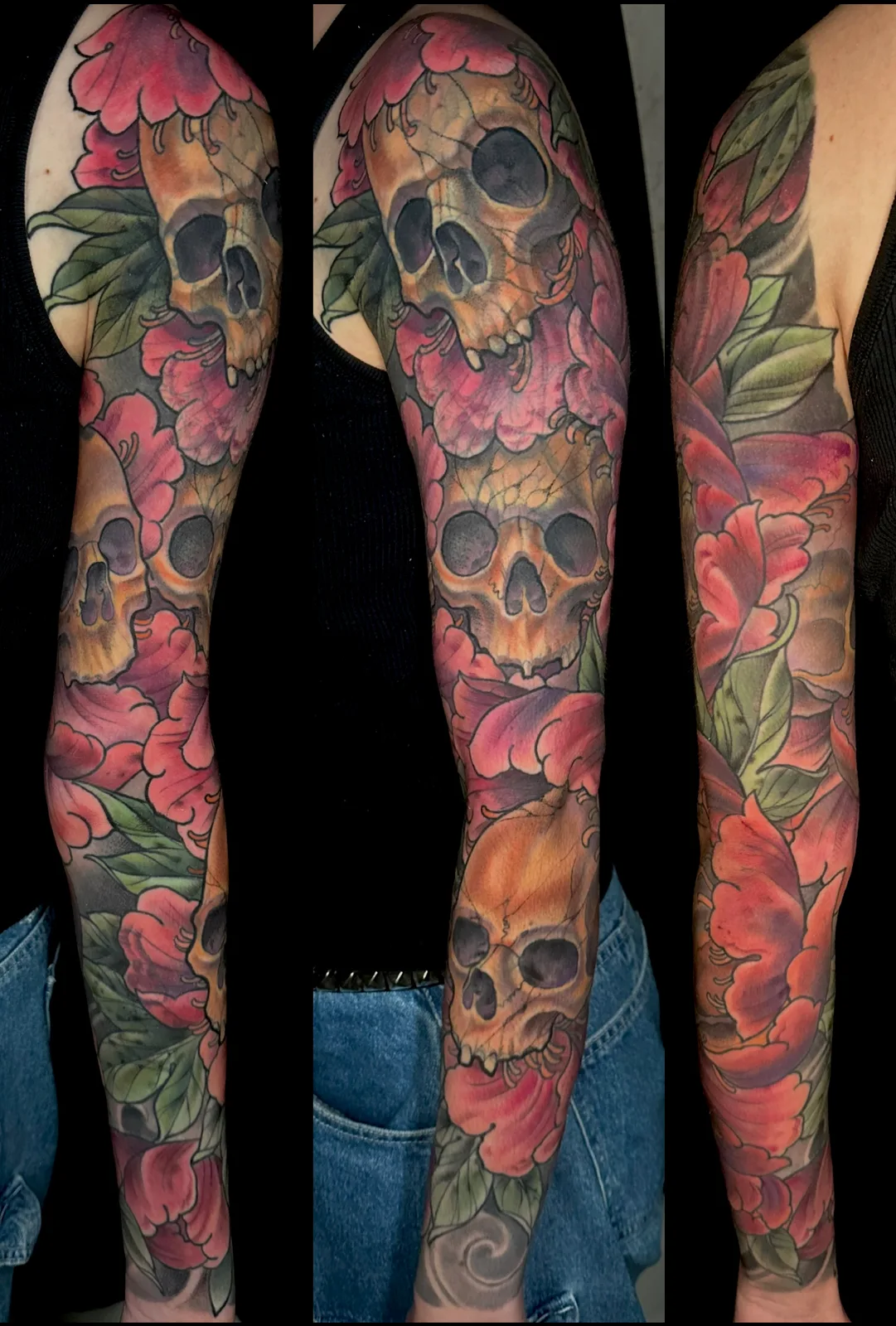
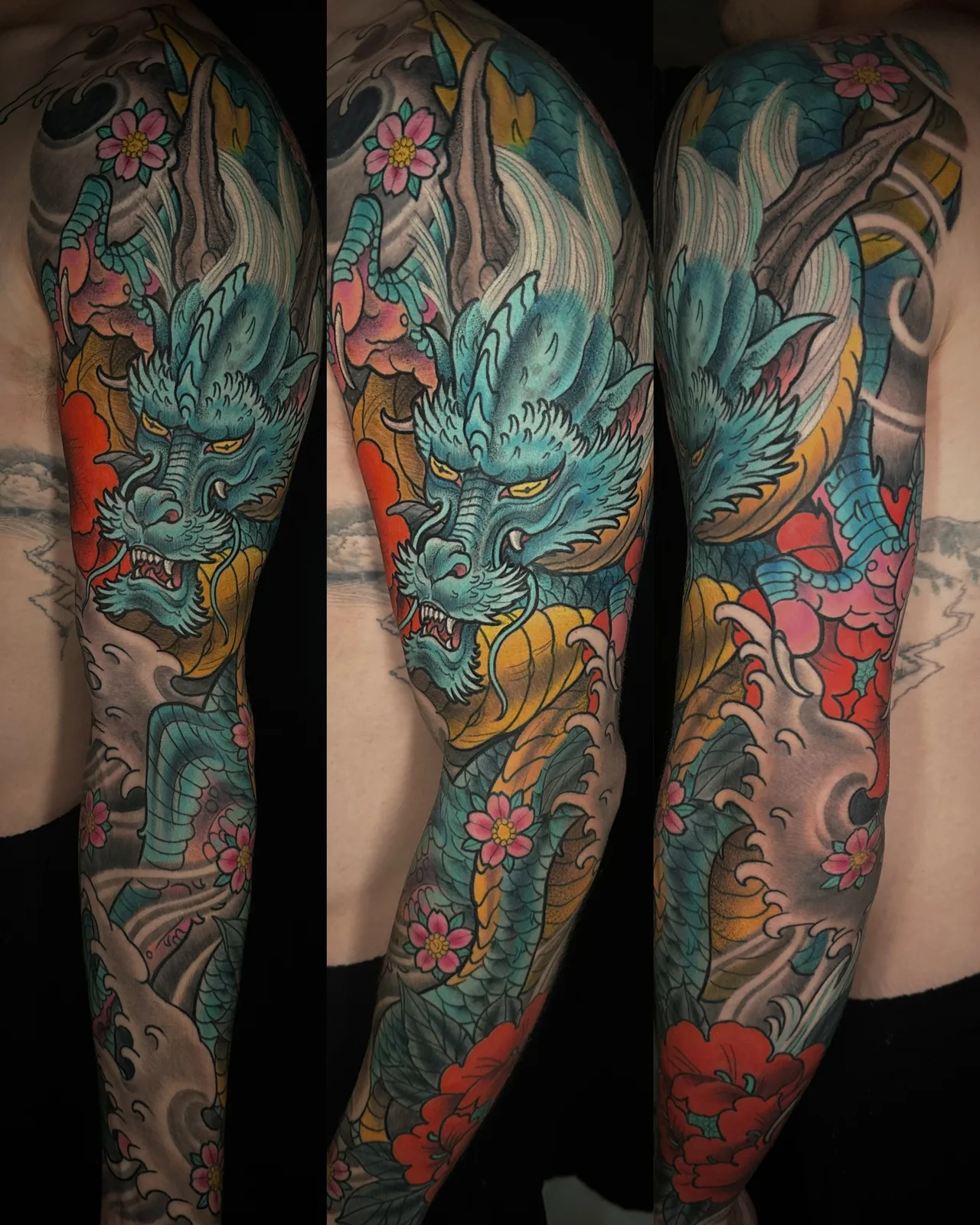
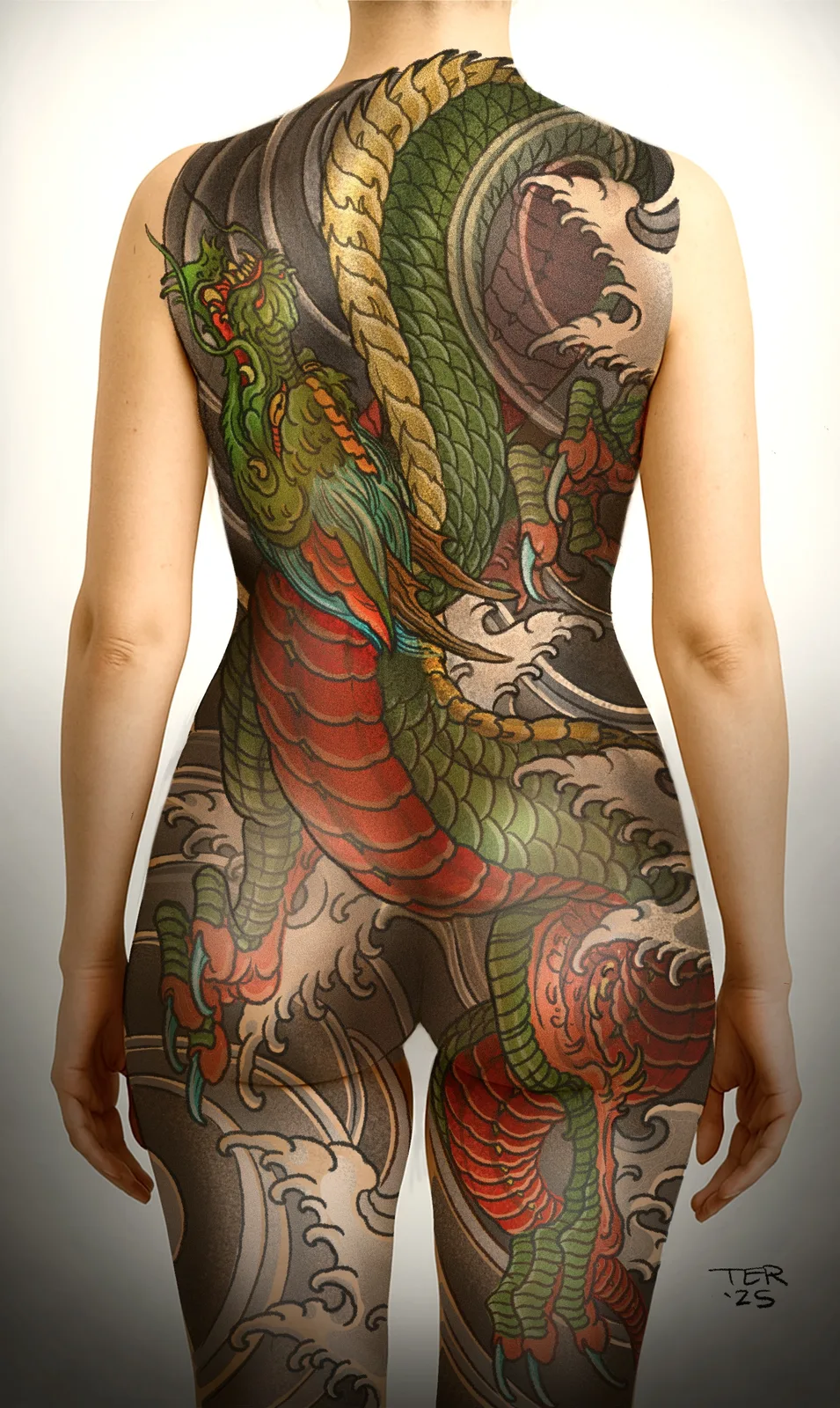
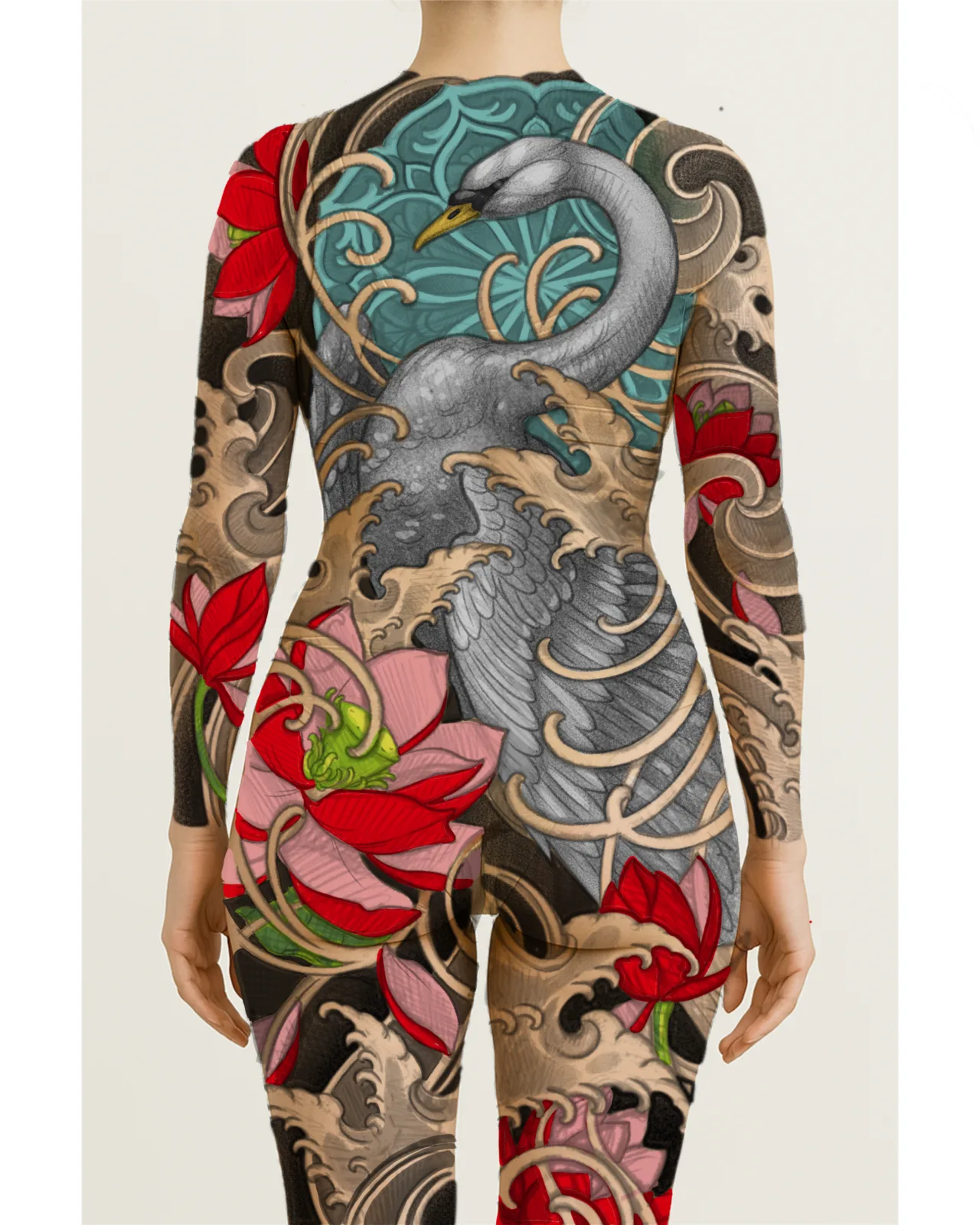
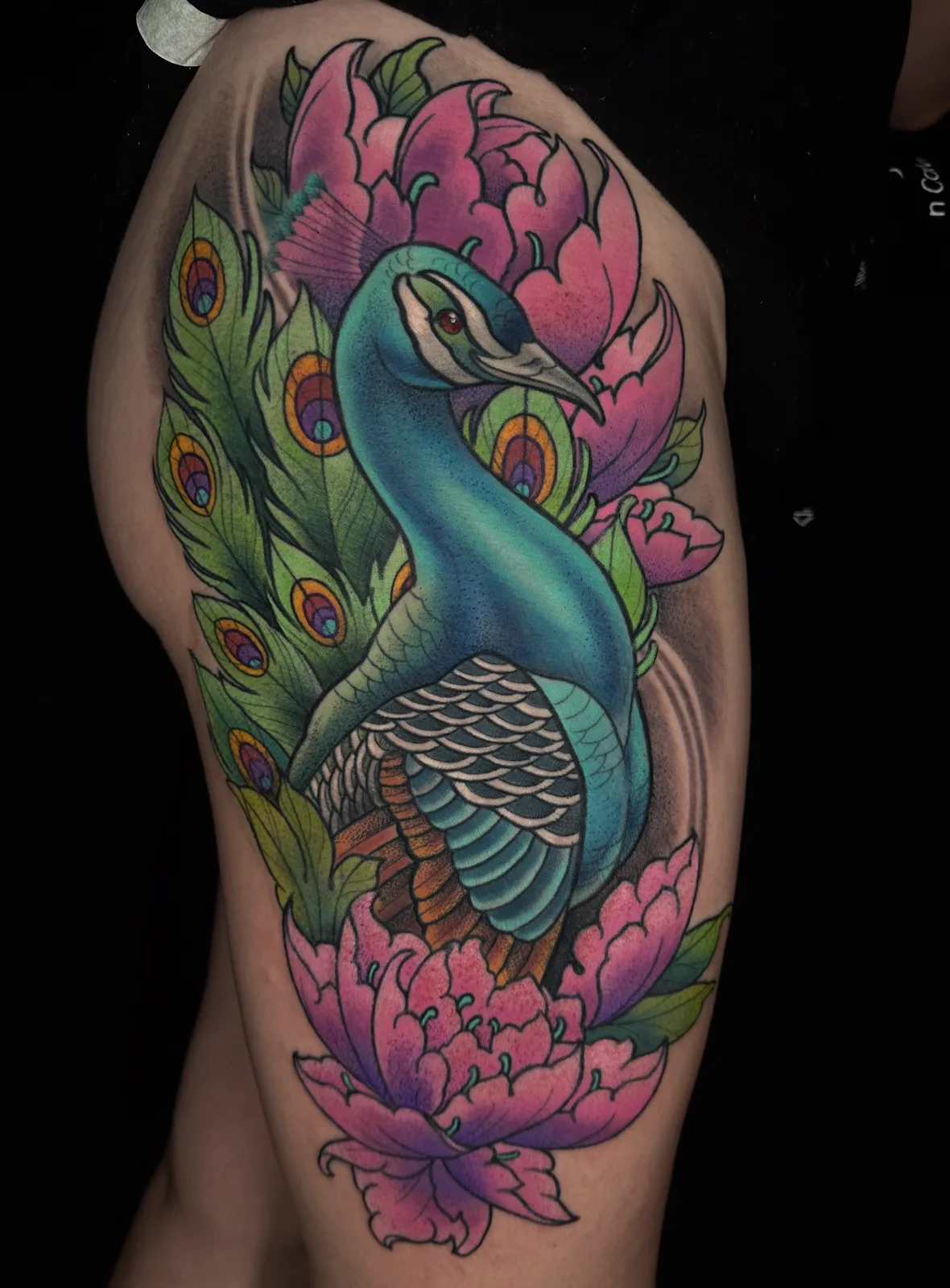
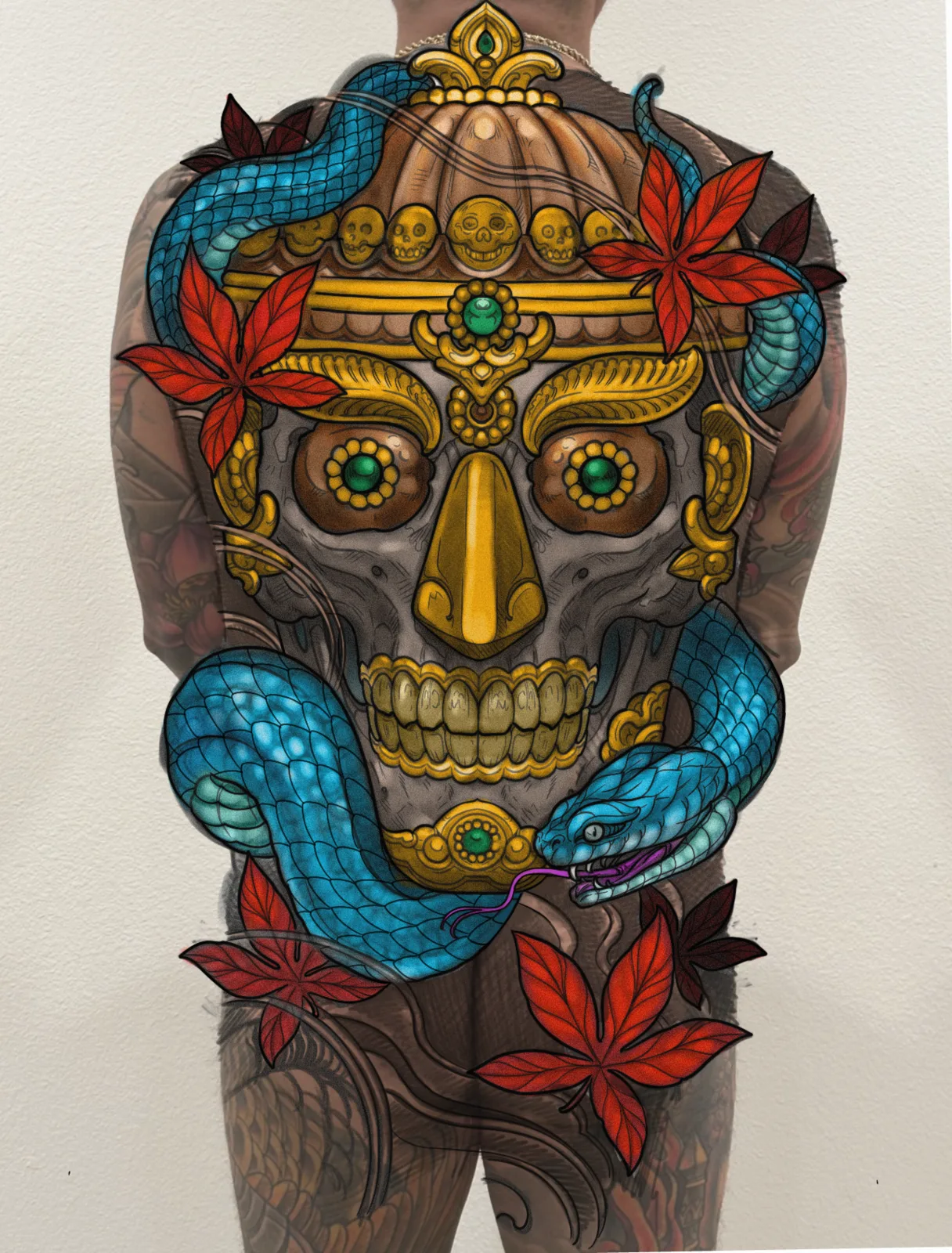
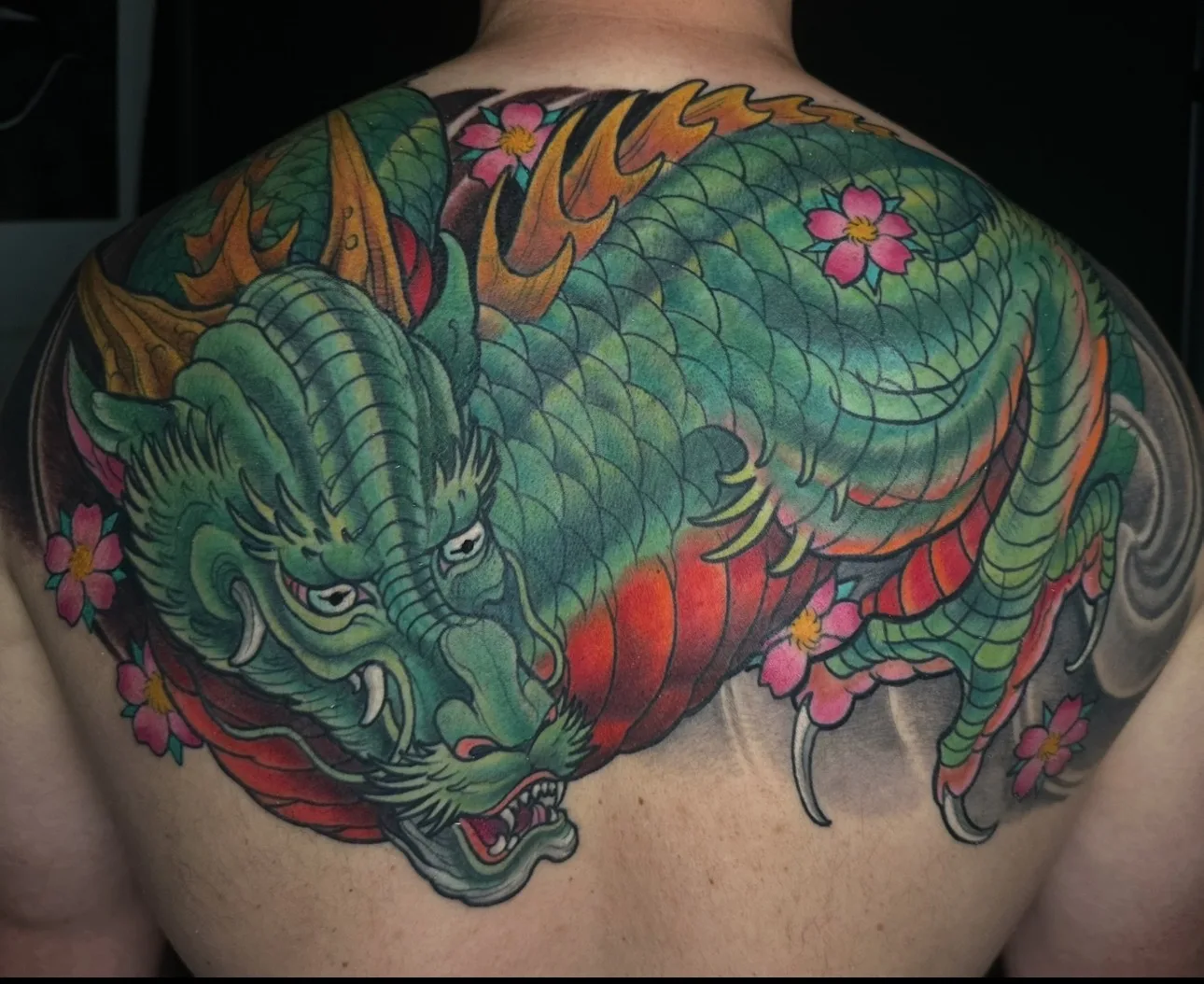
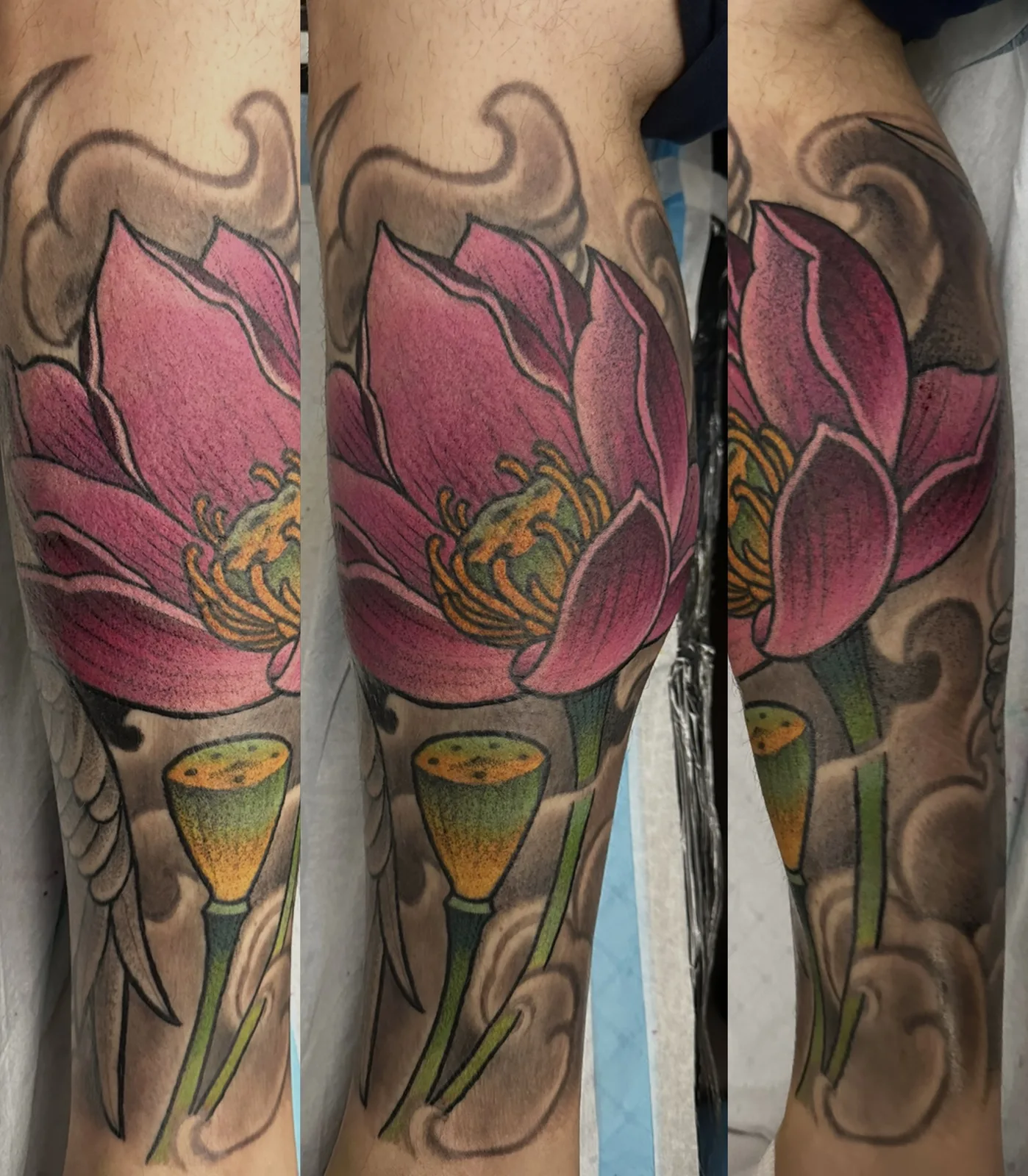
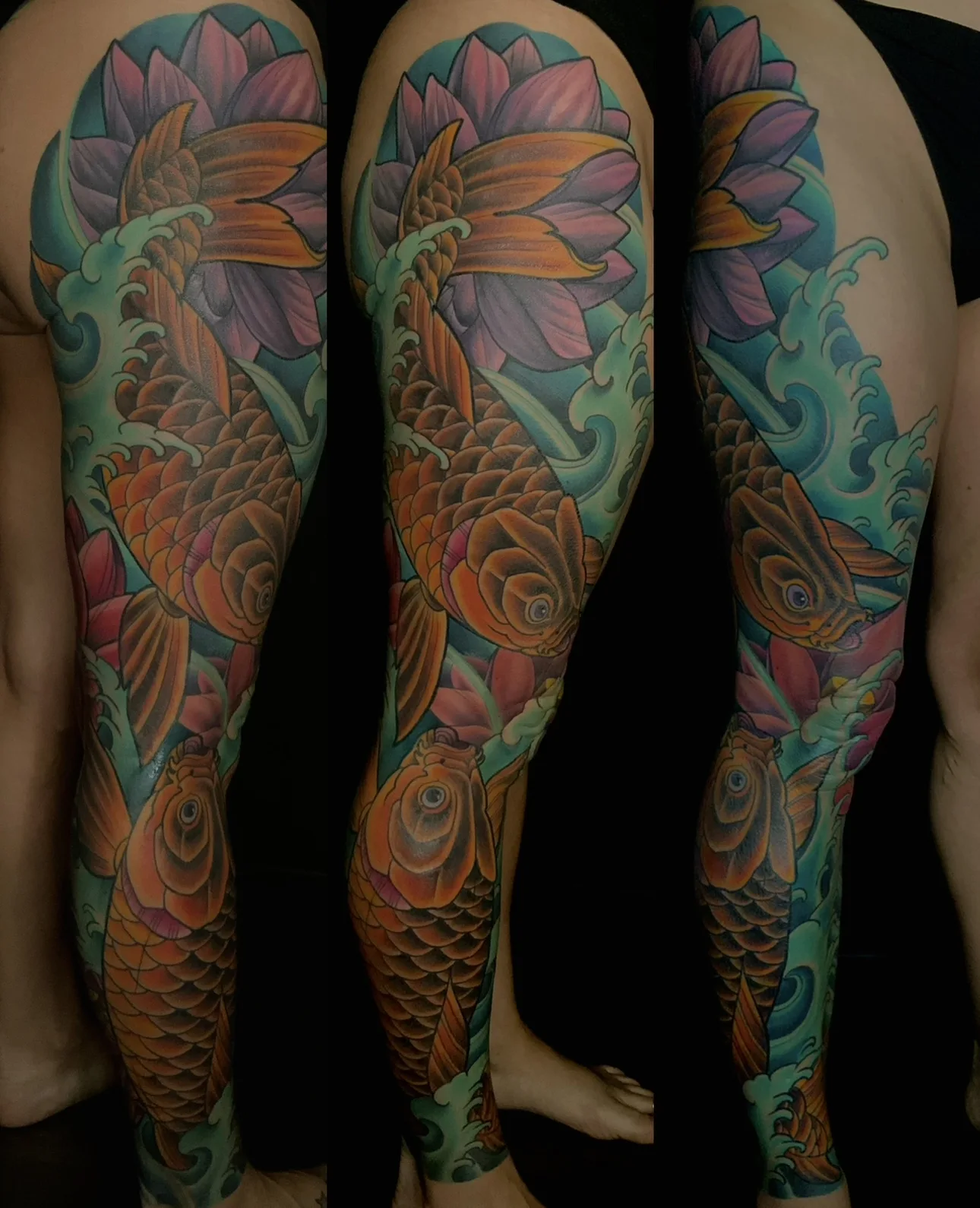
Every piece below is actual client work — drawn from scratch and built to wrap the body. Dragons, koi, hannya, phoenix, foo dogs, samurai, and figures from across the Asian canon, in full color and black & grey.
From the Drawing Table
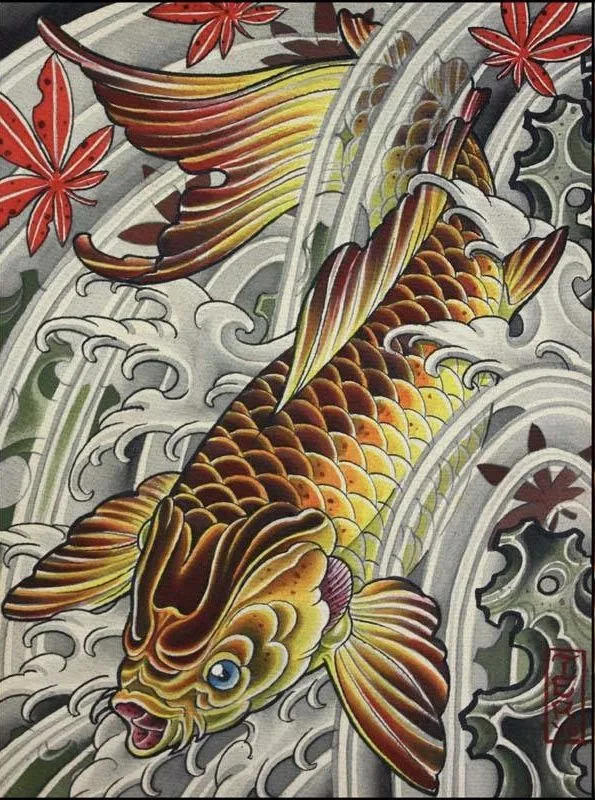
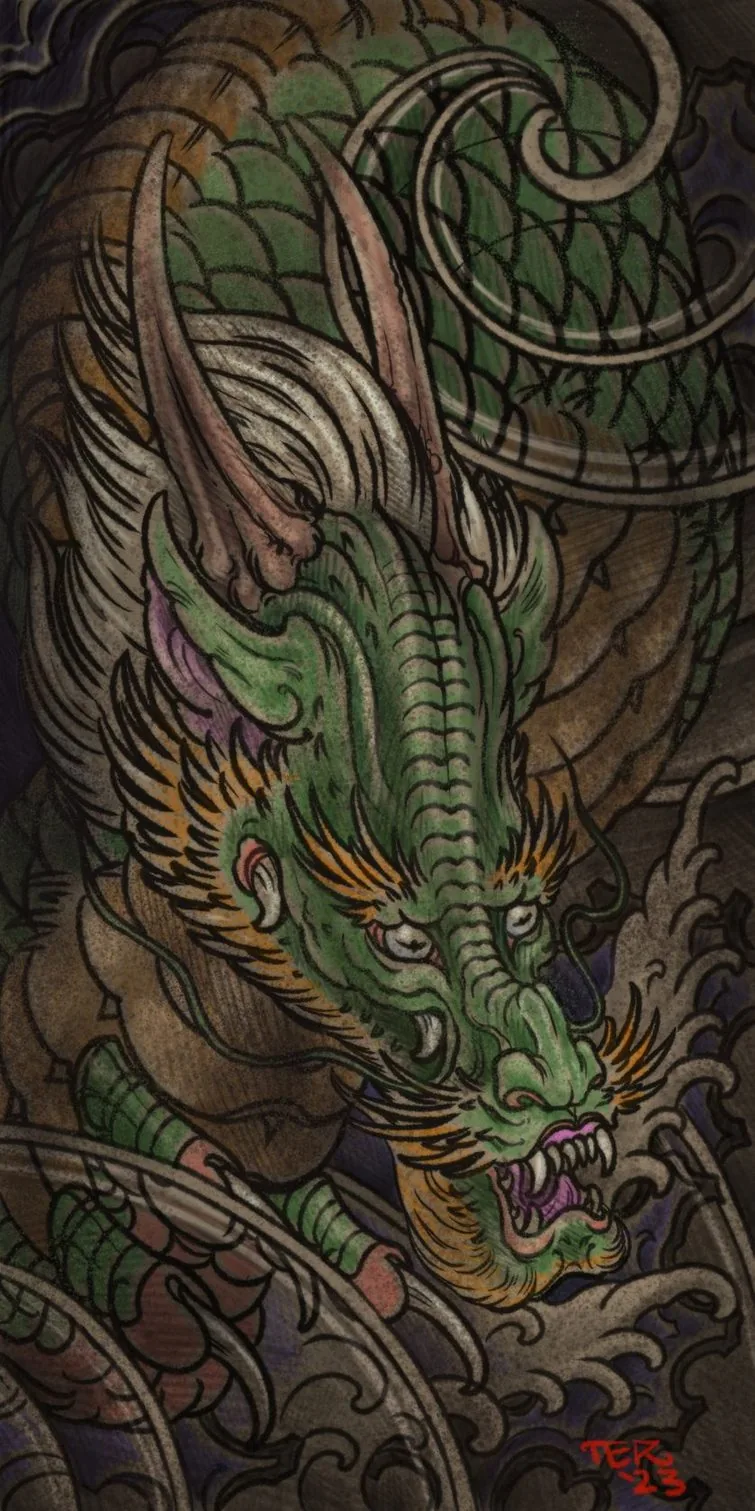
Iconography, drawn from scratch
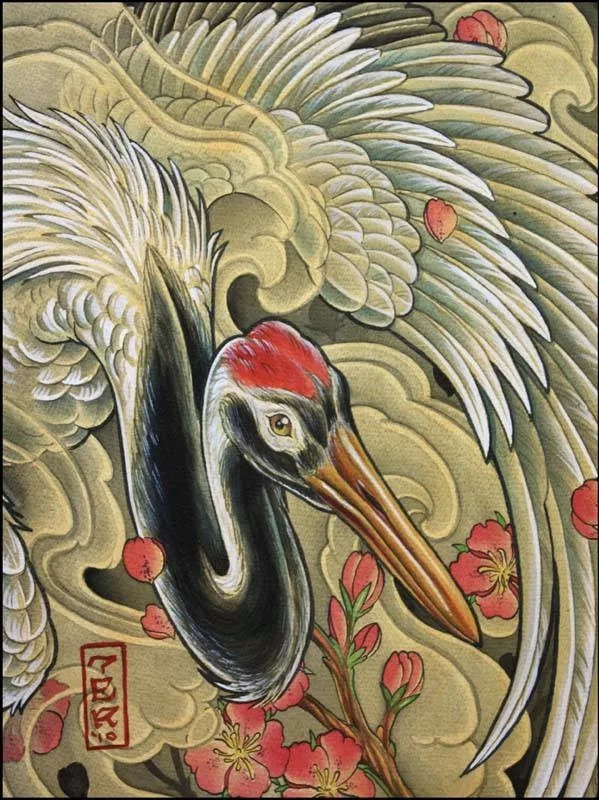
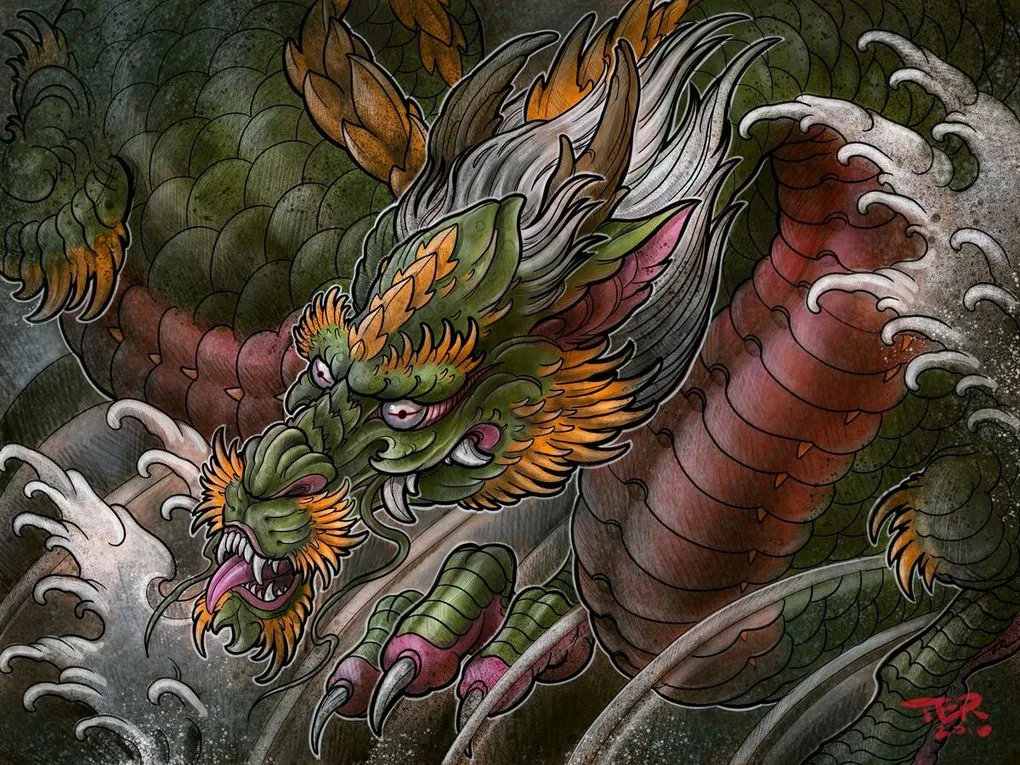
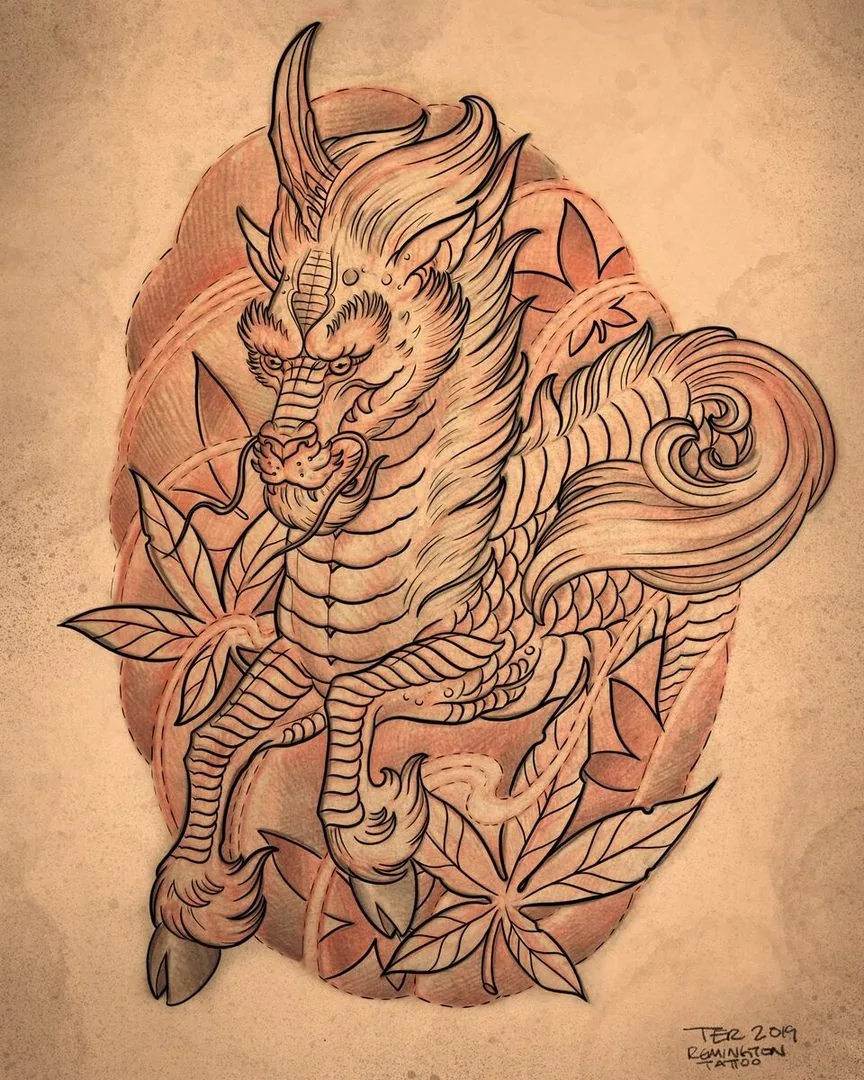
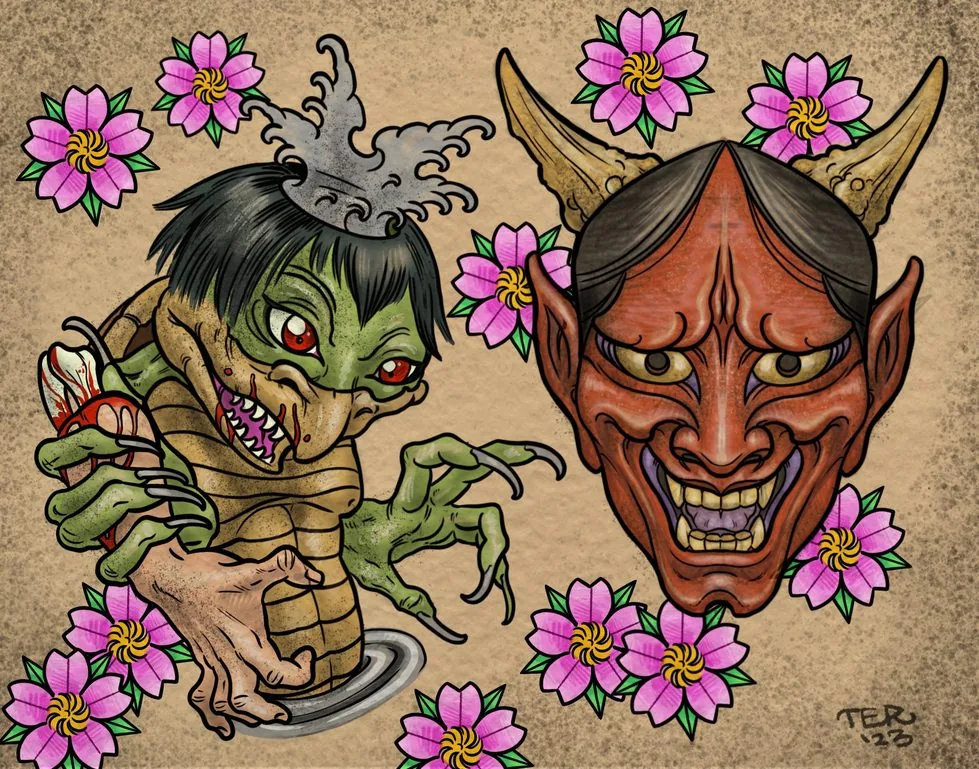
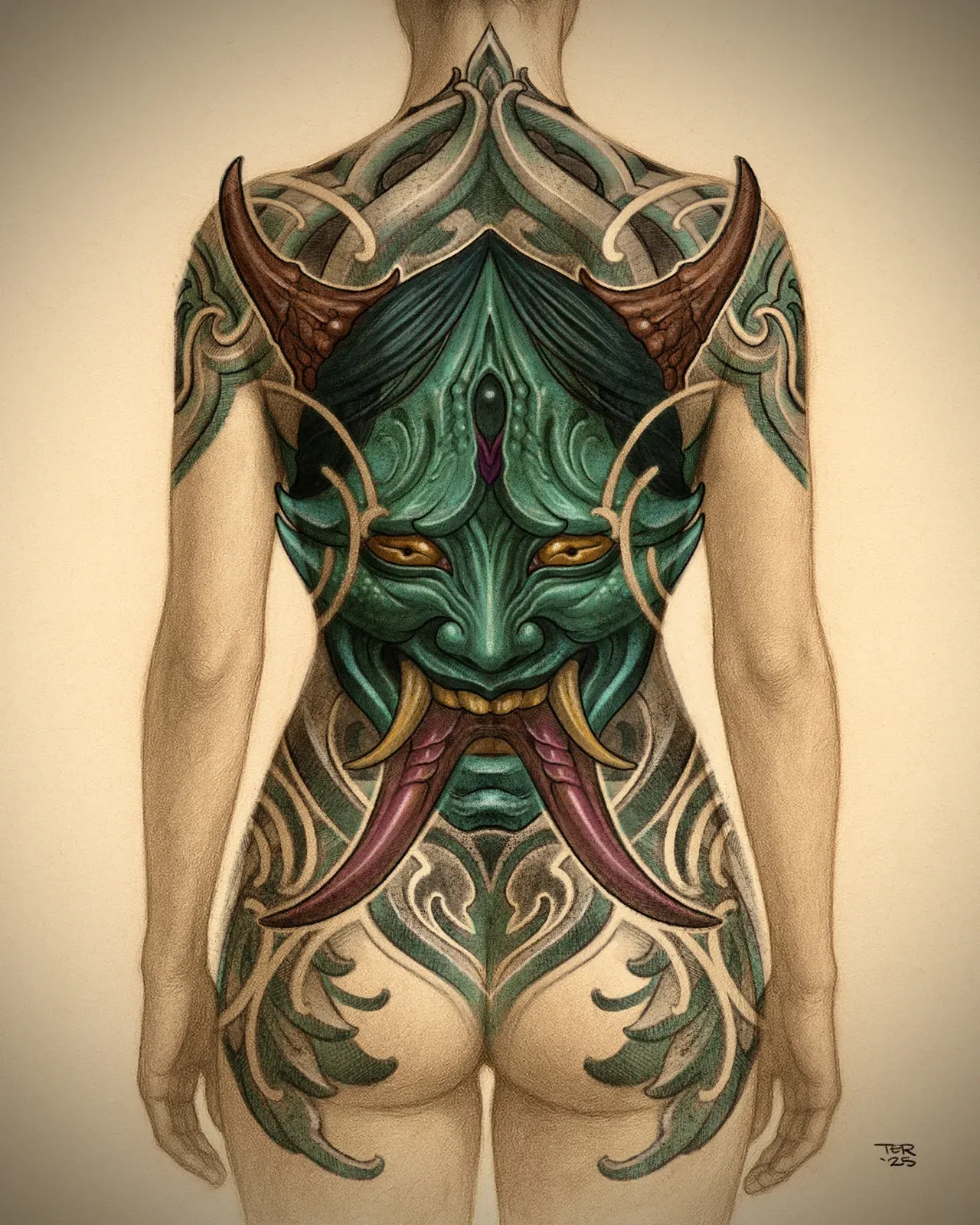
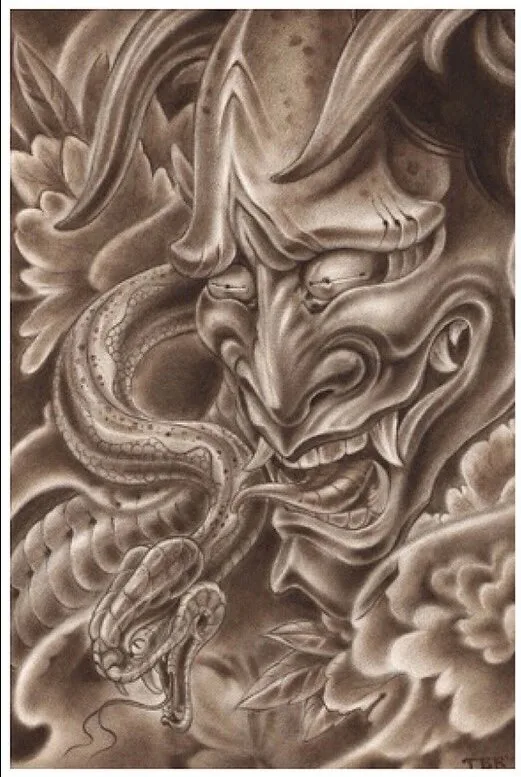
Every piece begins as an original drawing or painting — pencil, flash, and digital. This is where the composition is developed before it's ever mapped to skin.
Questions
Neo Japanese tattoo FAQ
What's the difference between traditional Japanese and Neo Japanese?
Traditional Japanese tattooing (Irezumi) follows a long-established system of subjects and background — dragons, koi, hannya, and figures set inside wind bars, finger waves, and blossoms. Neo Japanese keeps that structure and respect for the iconography, but renders it with a contemporary illustrative hand: more rendering depth, bolder color, and drawing built to read from across the room. Terry draws every piece from scratch in that modern illustrative style.
Do you do Japanese work in black and grey or only color?
Both. Japanese imagery reads powerfully in either. Terry does full-color dragons, koi, and phoenixes as well as black & grey hannya, samurai, and back pieces. Every version is built on the same strong black foundation, so it holds up regardless of palette.
How big should a Japanese tattoo be — can it be a sleeve or back piece?
Japanese work is designed for scale. The background — waves, wind, blossoms — is what carries the main figure around the body, so sleeves, legs, chest panels, and back pieces are ideal. Smaller standalone pieces are possible, but Terry designs every piece to flow and to connect if you decide to grow it into a larger composition or a full body suit.
Can you design a custom piece around specific imagery like a dragon, koi, or hannya?
Yes — everything is custom drawn for you. Bring the subjects and meaning that matter to you, and Terry develops an original composition around them during the drawing consultation. Nothing is copied from another artist or pulled off a wall.
Do you tattoo broader Asian imagery beyond Japanese?
Yes. Alongside Japanese subjects, Terry regularly works with the broader Asian canon — Buddhist and Hindu figures, kitsune, Sun Wukong, geisha, and more — all in the same illustrative approach and all drawn from scratch.
How much does it cost, and how far out are you booked?
Terry's hourly rate is $250, and clients are billed only for time on skin. A $500 non-refundable retainer secures your dates and comes off the total. A full color sleeve or back piece typically takes 18–21 hours. The waitlist is currently close to one year, with large-scale clients booked as ongoing projects. Full details are on the booking page.
Start the Conversation
Ready to tell a story on your skin?
Take time with the portfolio first and make sure the work speaks to you. If it does, reach out — every Japanese piece starts with a single conversation at Remington Tattoo in North Park, San Diego.