Remington Tattoo · San Diego, CA
Cover-up tattoos, rethought from scratch.
A good cover-up isn't a patch — it's a new piece of art designed around what's already there. For over 20 years, roughly a third of Terry Ribera's work has been covering and reworking unwanted, faded, and tribal tattoos into large-scale custom pieces that make the old ink disappear into the design.
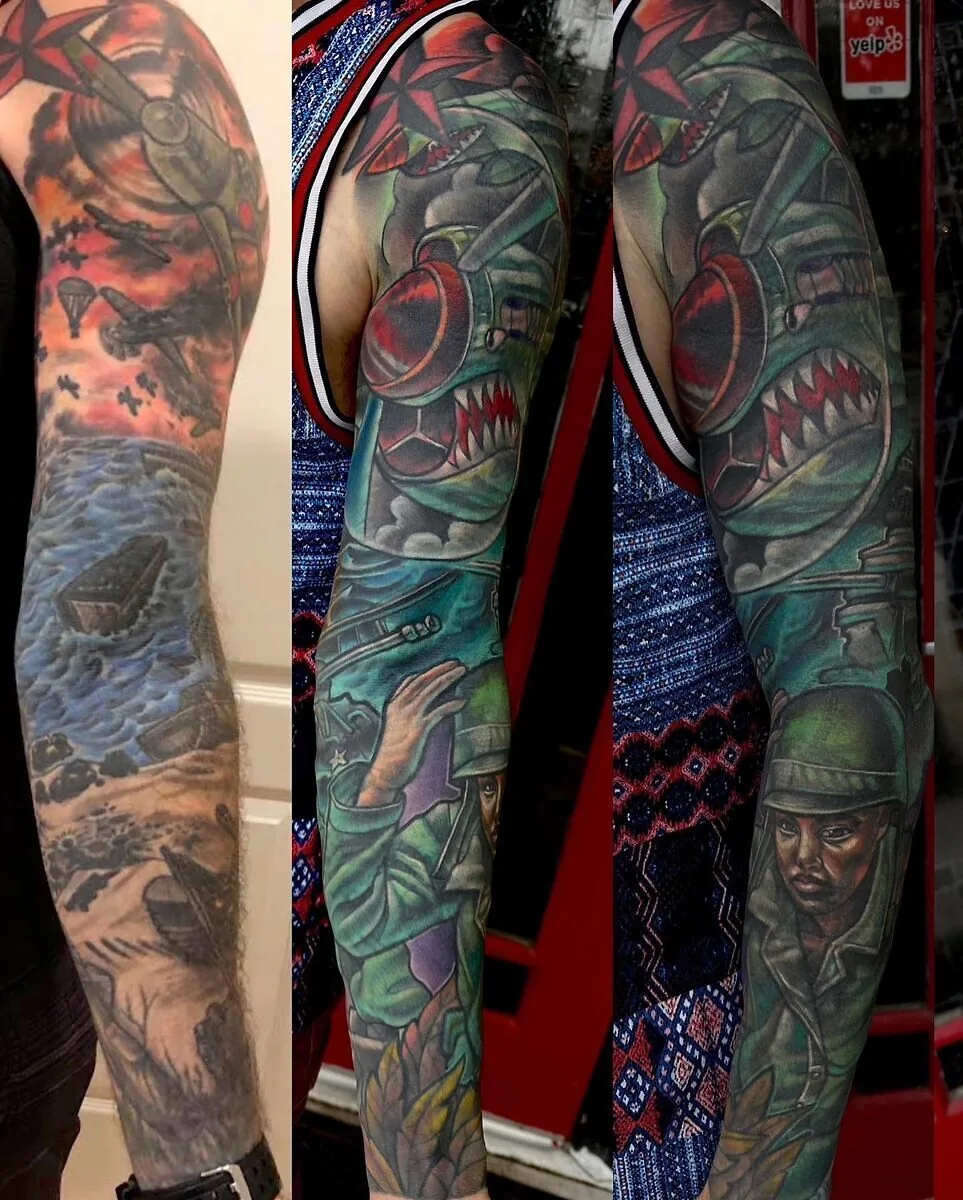
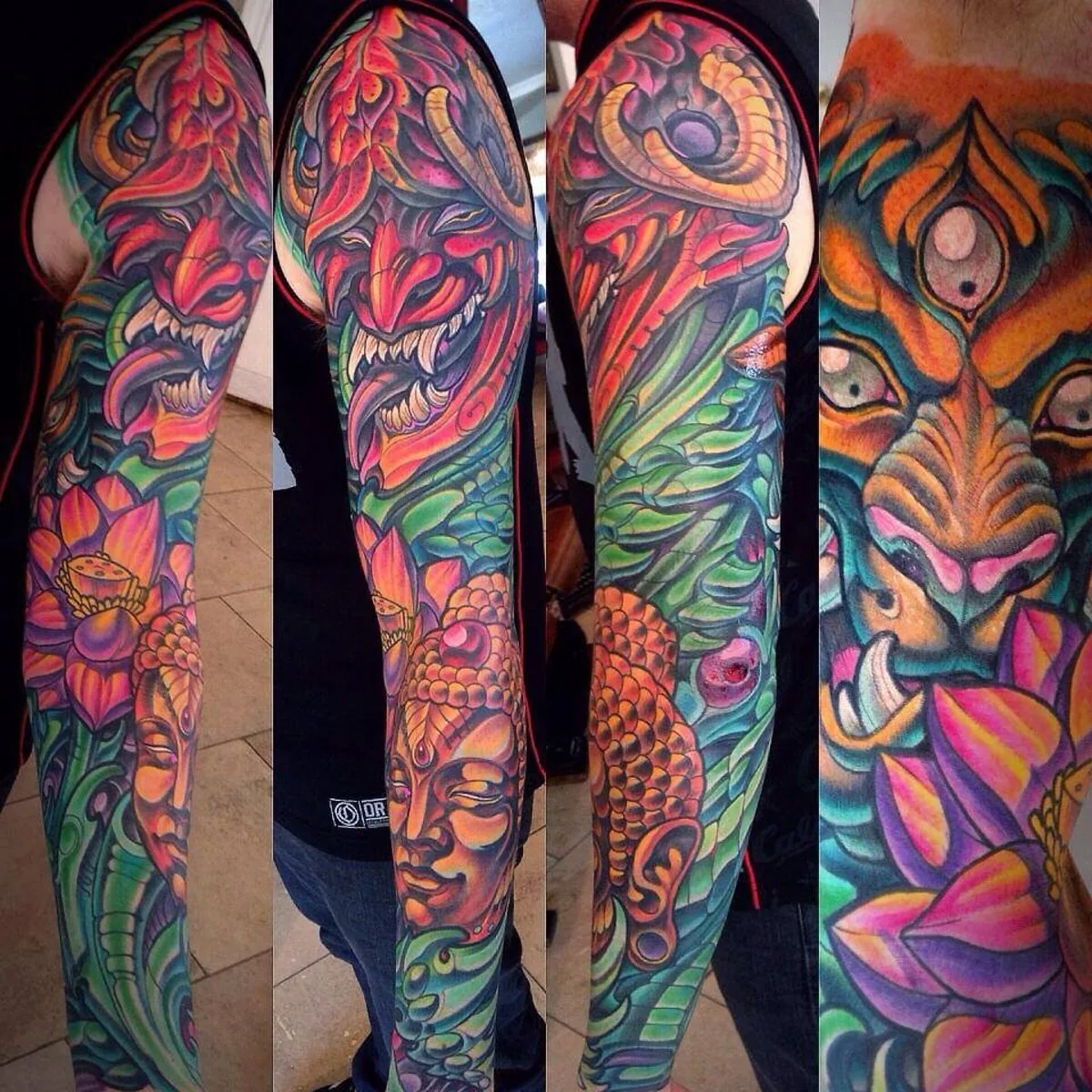
“The goal isn't to mask what's there — it's to design something strong enough that the old tattoo stops mattering.”Terry Ribera — On Cover-Ups
The Challenge
Designed around the old ink
A cover-up requires a different kind of thinking than a fresh tattoo. The existing ink, the skin condition, and the placement all set the rules before a single line is drawn. The answer is rarely to bury the old piece under a wall of black — it's to design a new composition that turns those existing shapes into an advantage, so your eye reads the new artwork and nothing else.
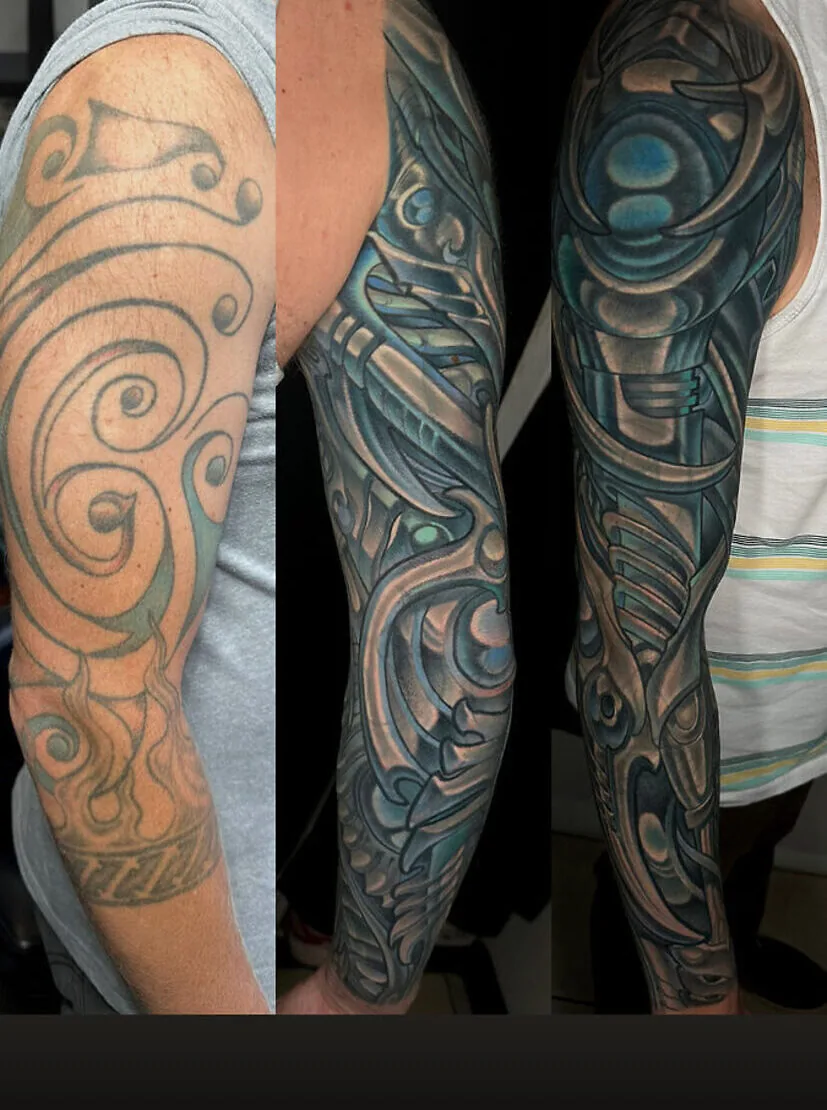
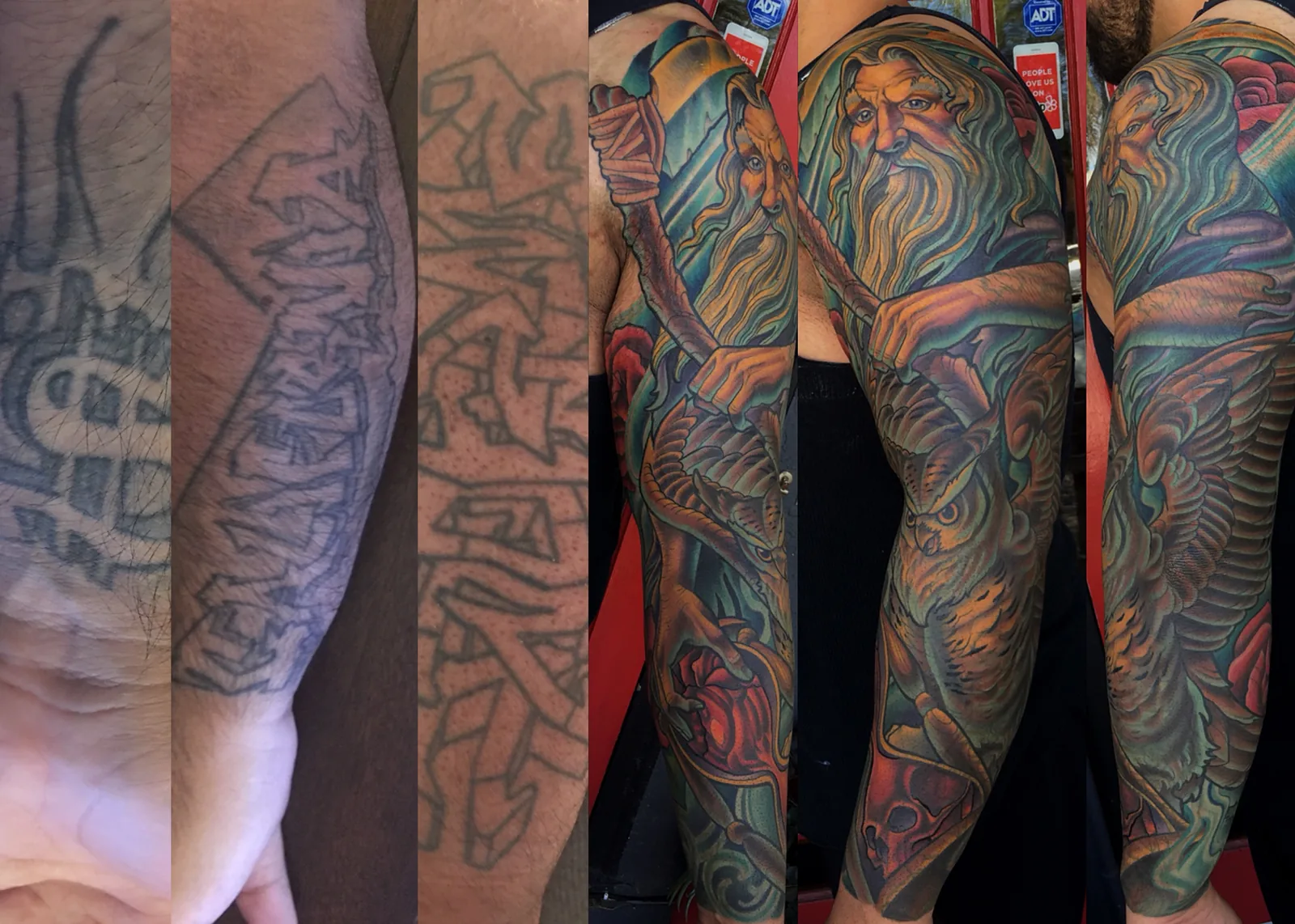
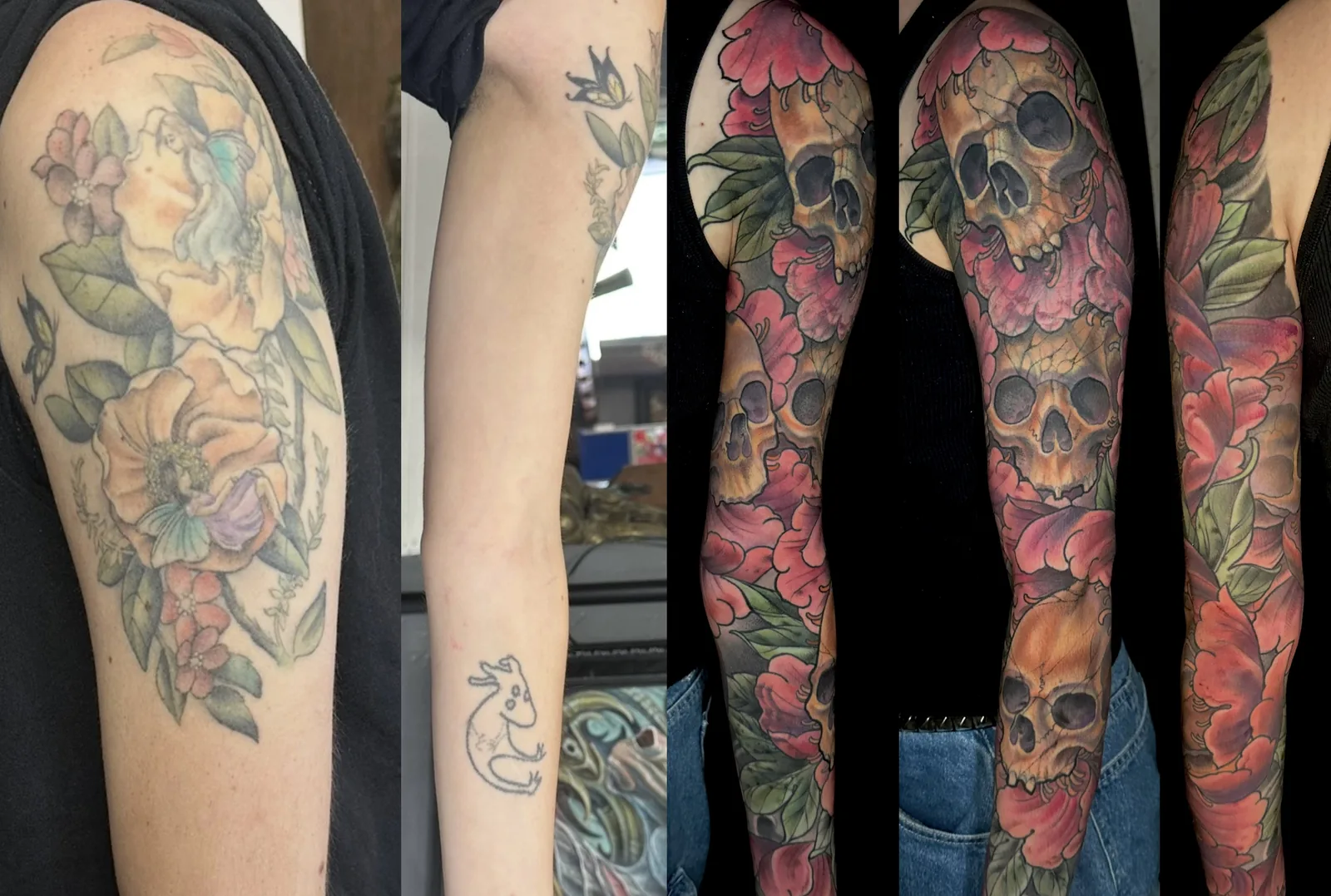
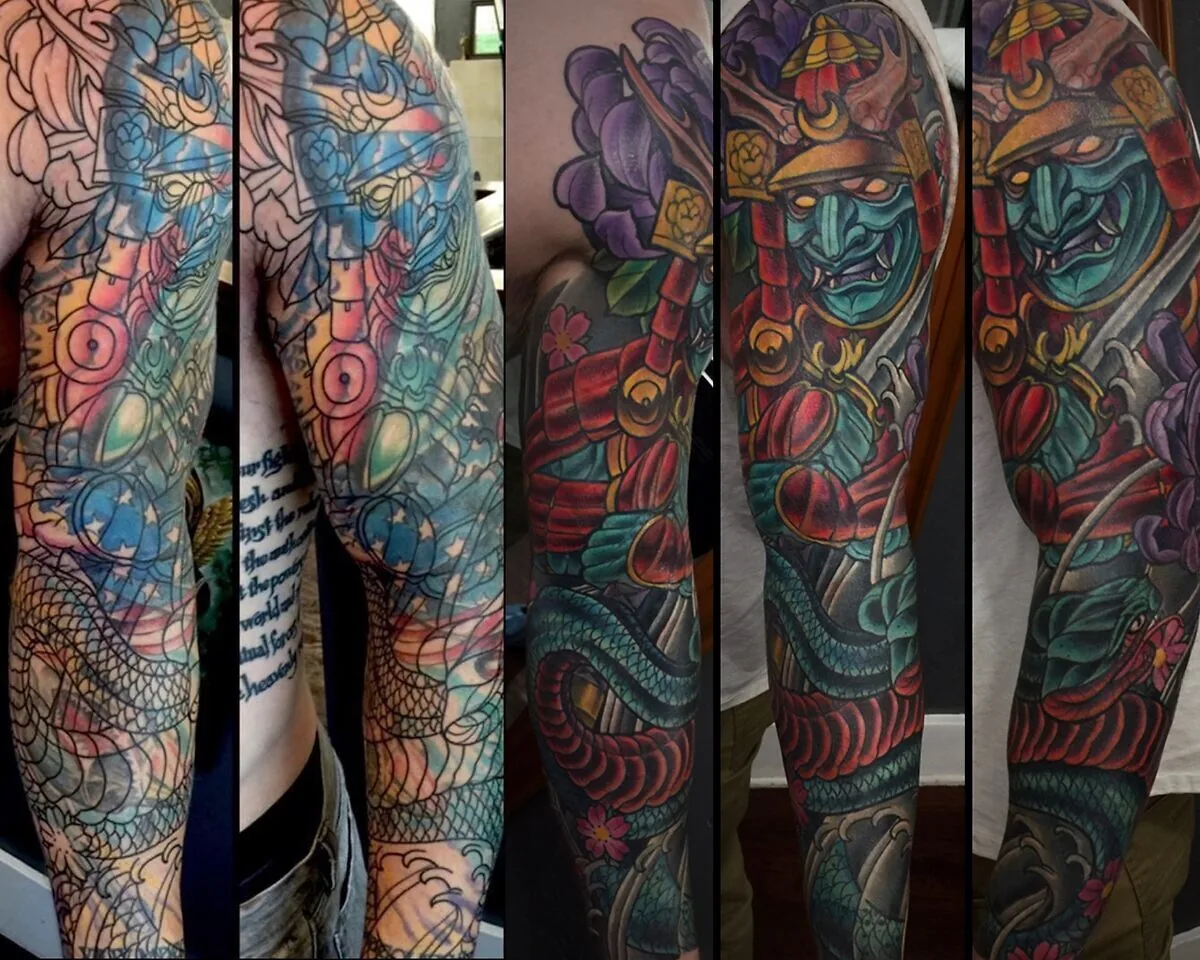
That's why Terry approaches every cover-up as an original design problem. Styles with strong structure and dark, interlocking forms carry the most ink underneath — biomechanical and bio-organic, Japanese, and bold neo traditional florals all cover beautifully — and each one is drawn from scratch around the piece being covered. Cover-ups are also some of the strongest material for a full sleeve, where an old tattoo can be absorbed into a larger composition.
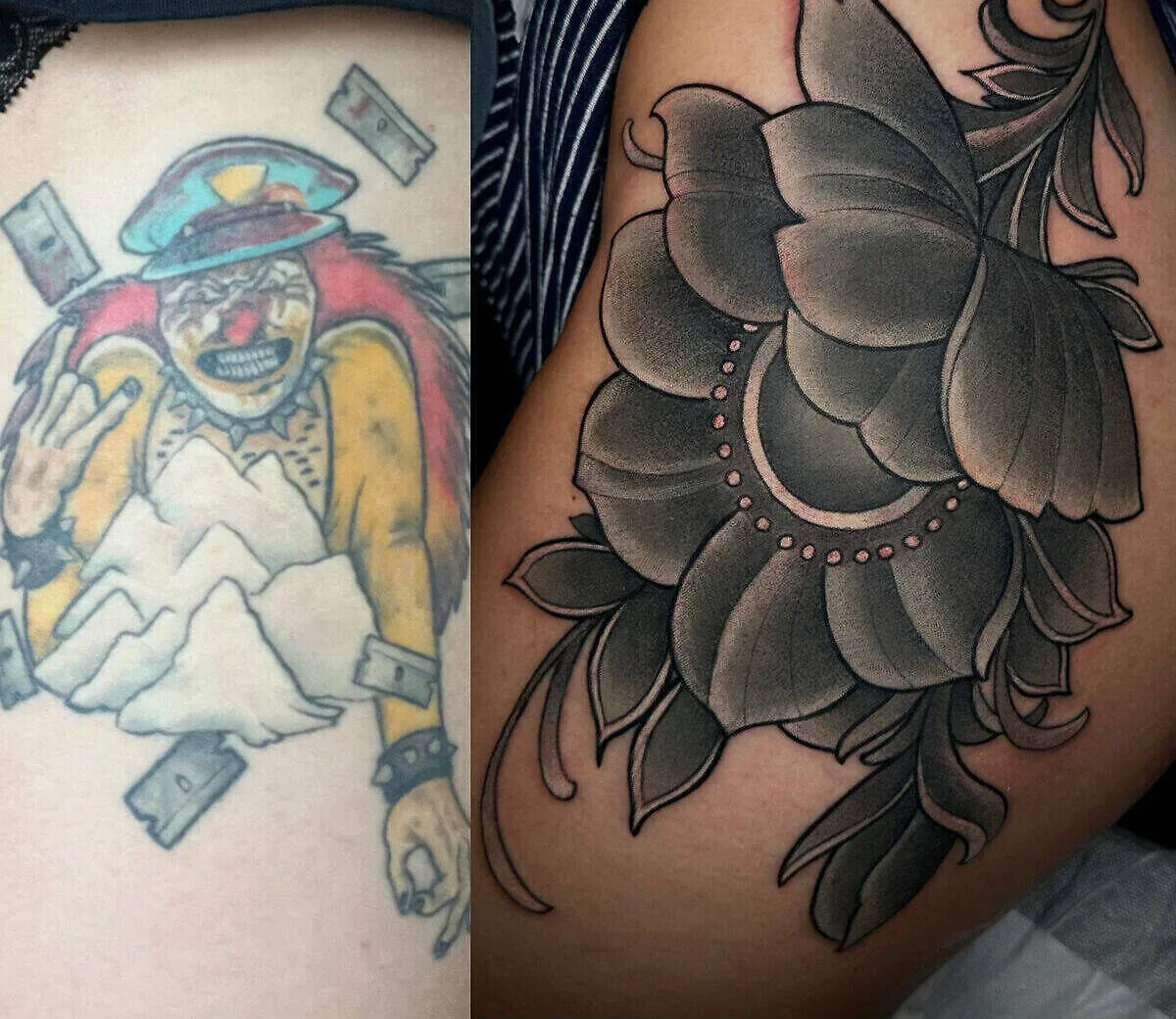
Client Review
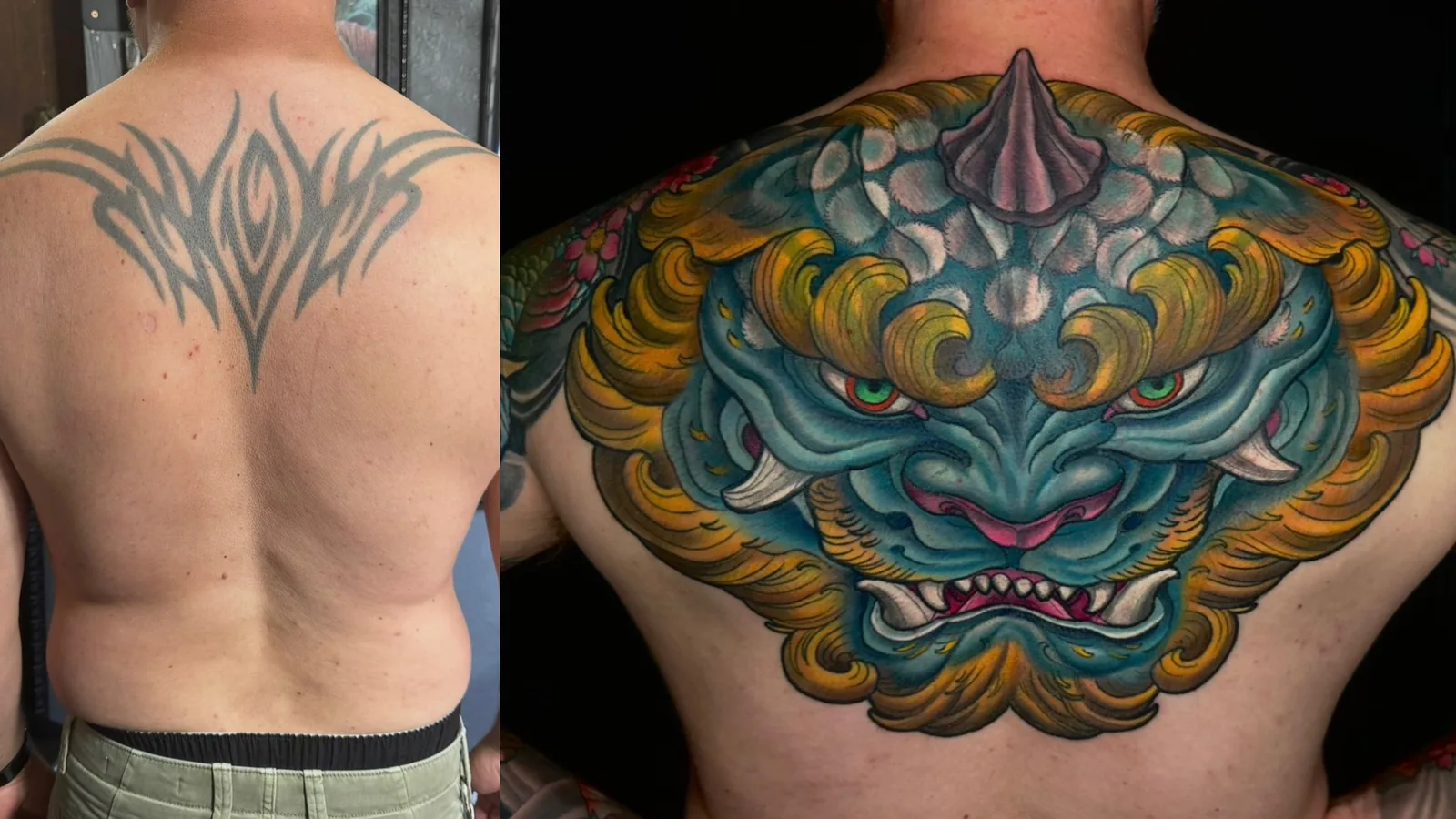
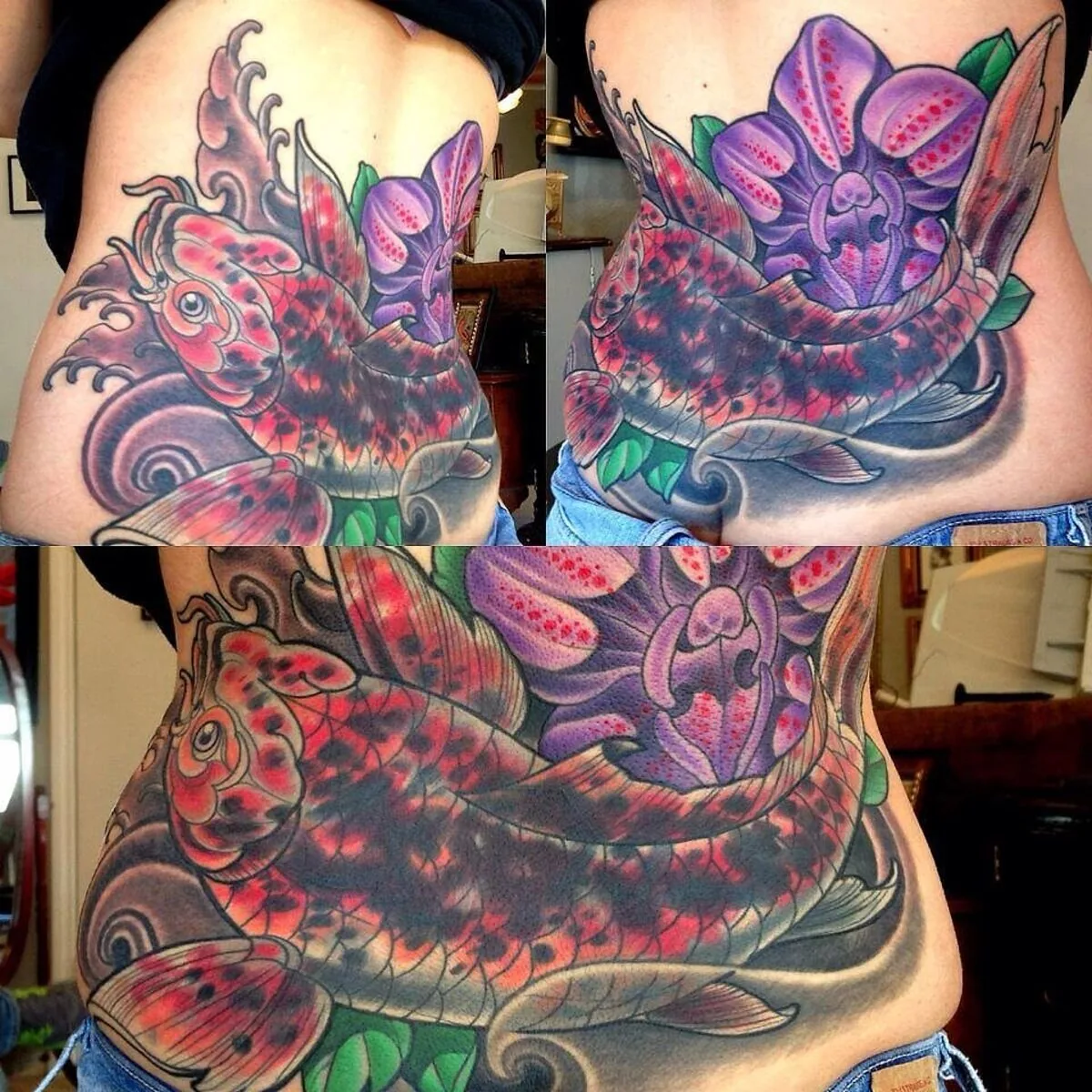
“For 10 years I searched for someone to cover a tribal design along my spine. Until I met Terry. He knew exactly what would cover it perfectly while taking into consideration what I was looking for.”— Kristen C., via Yelp
Cover-ups are roughly 30% of Terry's client work, and he's been doing them for over 20 years. That experience is the difference between hoping an old tattoo hides and knowing exactly how to make it disappear into something better.
The Approach
How a cover-up comes together
Every cover-up follows the same sequence Terry has refined over 25 years and roughly 24,000 hours of tattooing. It's built to be honest about what's possible up front, and to make sure the finished piece stands on its own.
Consultation & assessment
It starts with a real look at what's there. During the drawing consultation Terry evaluates the size, darkness, and saturation of the existing tattoo, the placement, and the condition of the skin — then he's honest about what will genuinely work. That candor up front is what makes the result reliable.
Designed around the old tattoo
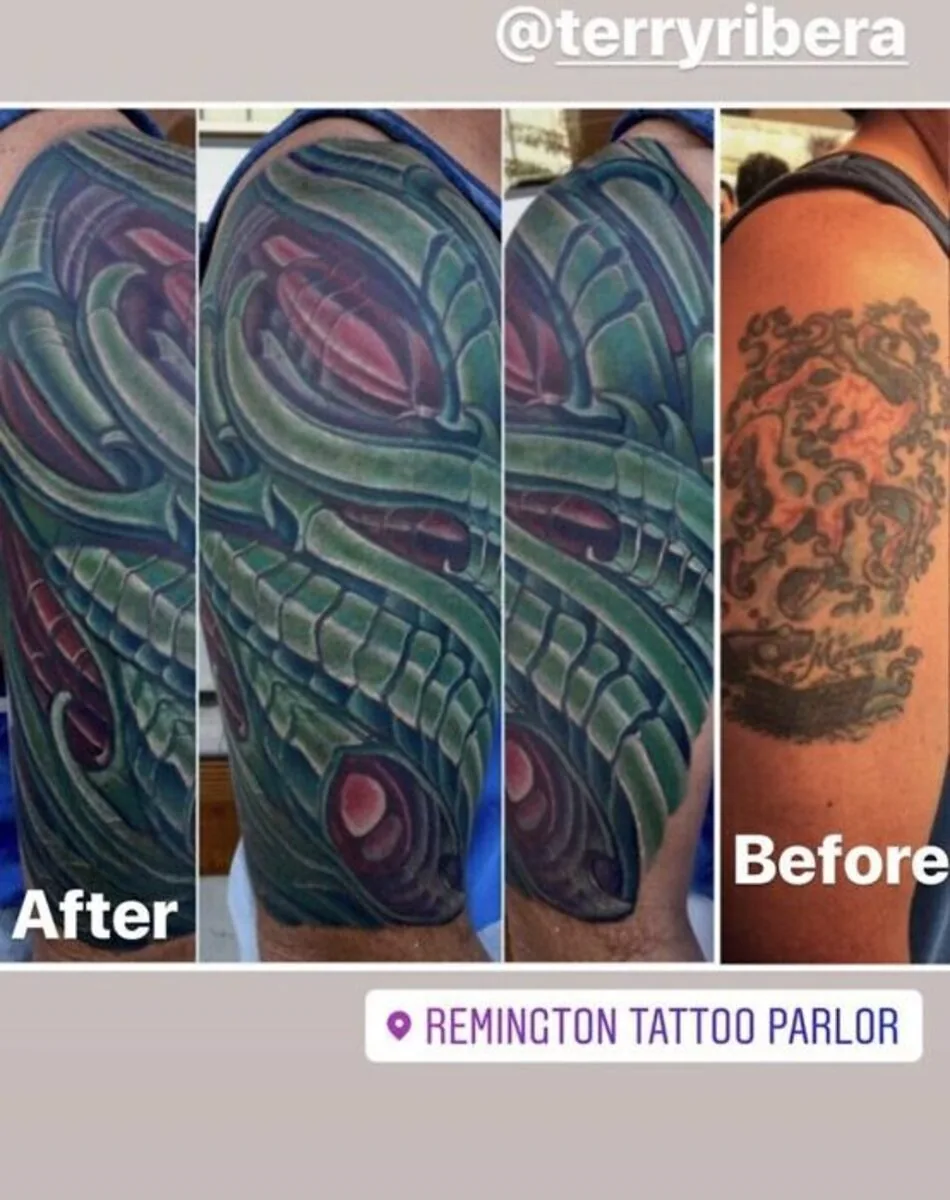
Rather than fighting the existing ink, Terry composes with it. The old shapes are worked into the new design from the first sketch, so the placement of focal points, dark areas, and flow all account for what has to be covered. Everything is drawn from scratch for you.
The black foundation
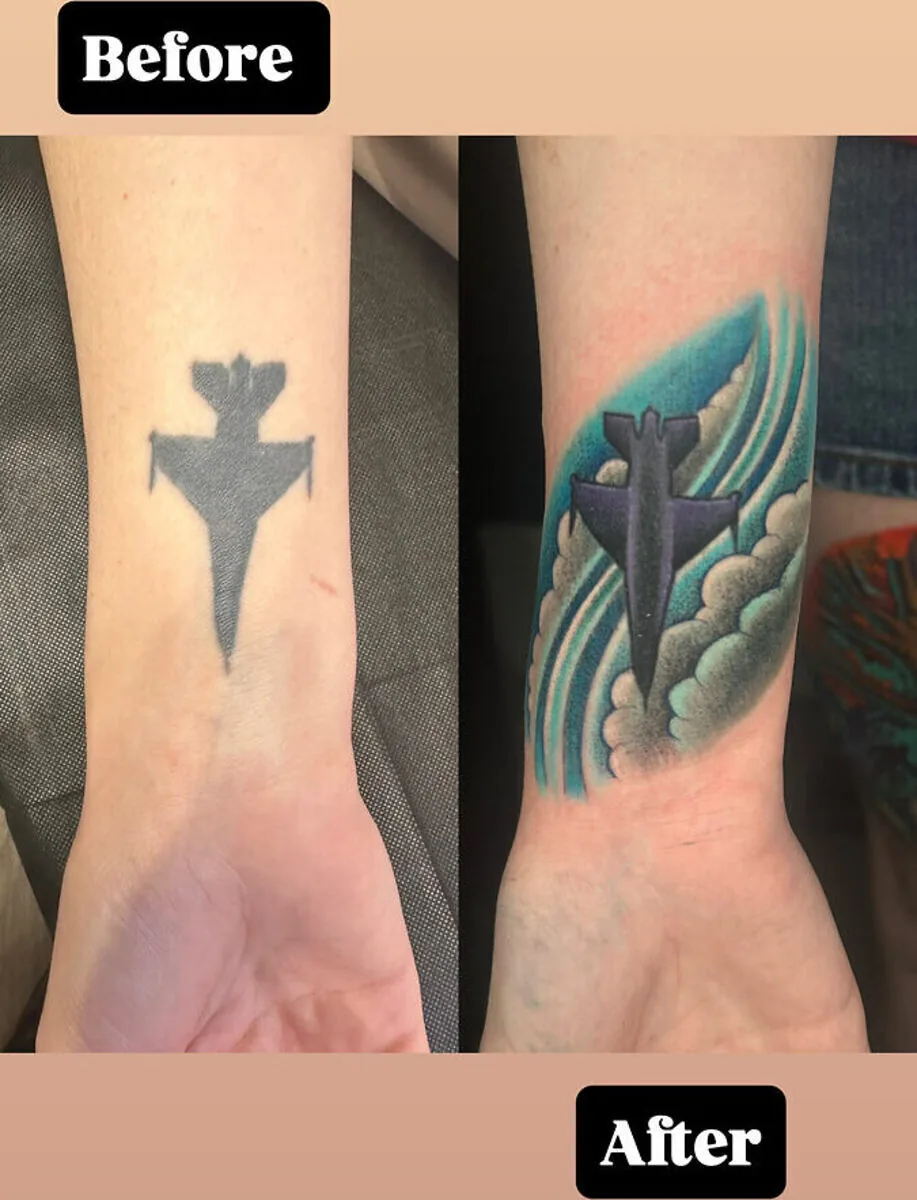
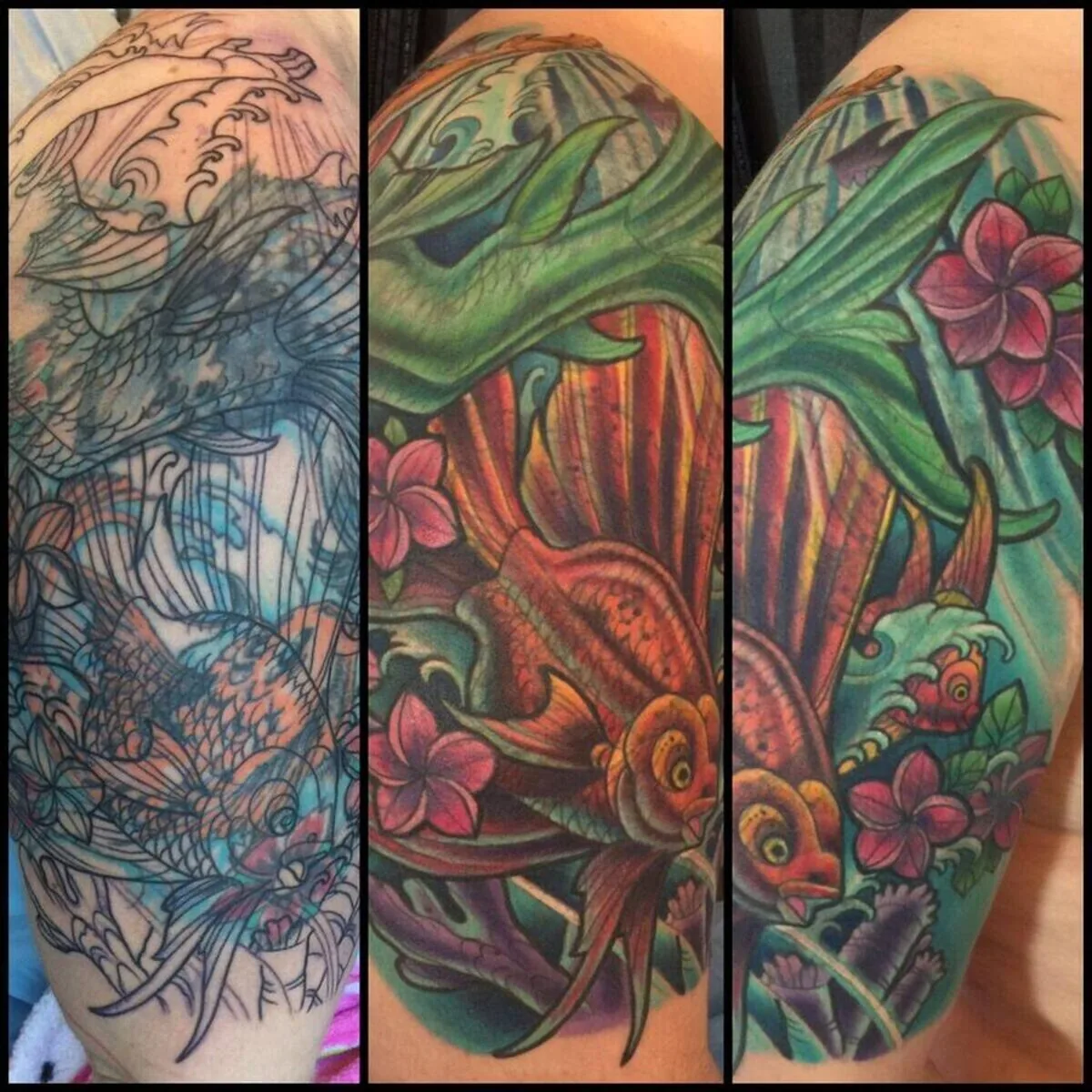
A cover-up lives or dies on its dark structure. Strong black linework and shadow are placed exactly where they need to be to overpower the old ink, then the rest of the piece is built on top. Done right, the underlying tattoo simply stops reading — and the new piece holds up for decades.
A piece that stands alone
The finished cover-up should look like it was always meant to be there — not like a fix. Color or black & grey is chosen with a real understanding of how ink behaves over decades, so the result reads as intentional, original artwork that you'd never guess started as something else.
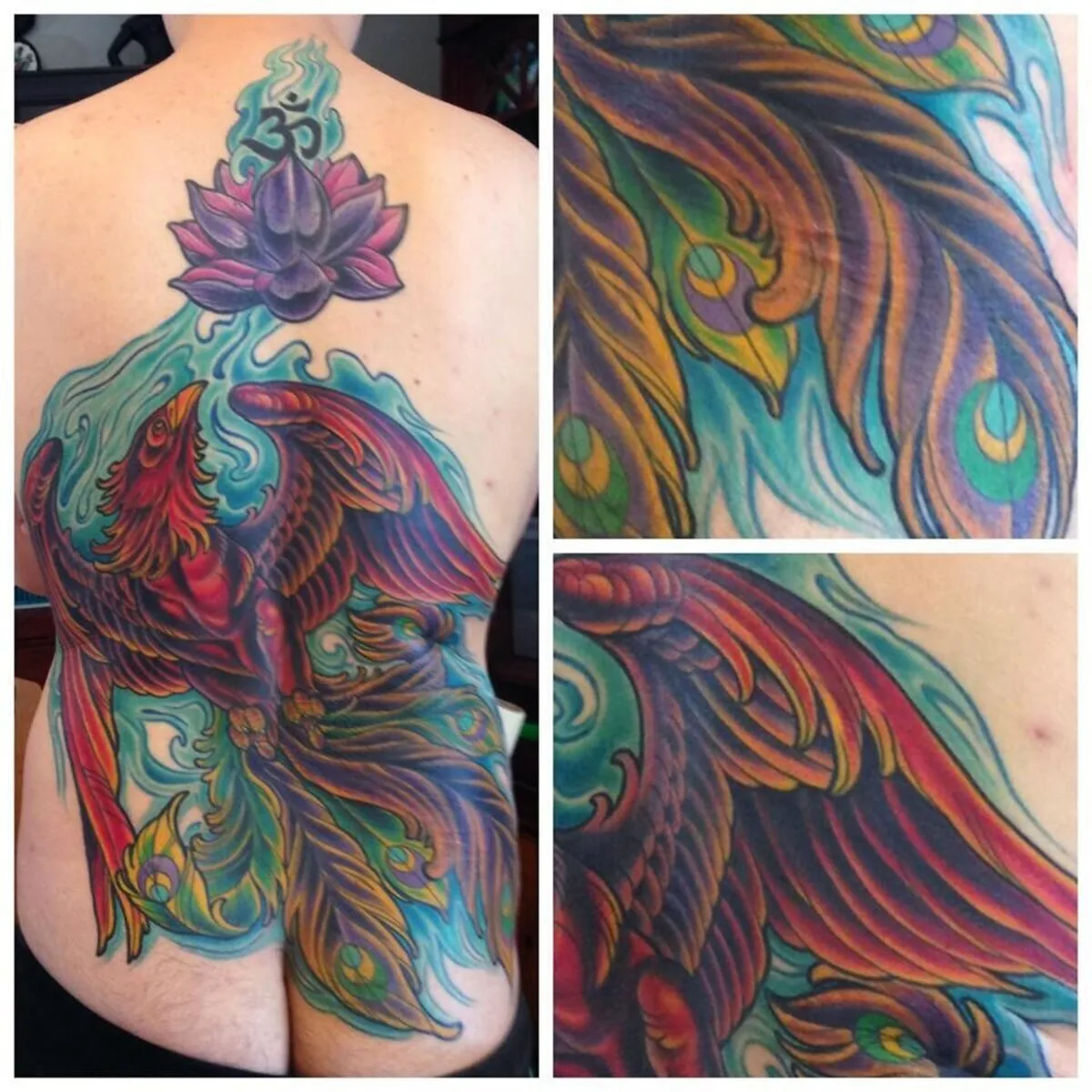
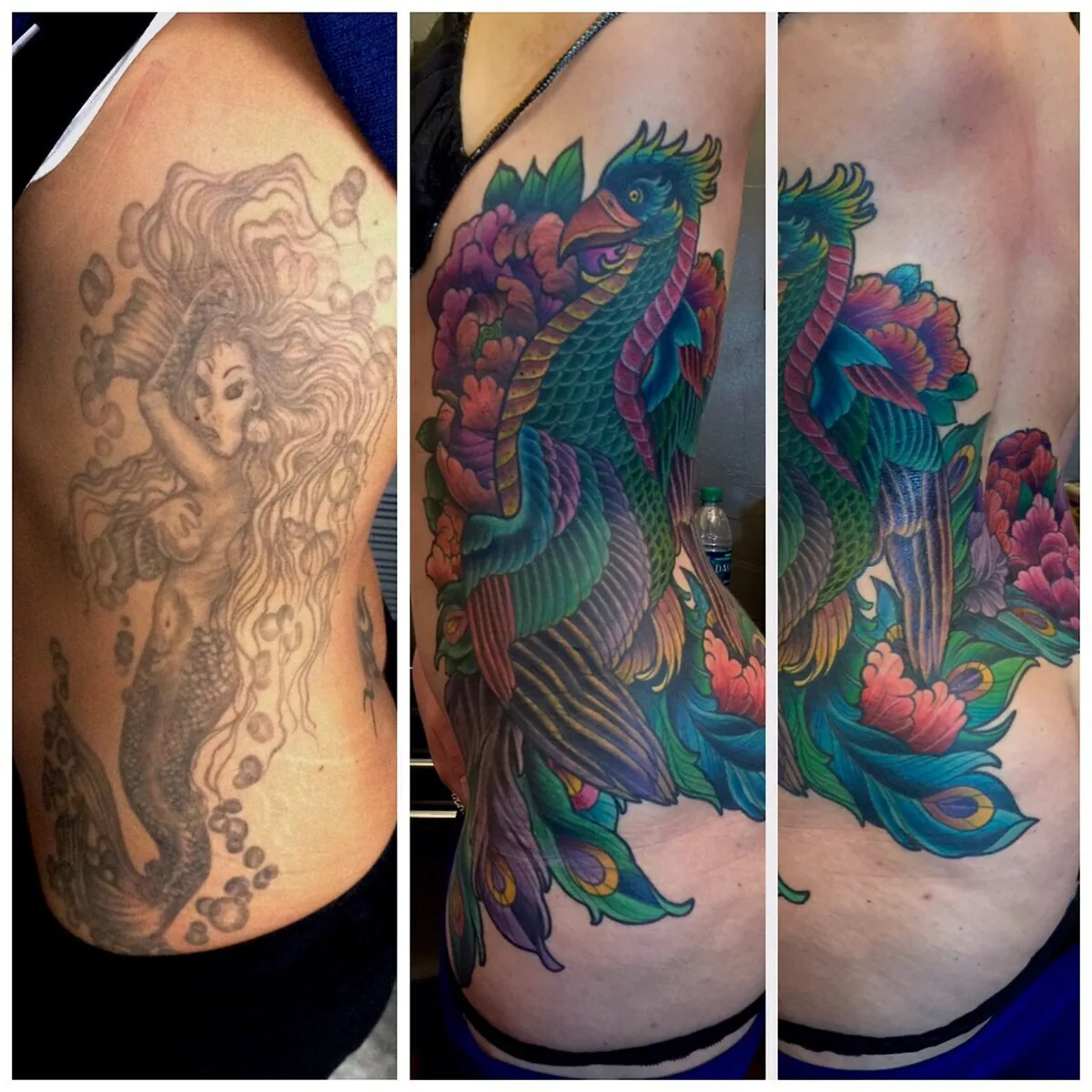
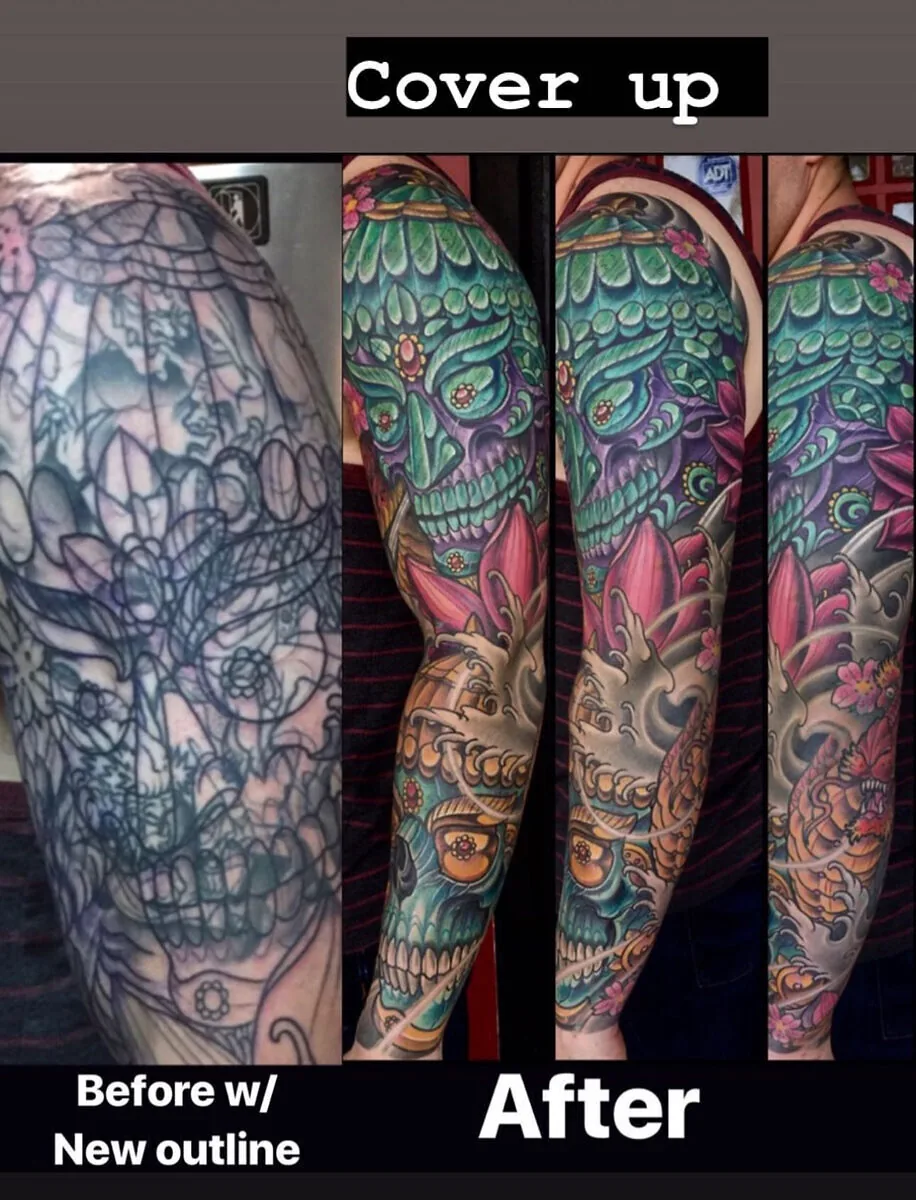
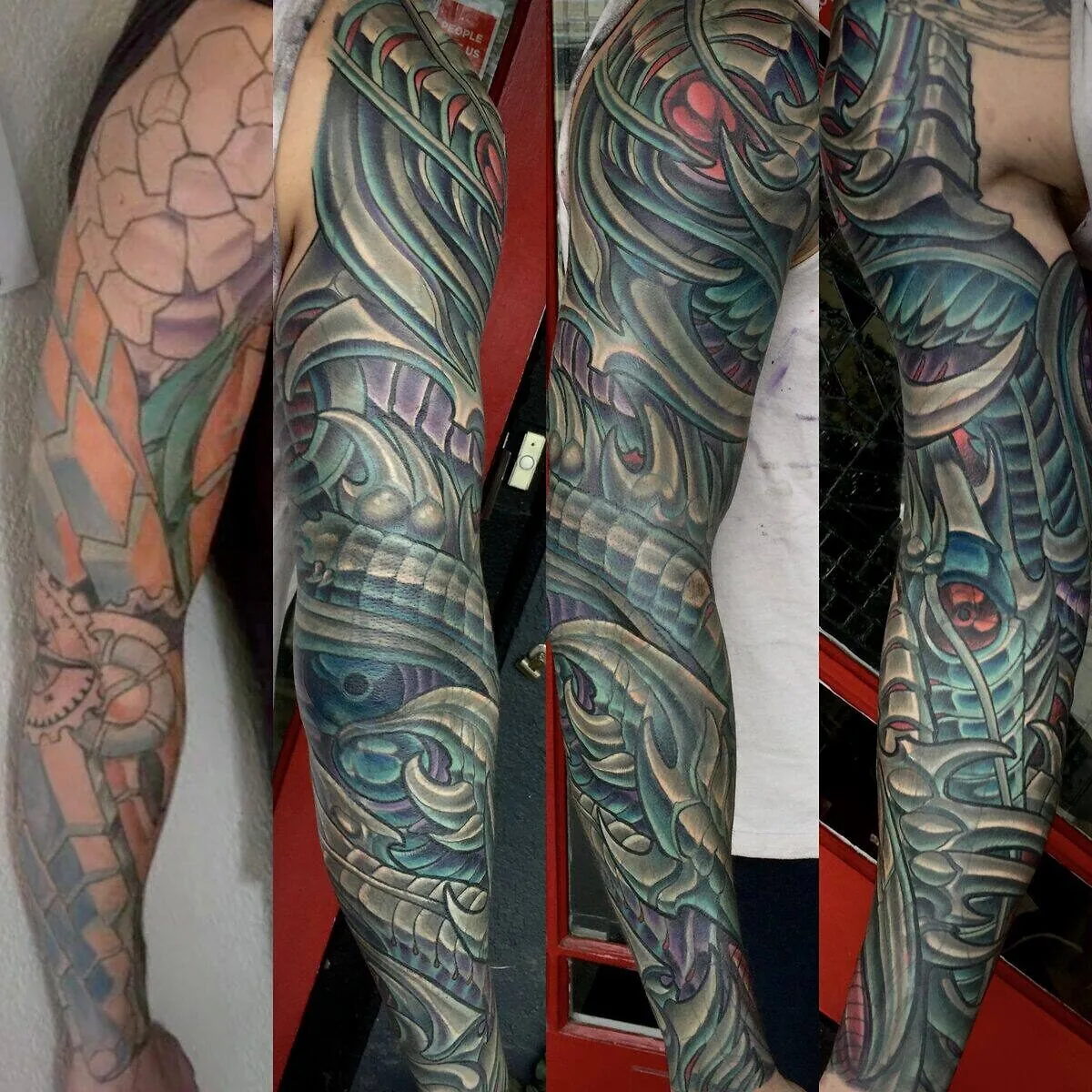
Before & After
Real cover-ups, on real clients
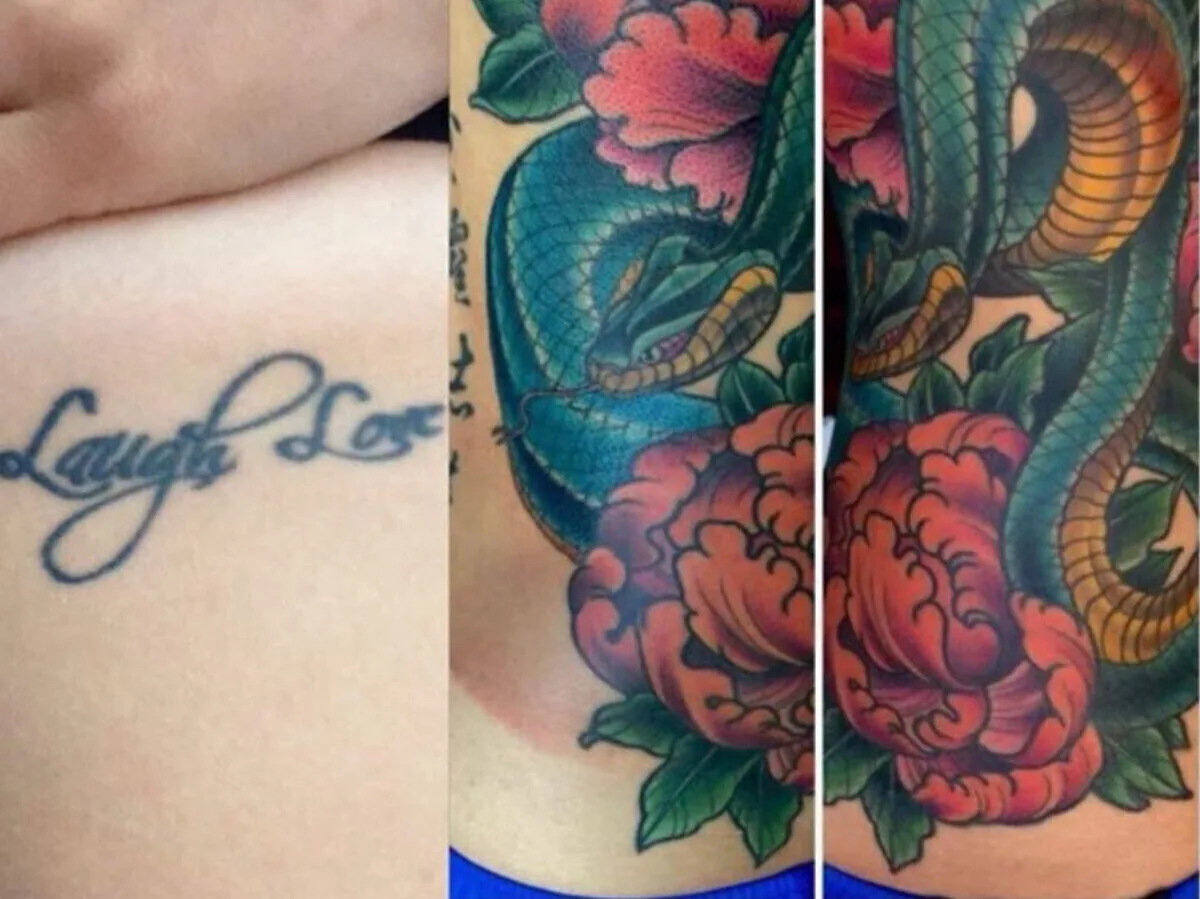
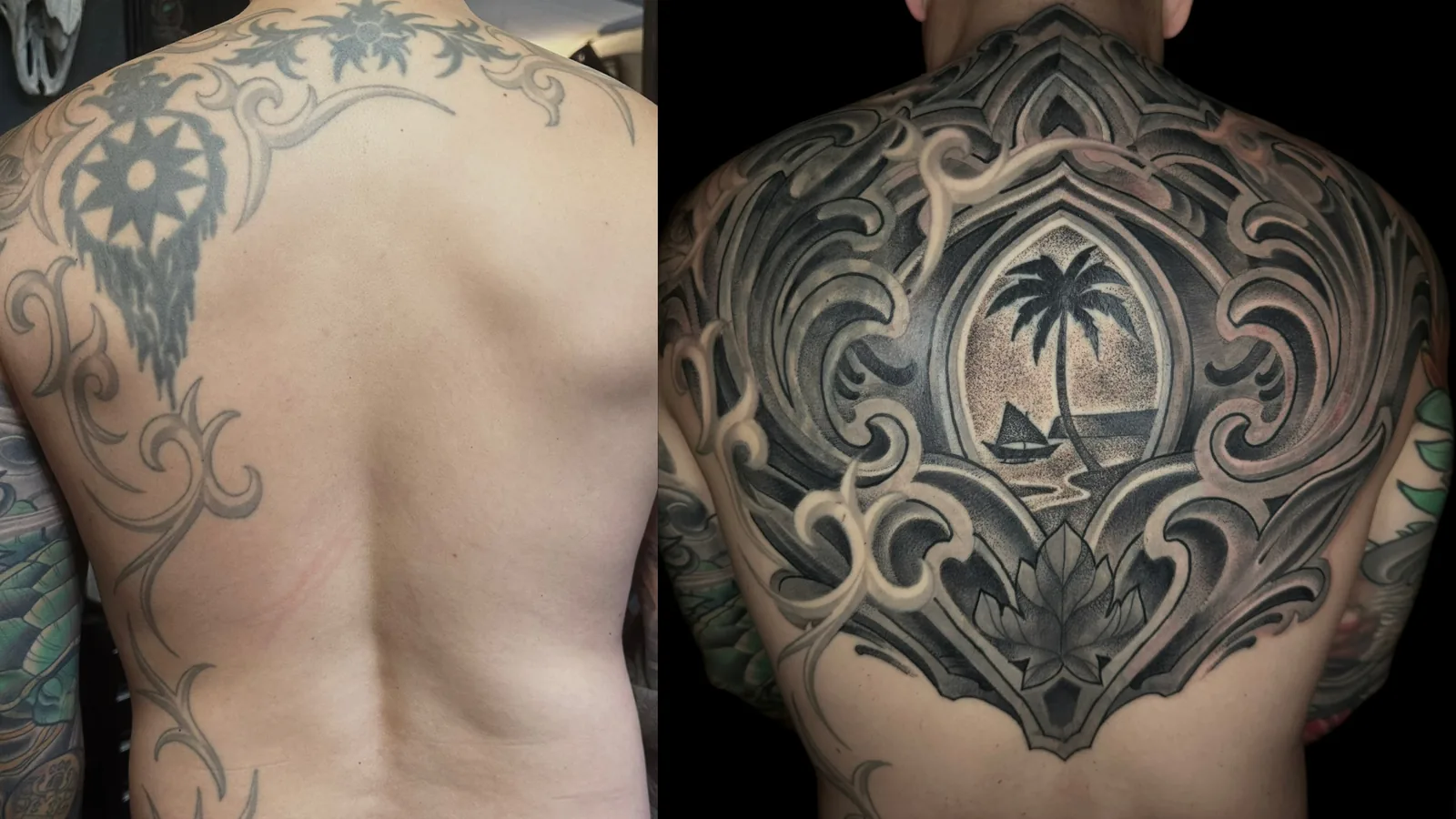
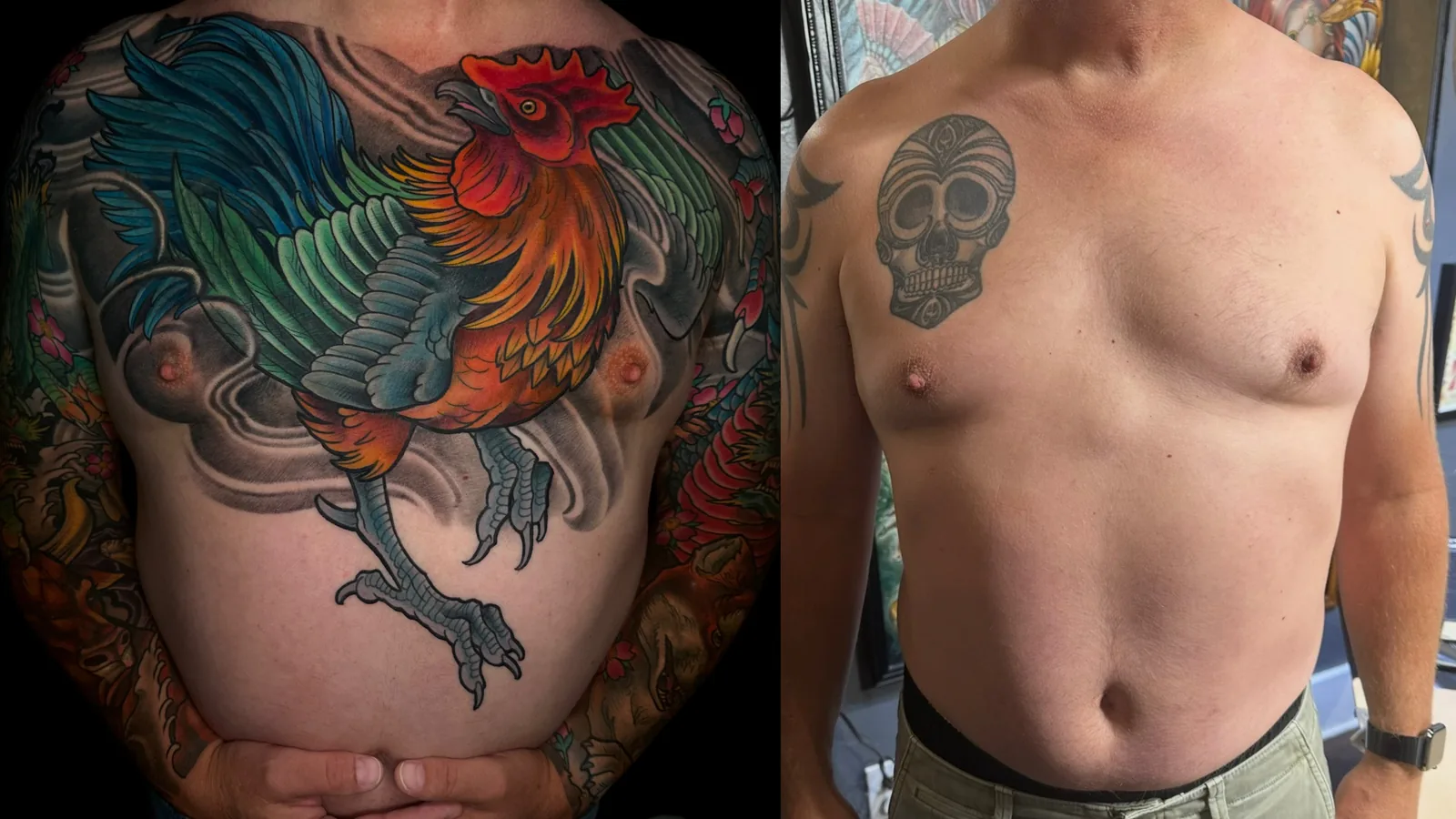
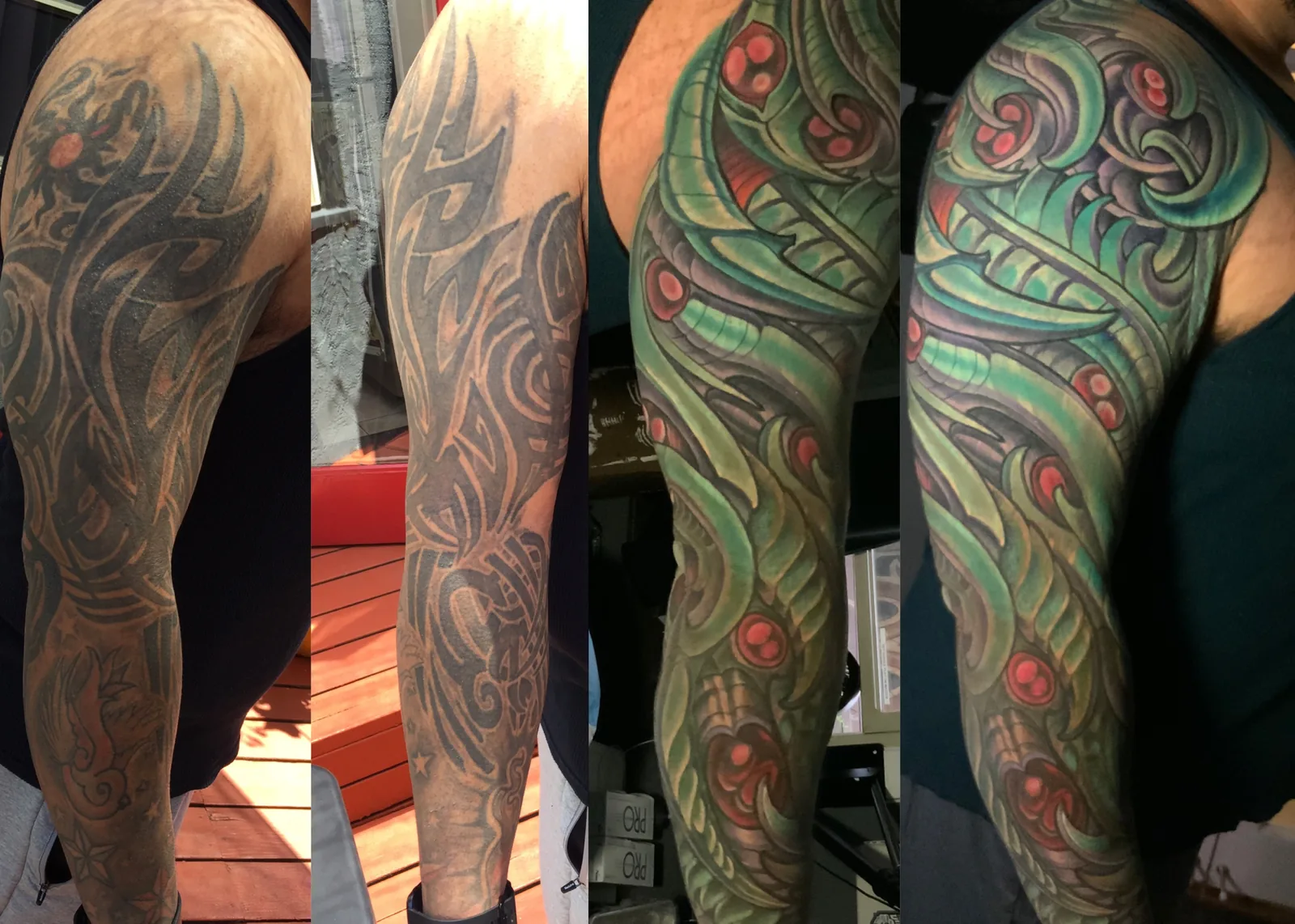
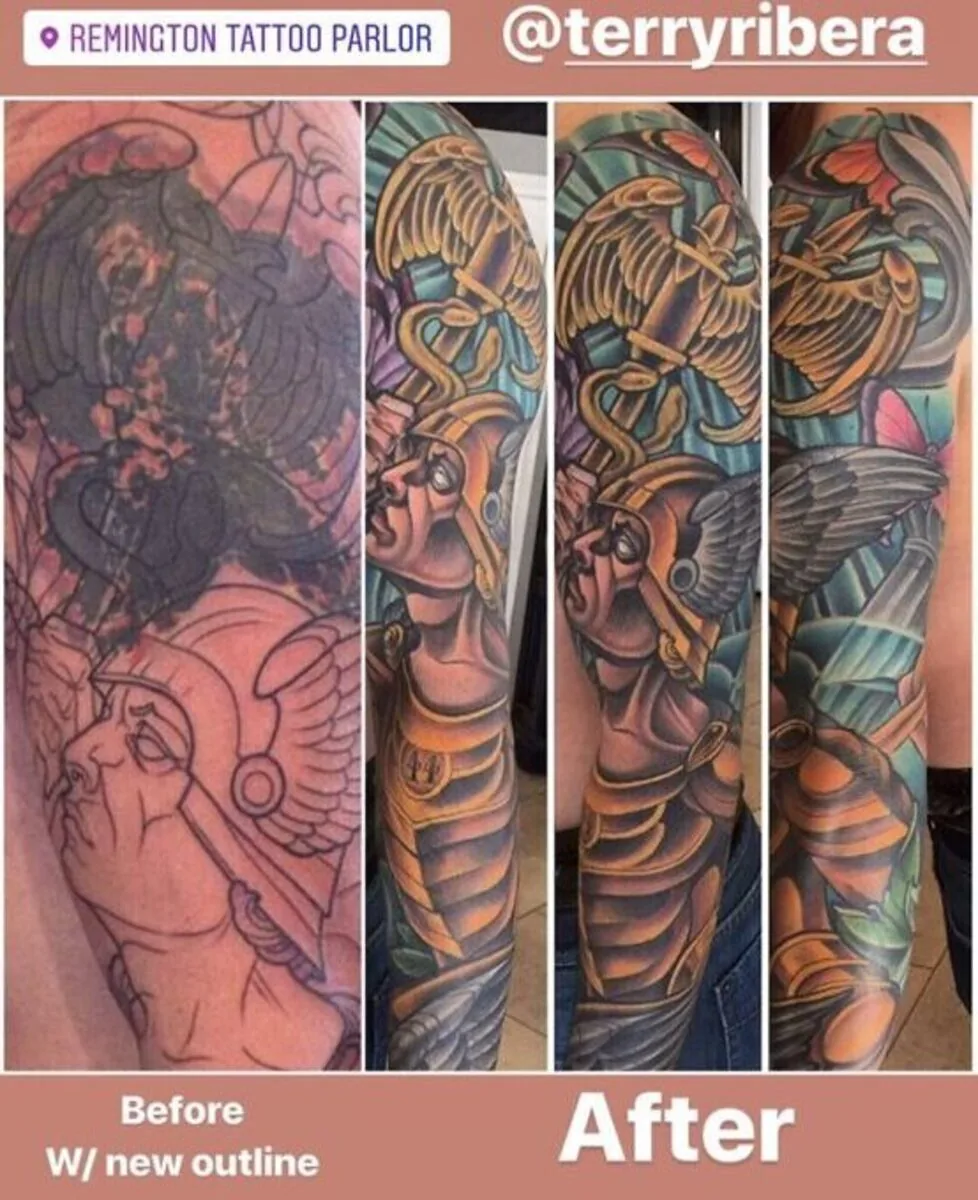
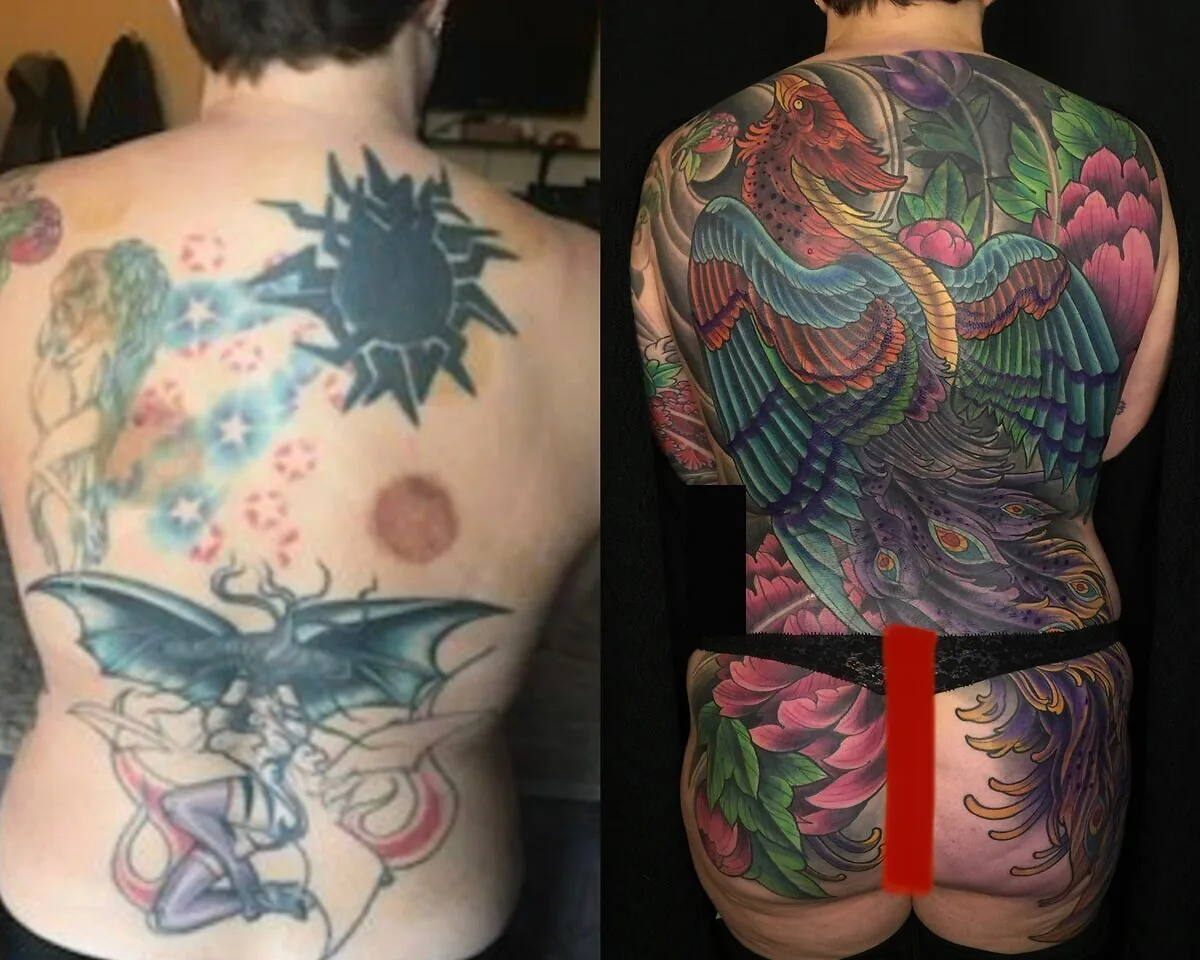
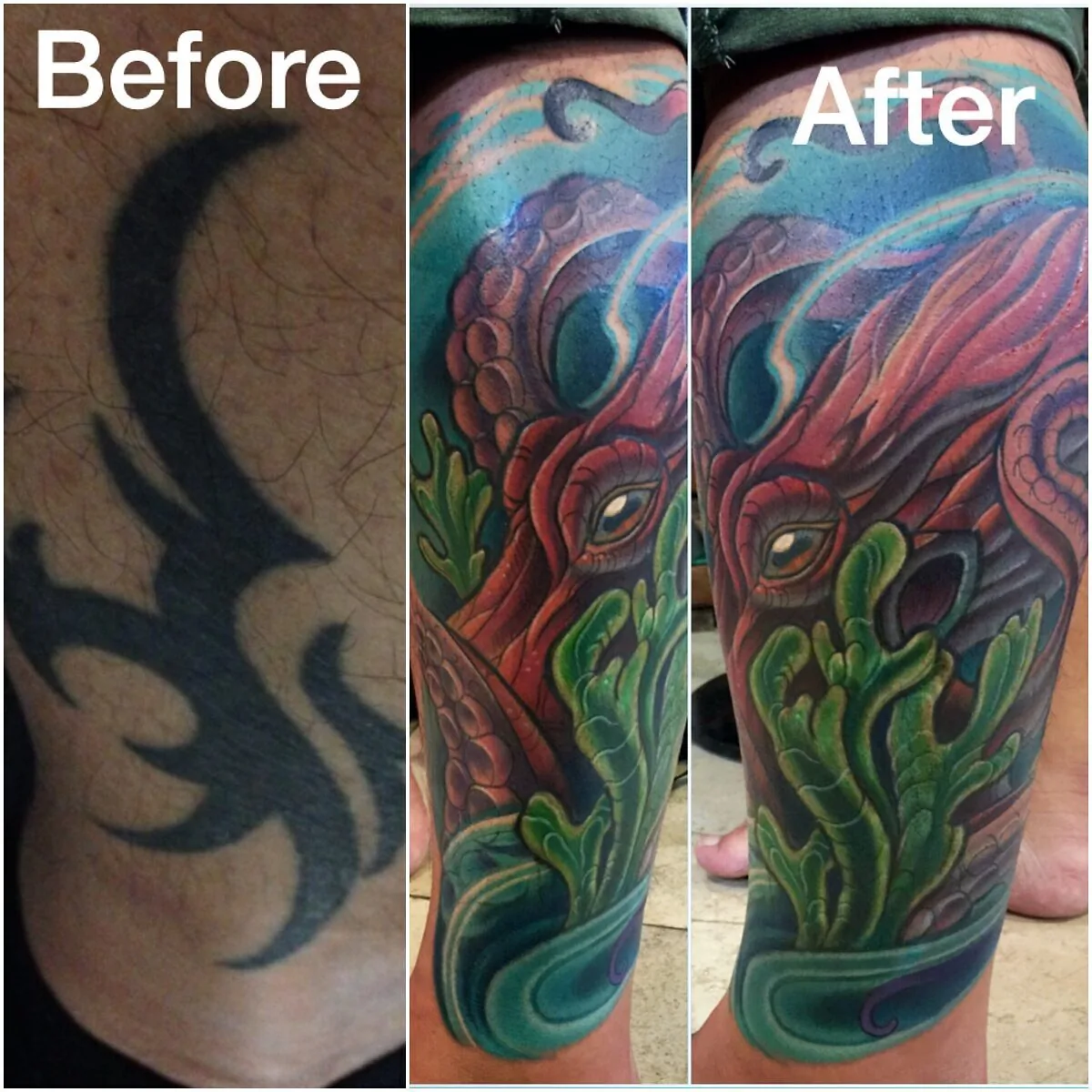
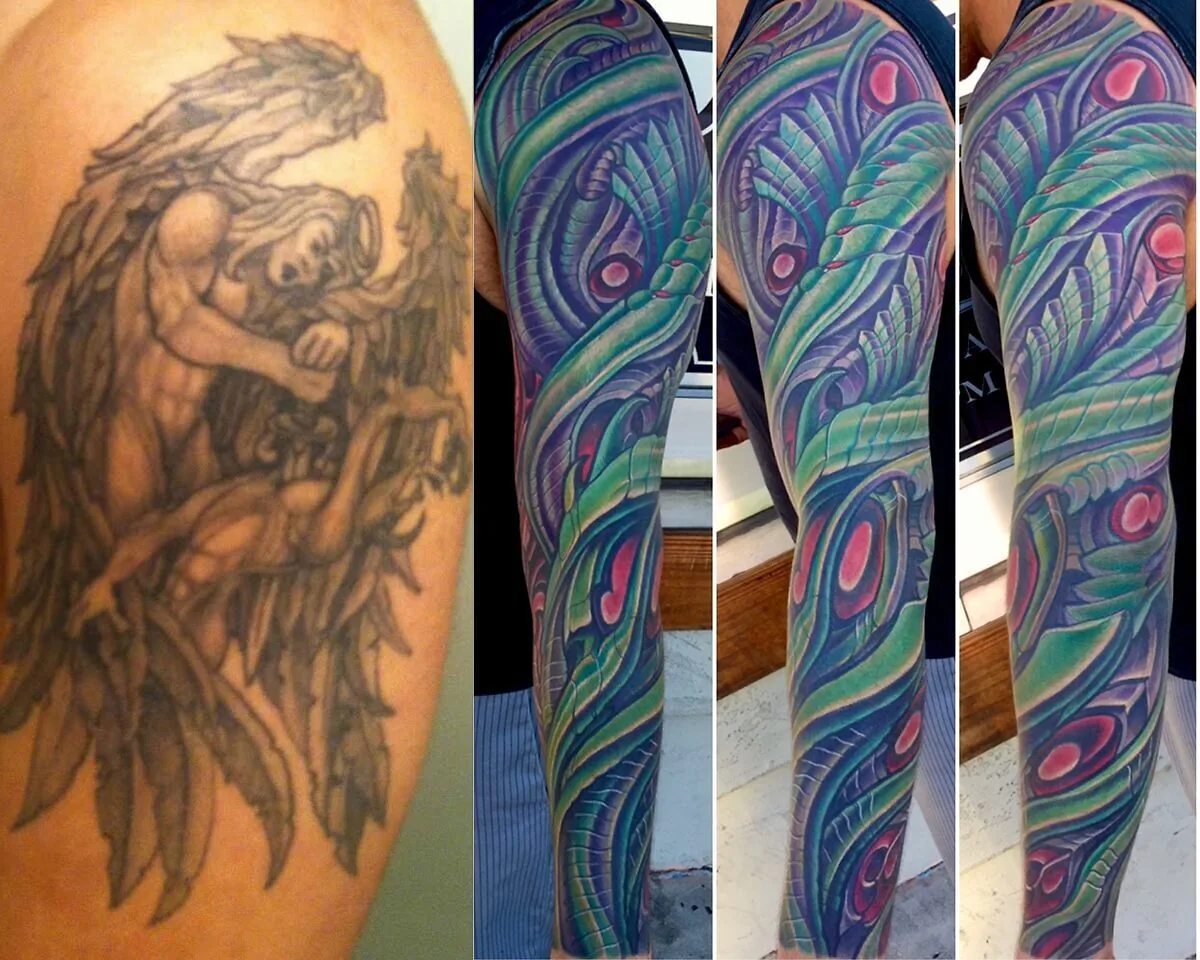
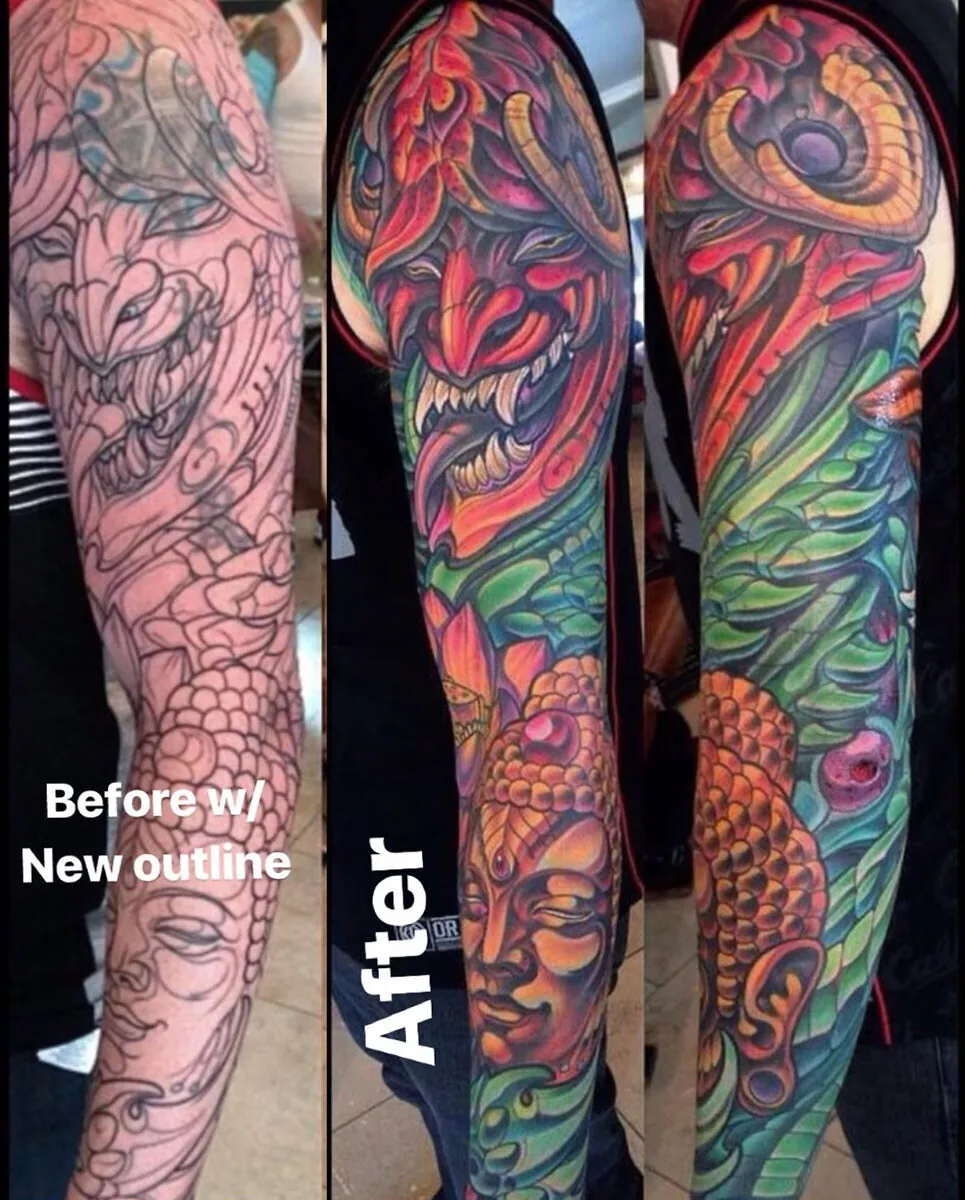
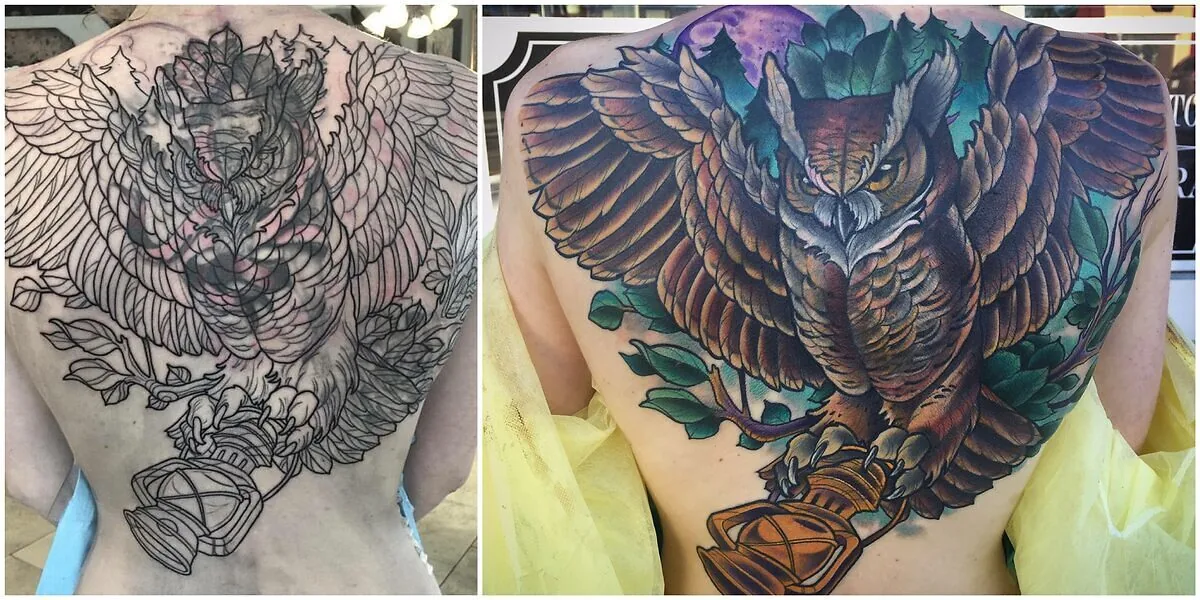
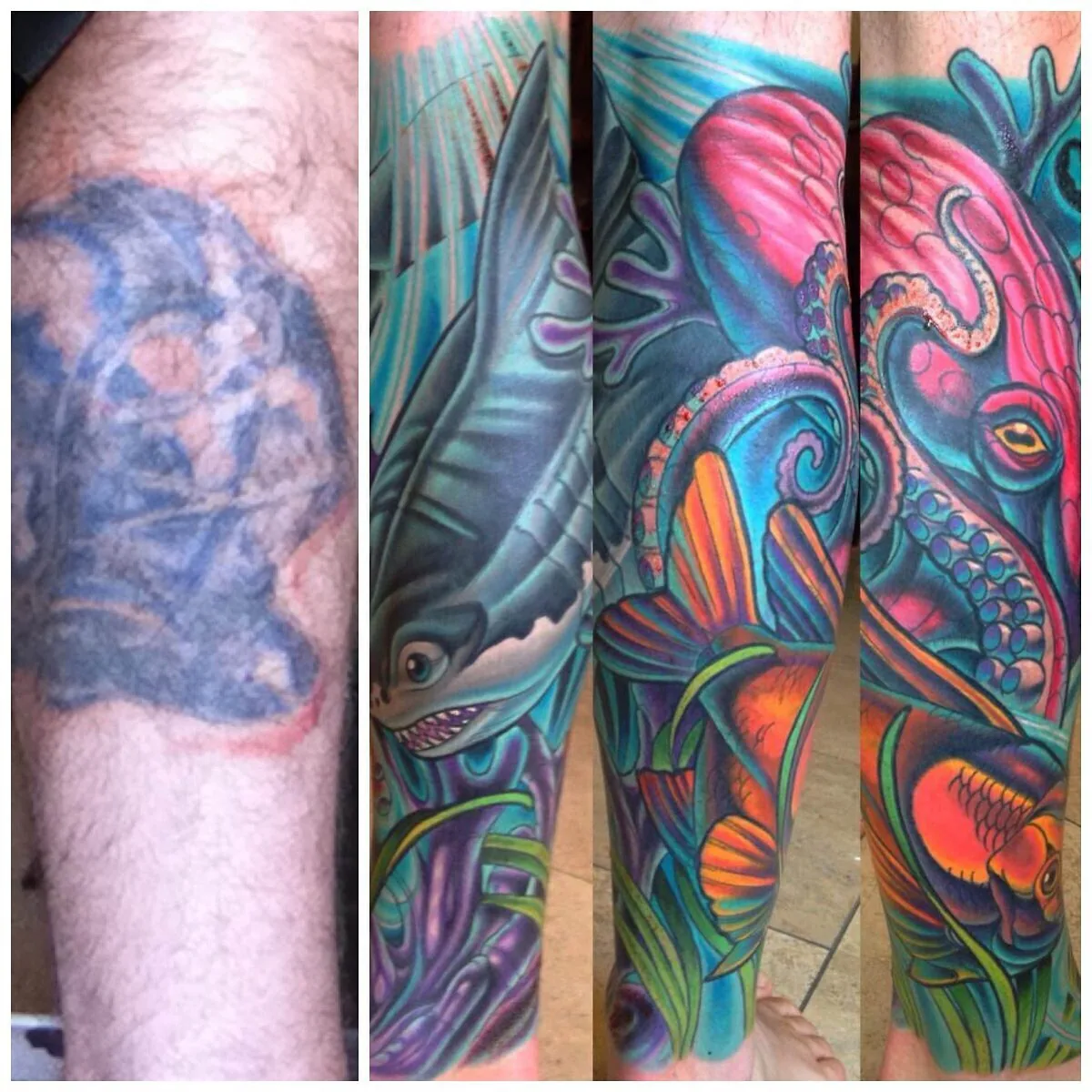
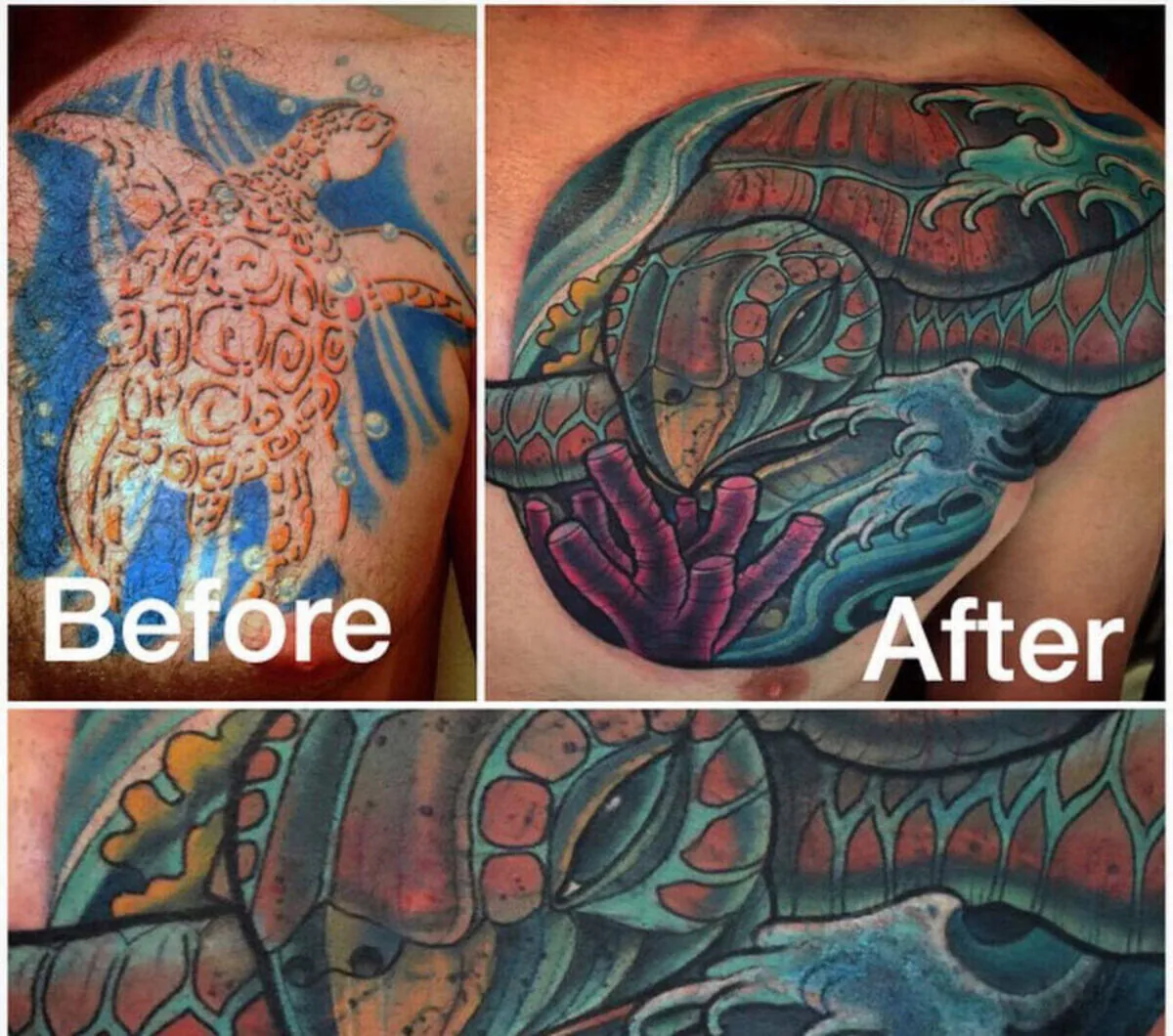
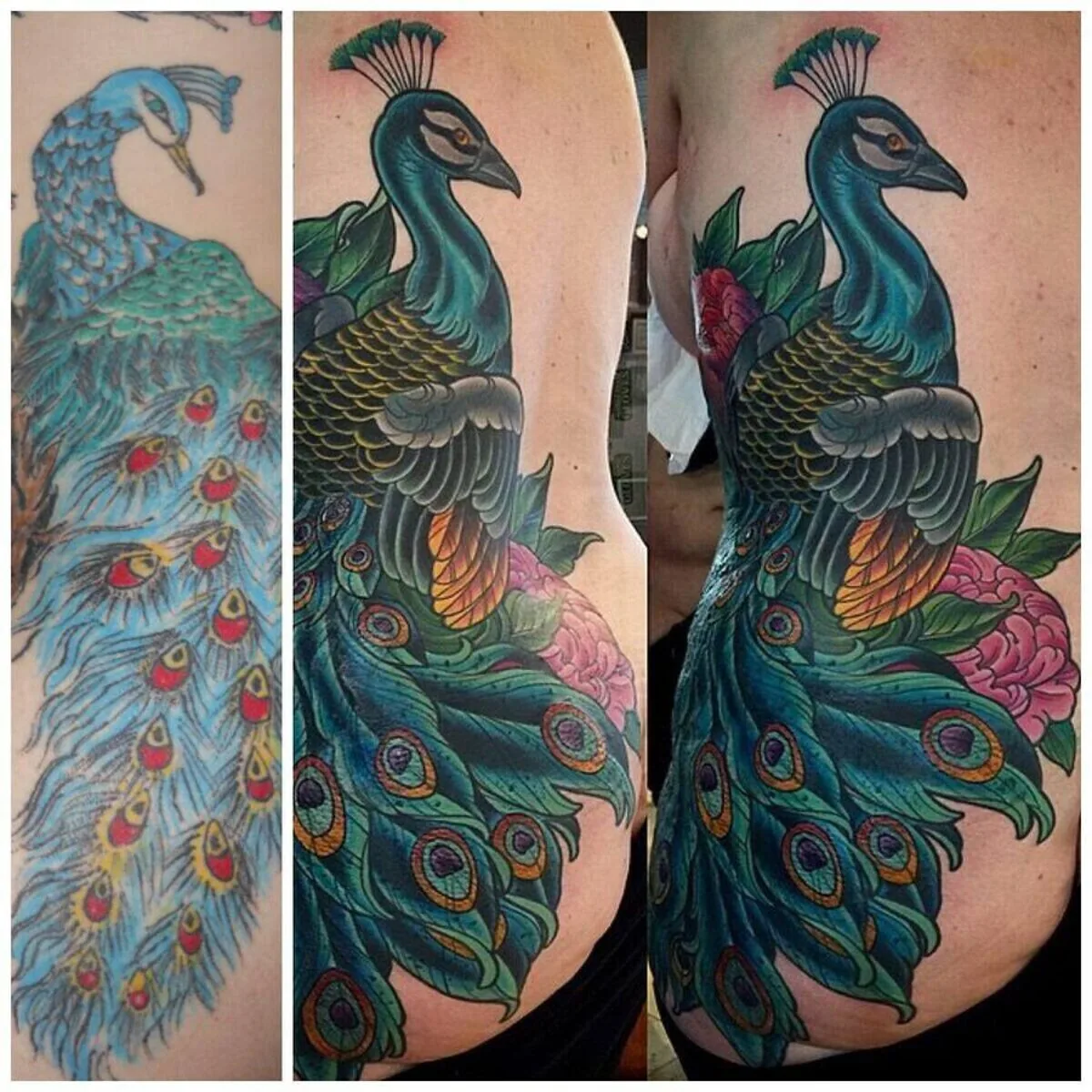
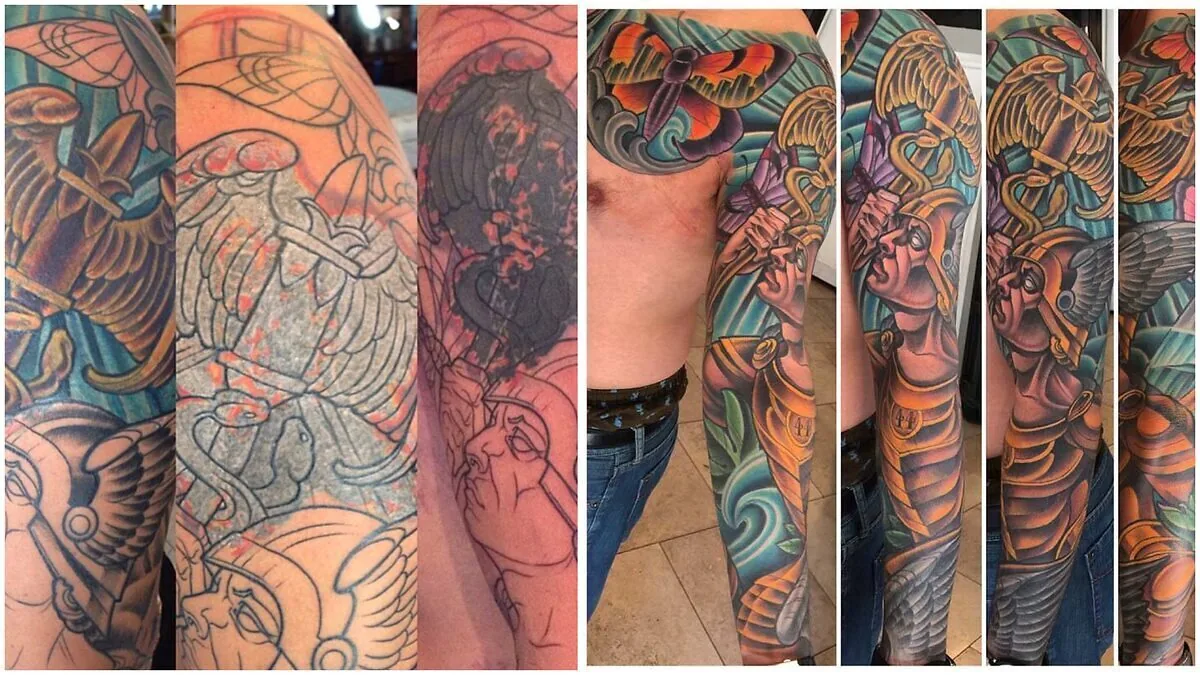
Every piece below is actual client work — an unwanted, faded, or tribal tattoo reworked into original large-scale artwork. Drag your eye from the old ink to the finished piece and see how completely it disappears.
Questions
Cover-up tattoo FAQ
Can any tattoo be covered up?
Most can, but not all in the same way. What's possible depends on the size, darkness, and saturation of the existing tattoo, its placement, and the condition of the skin. Terry evaluates all of that at the consultation and is honest about what will genuinely work. Roughly 30% of his client work involves covering or reworking existing tattoos, so he's seen almost everything.
Does a cover-up have to be bigger and darker than the old tattoo?
Usually somewhat larger, and with enough dark structure to absorb the old ink — but the goal isn't just to bury it under black. Terry designs a new composition that uses the existing tattoo's shapes to its advantage, so the finished piece reads as intentional artwork, not a patch.
Can you cover dark tribal, names, or script?
Yes — those are some of the most common requests. Dark tribal, lettering, and heavy black work are challenging, but Terry has covered them many times using strong, interlocking designs like biomechanical, Japanese, and bold floral work that can carry that much dark ink underneath.
Will the old tattoo show through the cover-up?
When a cover-up is designed and placed correctly, the old tattoo shouldn't read through. Terry plans the composition, values, and color specifically around what's underneath so the new piece is what your eye goes to. As he puts it, the goal is to make the old tattoo stop mattering.
What styles work best for cover-ups?
Styles with strong structure and dark, interlocking forms cover best — biomechanical and bio-organic, Japanese, and bold neo traditional florals are all excellent. Terry works across all of them, so the cover-up is designed in whatever style suits you and the piece being covered.
How much does it cost, and how far out are you booked?
Terry's hourly rate is $250, and clients are billed only for time on skin. A $500 non-refundable retainer secures your dates and comes off the total. Cover-ups vary in time depending on what's being covered. The waitlist is currently close to one year, with large-scale clients booked as ongoing projects. Full details are on the booking page.
Start the Conversation
Ready to make it disappear?
Bring the tattoo you want gone. Take time with the portfolio first, then reach out — every cover-up starts with an honest look at what's there, at Remington Tattoo in North Park, San Diego.
Cover-ups run larger and longer than the piece they replace, which changes the math — here's how cover-up pricing works.