Work in Progress
Designing a Chainsaw Man back piece
I'm in the drawing stage of a full Chainsaw Man back piece. Anime and manga back pieces are some of the most requested large tattoos right now, and they're also some of the easiest to get wrong. Here is how this one is coming together, from the first pencil pass to a color study on my client's back.
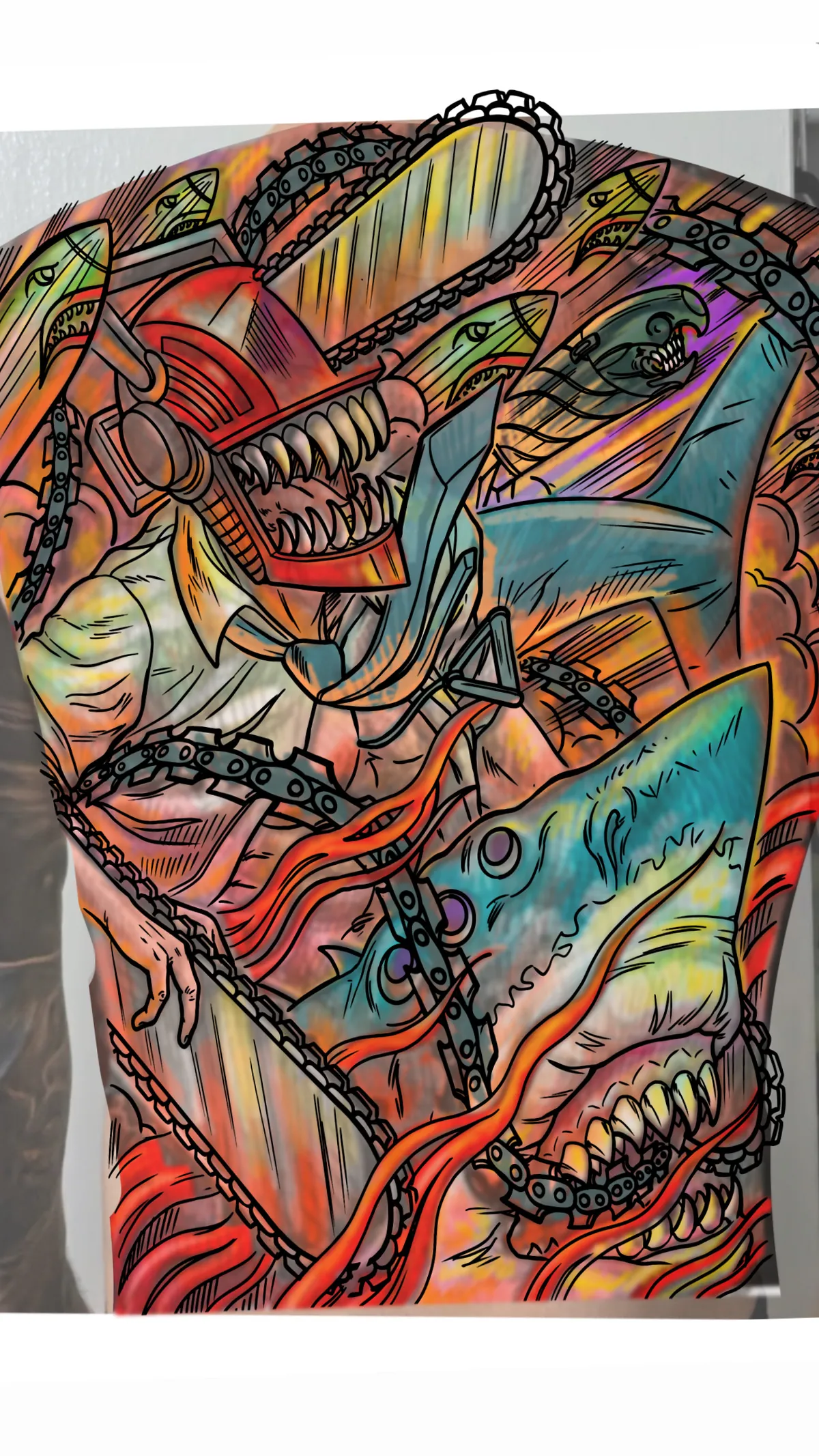
A manga page is a rectangle. A back isn't.
Chainsaw Man has incredible energy on the page: chainsaws, chains and chaos tearing through every panel. The temptation is to pick a favorite panel and put it on skin. The problem is that a panel is drawn for a flat rectangle. A back is round, it moves, and it has shoulder blades, a spine and a waist running through it. Lift a panel straight onto it and you get dead corners, a focal point in the wrong spot, and an image that only reads when the person stands perfectly still.
So I don't copy panels. I redraw the character from scratch, in my own hand, and build the whole scene for this specific back. The source sets the mood. The body sets the composition.
Step 1: The loose pencil pass
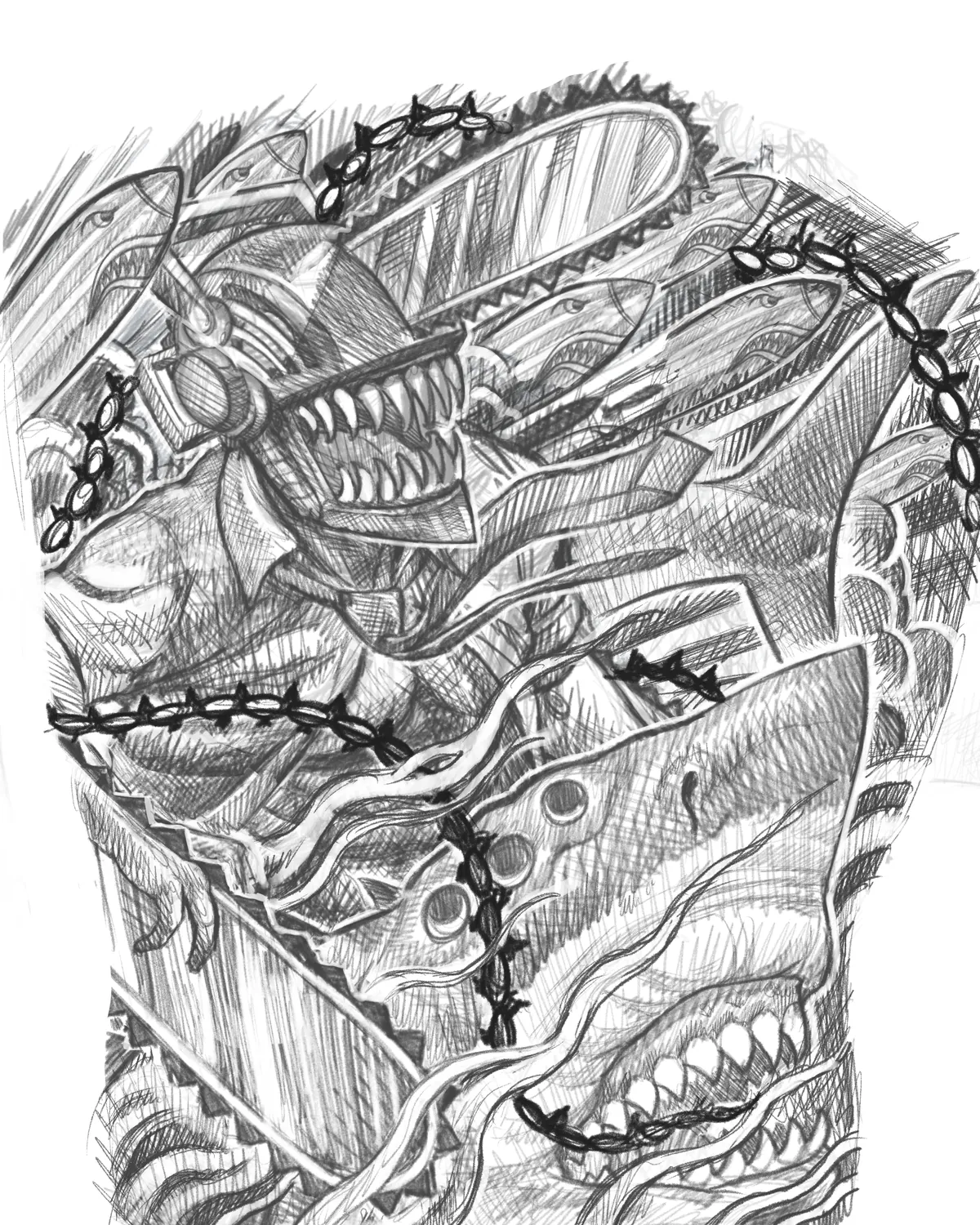
Everything starts loose. In this first pass I'm not drawing details. I'm placing the big masses and the direction of movement. The main figure sits high on the upper back, where the shoulders give the widest, most visible area. The design drives in a strong diagonal from the upper back down across the lower back, so the piece has motion even when the client is standing still.
The chains are doing structural work. They wrap around the back like rhythm lines, tying the separate elements together and carrying the eye from one area to the next, the same way I'd use wind bars or water in a Japanese back piece.
Step 2: Testing it on the real back
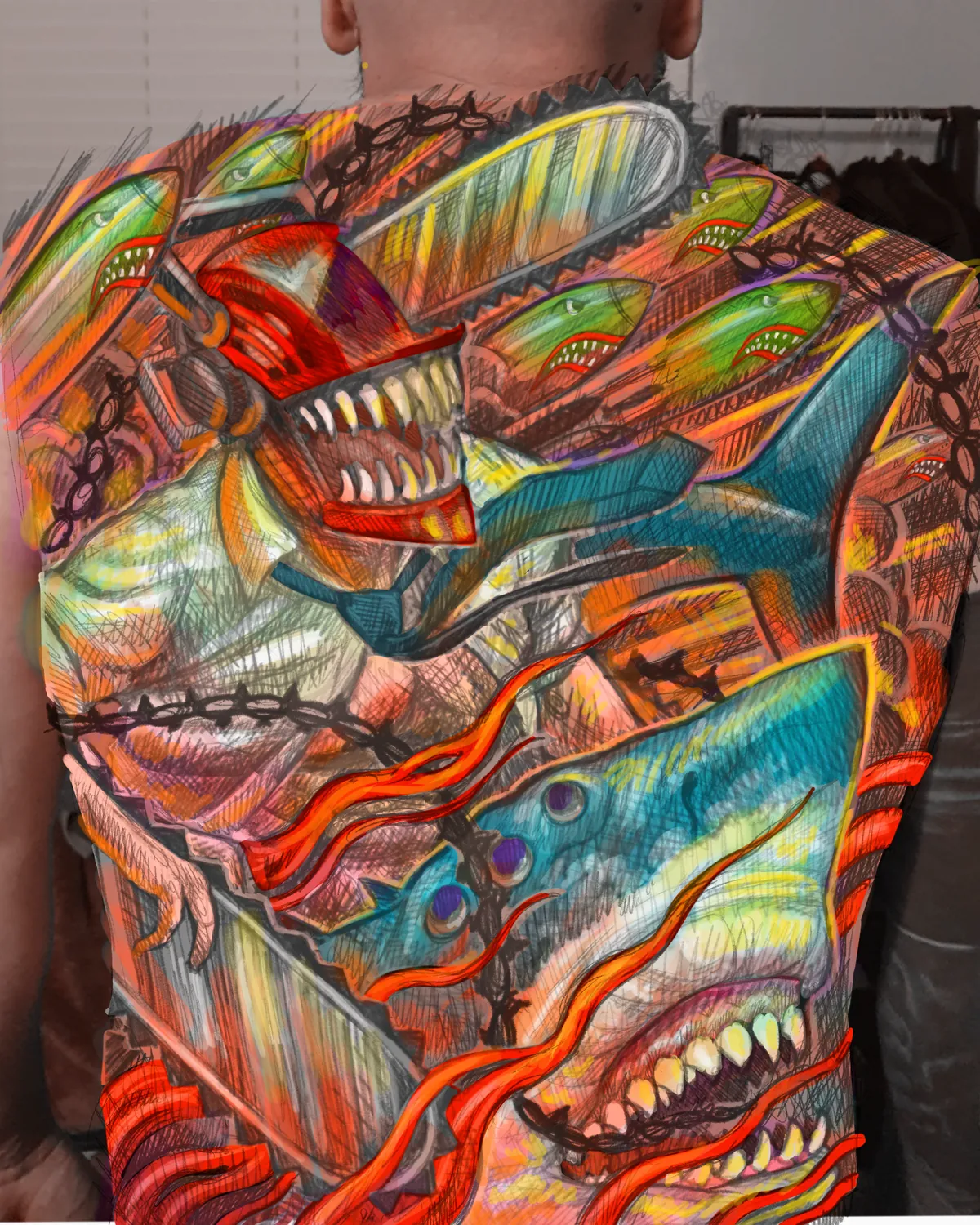
Before the drawing gets tight, I put it on a photo of the client's actual back. This is where you find out what paper hides: whether the main figure sits on the shoulder blade instead of sliding into the spine, whether the lower elements bend with the waist, and whether the composition still reads from across a room.
The color study here is rough on purpose. It's about value and temperature, not finish: which areas should push forward, which should fall back, and where the warm colors pull the most attention.
Step 3: Clean linework
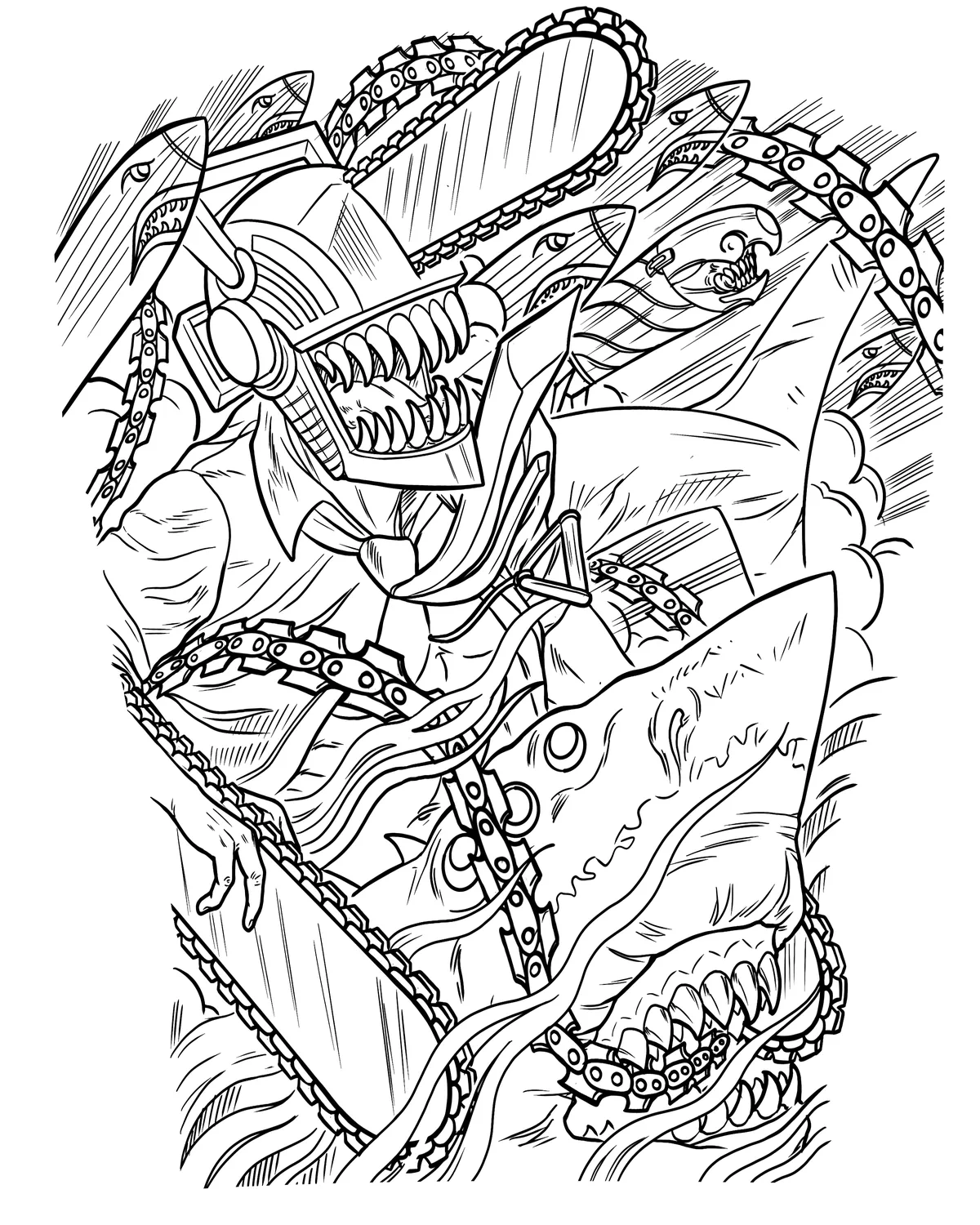
Once the layout works on the body, I redraw it as clean linework. This is the version that becomes the stencil, so every line has a job. Bold outlines hold the big shapes. Interior lines are kept simple enough to stay readable for decades. Background speed lines fill the gaps and keep the energy of the manga without crowding the main figure.
Step 4: Color that survives healing
The final color mockup goes back over the linework on the body. Warm reds and oranges carry the heat of the action, and cooler blues and greens balance them so the piece doesn't turn into one wall of color. Strong black holds it all together. Anime color can be very flat on screen; on skin, it needs that black structure and contrast or it fades into a blur.
Why this matters for any fan piece
Whether it's Chainsaw Man, another anime, a comic or a film, the subject is only half of the tattoo. The other half is composition: how the image is arranged so it fits the body, moves with it, and still reads 20 years from now. I design every piece, fan art included, with a full body suit in mind, so a back piece like this can connect to sleeves or legs later without looking like an afterthought. I wrote more about that in why every tattoo I make is designed for a bodysuit, and the full system is on my tattoo composition page.
I'll update this post with photos once we're on skin.
Anime back piece questions
Can you tattoo anime characters like Chainsaw Man as a back piece?
Yes. I redraw the character from scratch in my own hand and compose the whole scene for the client's back, rather than copying a panel or a cover. The source material sets the mood; the composition is built for the body.
Why not just tattoo a favorite manga panel?
A manga panel is a rectangle designed for a page. A back is round, moves, and has the shoulder blades and spine running through it. Lifting a panel onto skin usually leaves dead corners and a focal point in the wrong place. Redrawing for the body fixes both.
Will a busy anime design hold up over time?
It will if the big shapes read first. I build the design around a few large, clear forms with strong black outlines, then add detail inside them. Small crowded detail is what blurs as a tattoo ages.
Thinking about a back piece?
Every large design starts at a drawing consultation, built around your body. I tattoo at Remington Tattoo in North Park, San Diego.
Book a consultation See pricing