The short version
- Fall and winter are the better window in San Diego, because you're in the sun and the water far less while the work heals.
- A full color arm sleeve is around 20 hours across six or seven appointments — four to seven months, not one day.
- A full leg sleeve is closer to 30 hours across nine or ten appointments.
- After each session you're out of the ocean, pools and direct sun for two to three weeks. Multiply that by the number of sessions.
- My waitlist runs close to a year, so reaching out in September is really about booking next fall.
The season doesn't change your biology. What changes is your behavior, and behavior is most of what determines whether a piece heals cleanly and stays saturated.
Sun is the enemy, and we have a lot of it
A fresh tattoo is an open wound for the first couple of weeks and stays photosensitive well past that. Direct sun on healing skin does two things: it slows the heal, and it degrades the ink you just paid for. Over years, UV is the most reliable way to turn a saturated piece soft and muddy.
San Diego makes that hard to avoid in July. In October it takes almost no effort — you're covered up more, in the water less, and the sun sits lower for the entire stretch your project is in progress.
That matters more for large work than small. A sleeve doesn't heal once. It heals five, six, seven separate times across the same arm.
A sleeve is a season, not an appointment
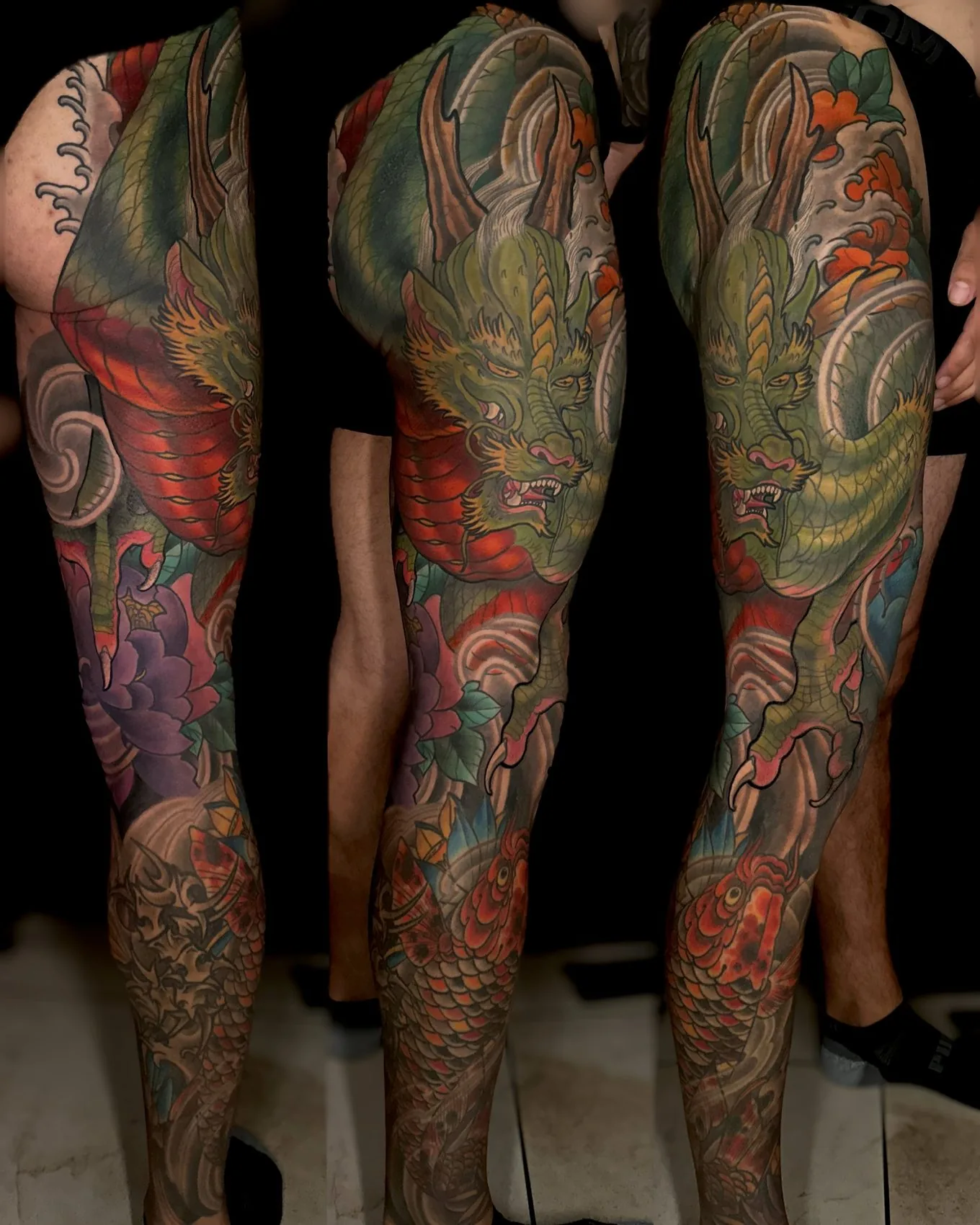
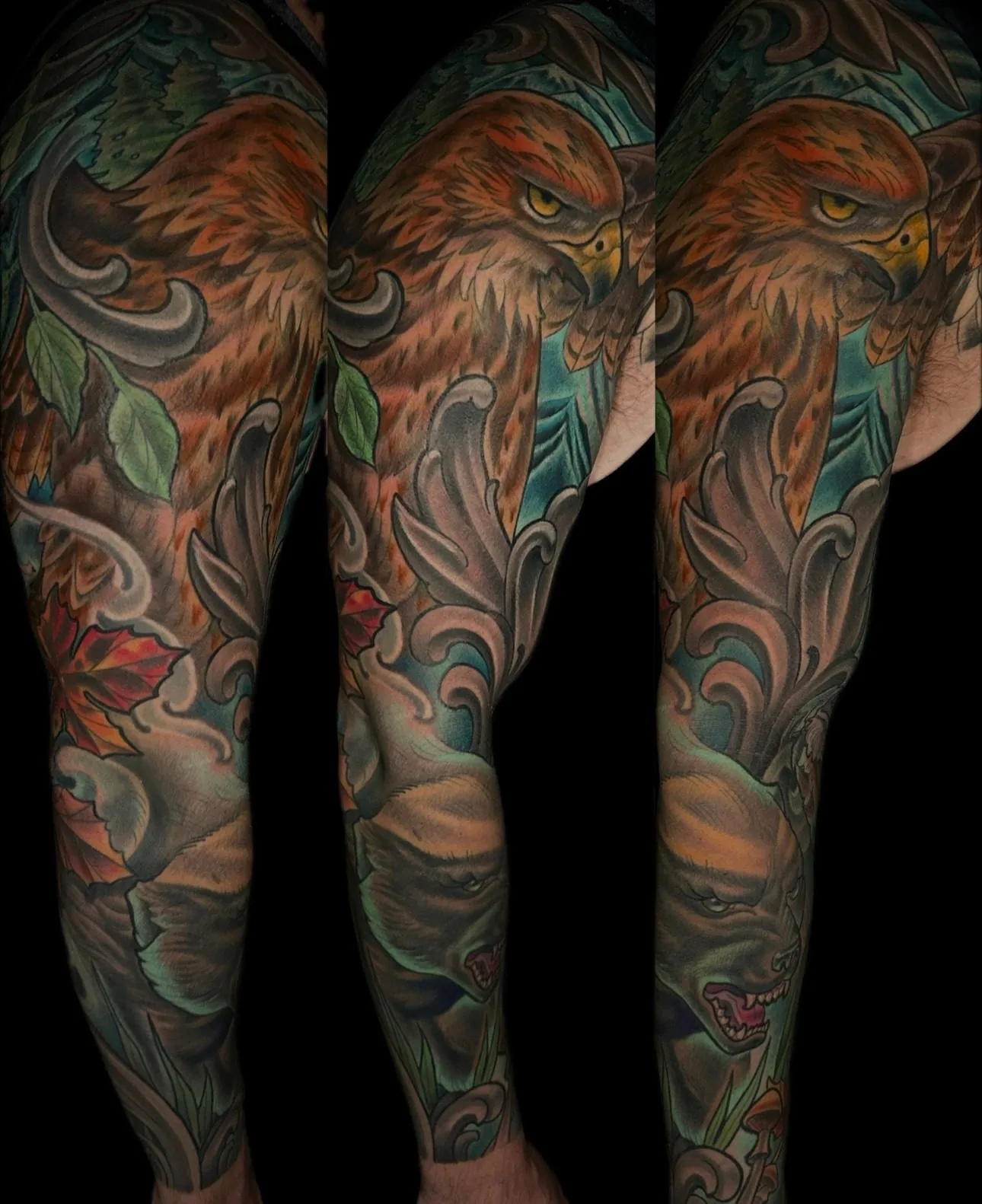
People underestimate this constantly. A full color arm sleeve takes me around twenty hours — not one marathon day, but six or seven appointments with real healing time between them. Call it four to seven months start to finish.
A leg is bigger in every sense: closer to thirty hours across nine or ten appointments, which realistically means six months to a year.
So whatever month you start, you're committing the next several months to it. Starting in October means the bulk of the work heals through the cool part of the year and you walk into next summer with a finished, fully settled piece. Starting in June means the opposite — you spend the summer avoiding the beach, and the piece is still in progress when the weather turns anyway.
The aftercare gets easier
For two to three weeks after each session you're out of the ocean, out of pools, out of hot tubs, and out of direct sun. Multiply that by six or nine sessions and it stops being a footnote.
From September through March that's barely a lifestyle change. In summer it's most of what people actually do here. I've watched clients push appointments over and over because a trip or a weekend kept landing in the healing window, and a project that should take six months stretches into eighteen.
Long sleeves also cover fresh work, which matters if your job has opinions about it.
The part people forget: the waitlist
Here's what changes the whole calculation. My waitlist runs close to a year, and it has for most of two decades.
So "starting in the fall" isn't really a decision about October. Reaching out in September means your drawing consultation lands well into next year, and your first session after that. If you want needle-in-skin time to fall in cool months, you're booking roughly a year ahead.
Which is why September is genuinely the right moment to send the email — not because of this fall, but because of the next one.
What the drawing does to the timeline
Every project starts with a two to three hour consultation where I take measurements, photograph the area, do tracings, and develop the composition with you in the room. From there I keep refining on my own time — structural edits and final adjustments are better made without distraction, so the design is finished before your first appointment rather than negotiated on the day.
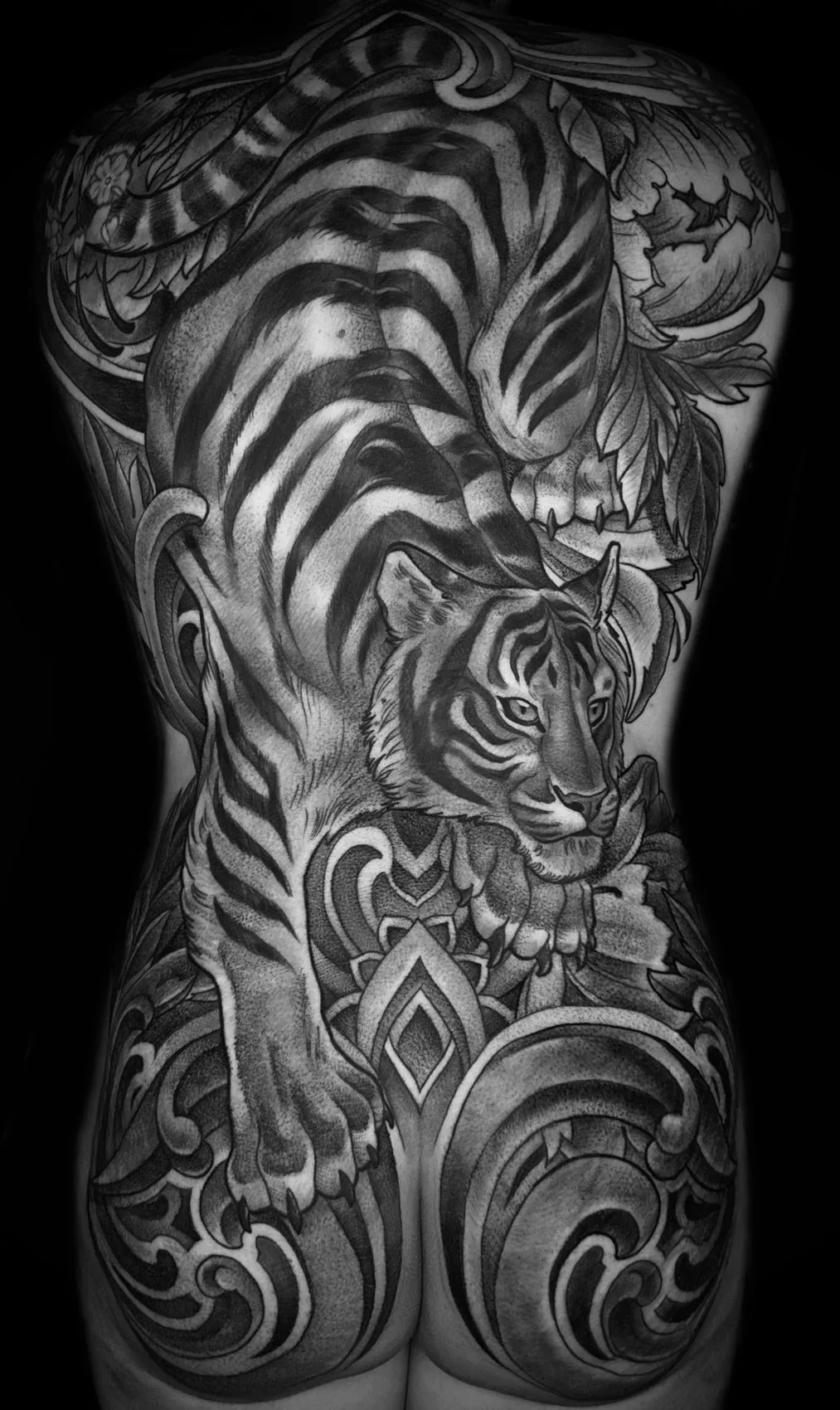
Most pieces need three to six or more hours of that. Large bodysuit and biomechanical work needs considerably more, because the composition has to resolve across the whole body before the first line goes down. None of it happens the week of. Build it into your thinking.
If you're covering something
Cover-ups benefit from the fall window even more than fresh work. They're larger, darker and more heavily saturated by necessity, which means more black going into skin and more to protect while it settles. Sun on a healing cover-up is the fastest way to lose the contrast that makes the old piece disappear.
What is the best time of year to get a tattoo?
In San Diego, fall and winter. The season doesn't change how skin heals, but it changes your behavior — less sun exposure, less swimming, more covered skin during the weeks each session is settling. For a multi-session project that difference compounds.
How long does a full sleeve take from start to finish?
A full color arm sleeve is around twenty hours across six or seven appointments, which usually means four to seven months depending on spacing. A full leg sleeve is closer to thirty hours across nine or ten appointments.
How far apart should tattoo sessions be?
Two to four weeks is typical — long enough for the skin to settle, close enough to keep momentum on the project.
Can I still get tattooed in summer?
Of course. You just have to be disciplined about sun and water for two to three weeks after every session, and most people aren't. That's what stretches projects out.
How far in advance do I need to book?
My waitlist runs close to a year. Reaching out in September means the drawing consultation lands well into the following year, with the first session after that.
Keep reading
If you're weighing cost as well as timing, why hours matter more than hourly rate covers the money side. Real hours and totals from completed projects are on the pricing page.
See pricing and completed work